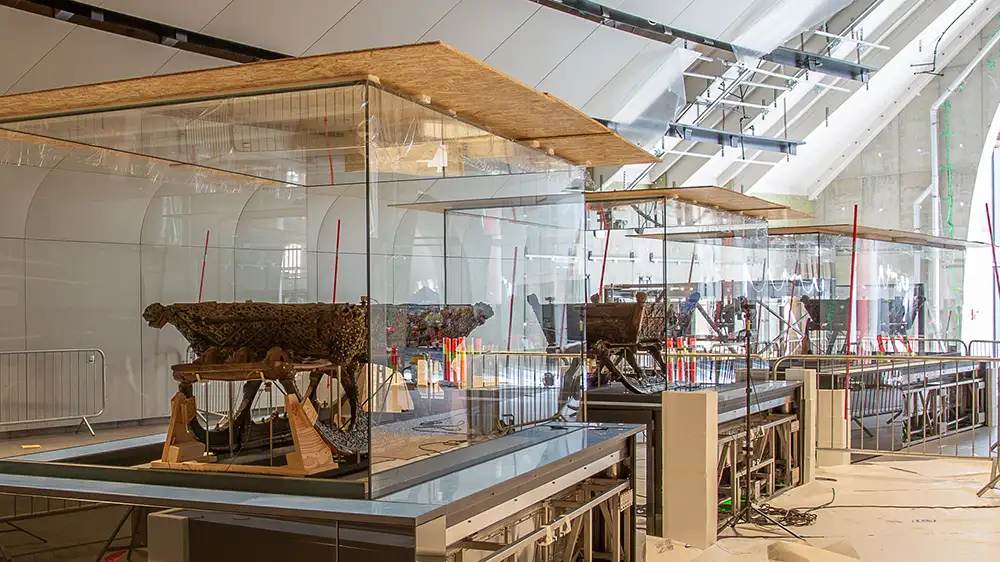
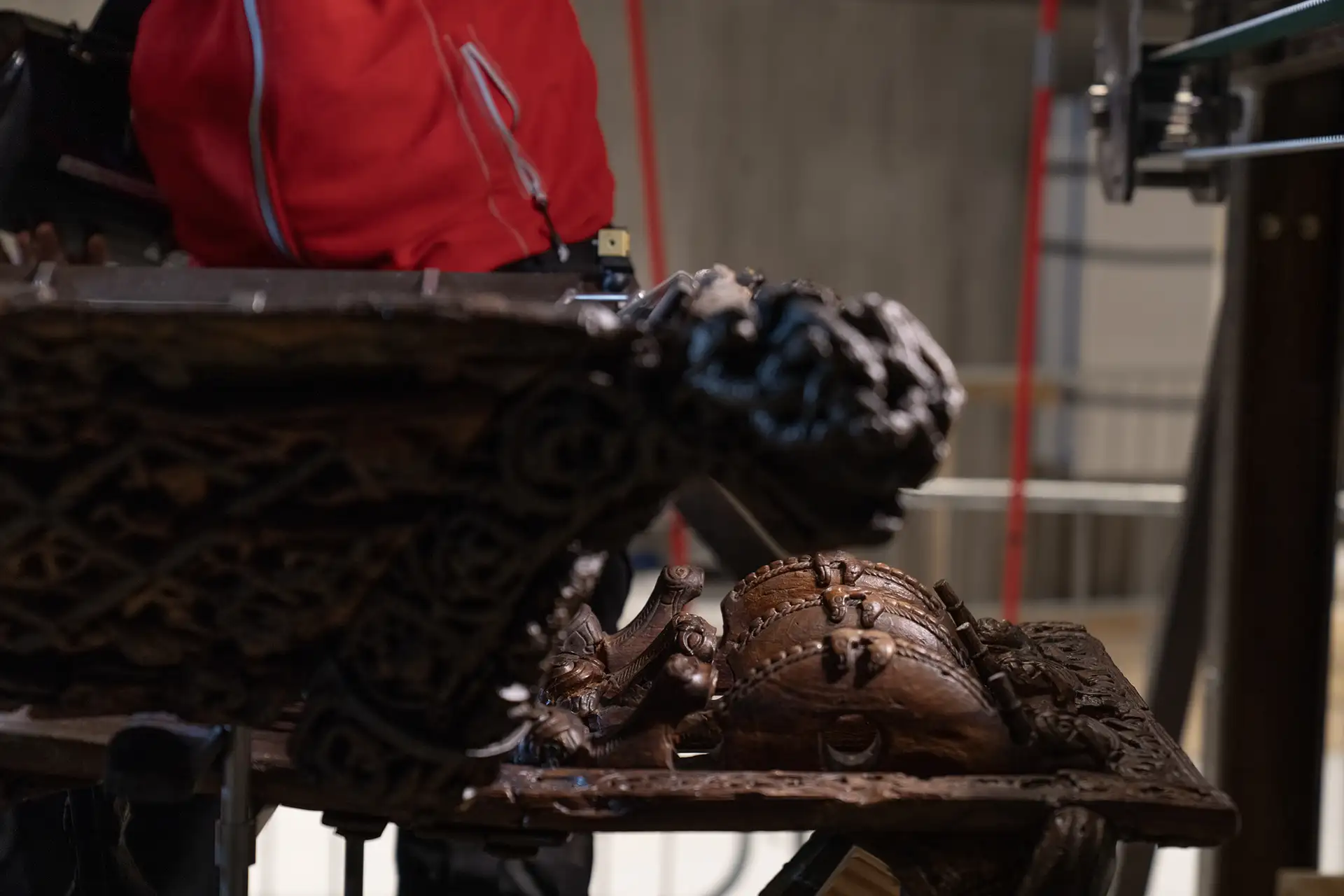
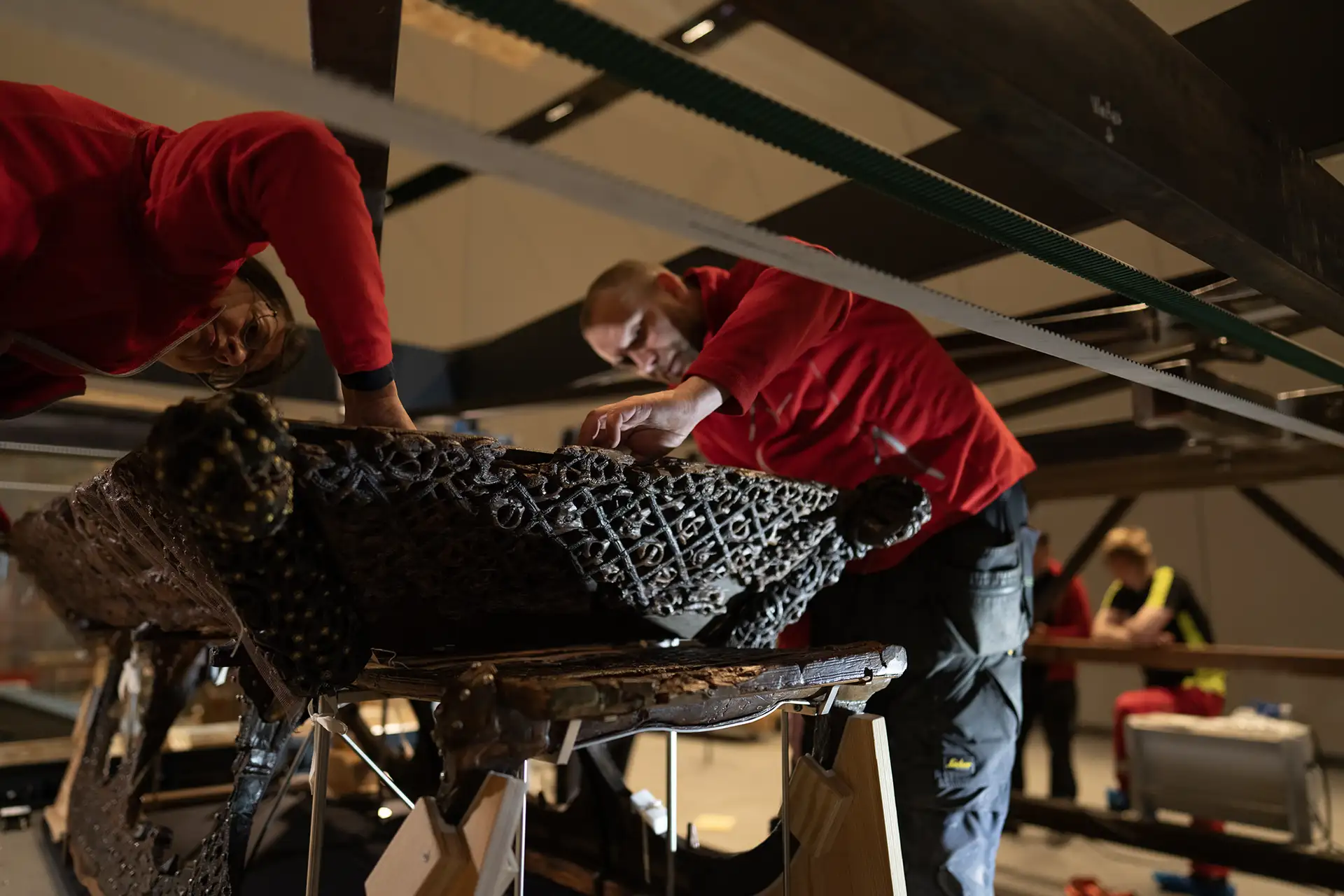
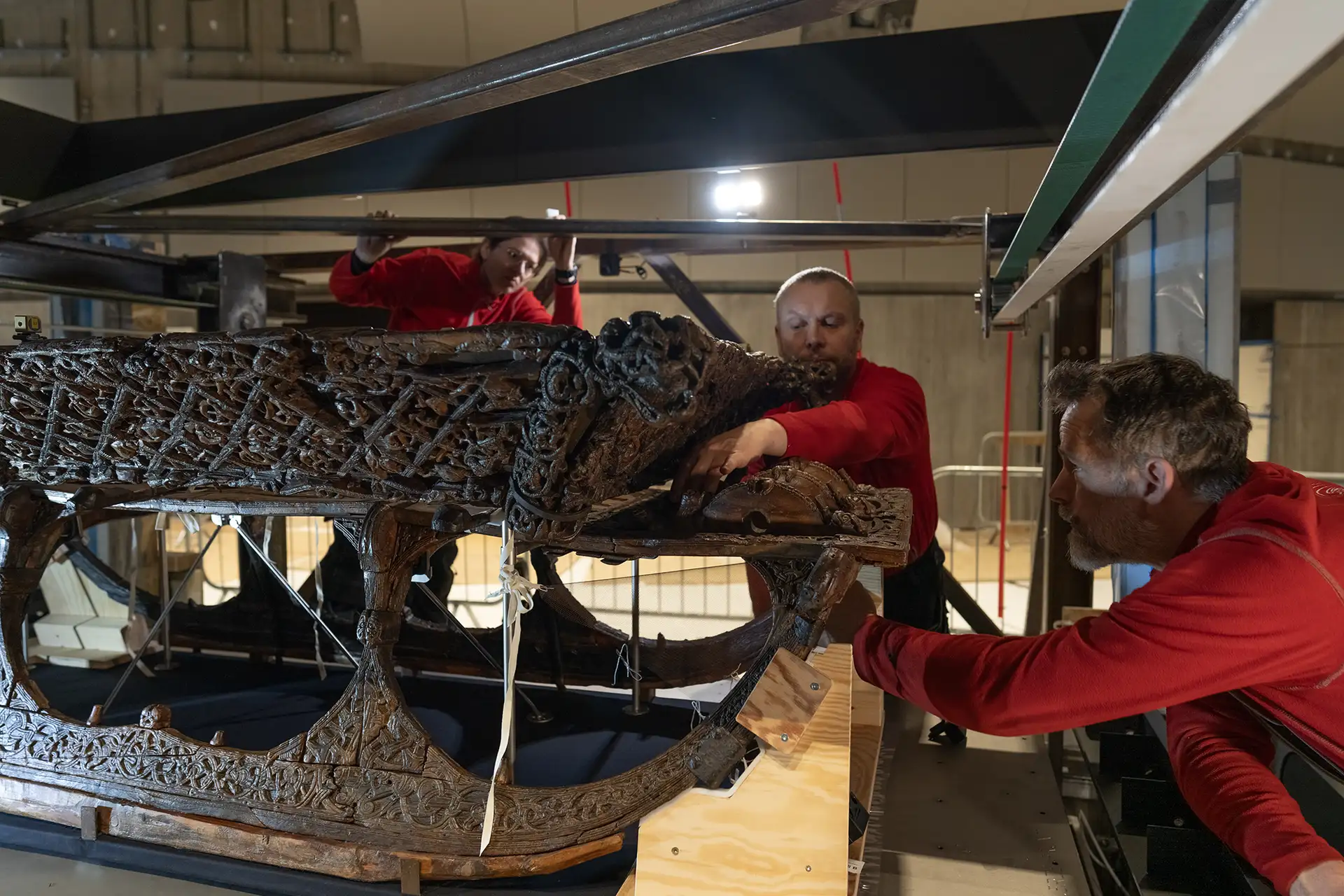
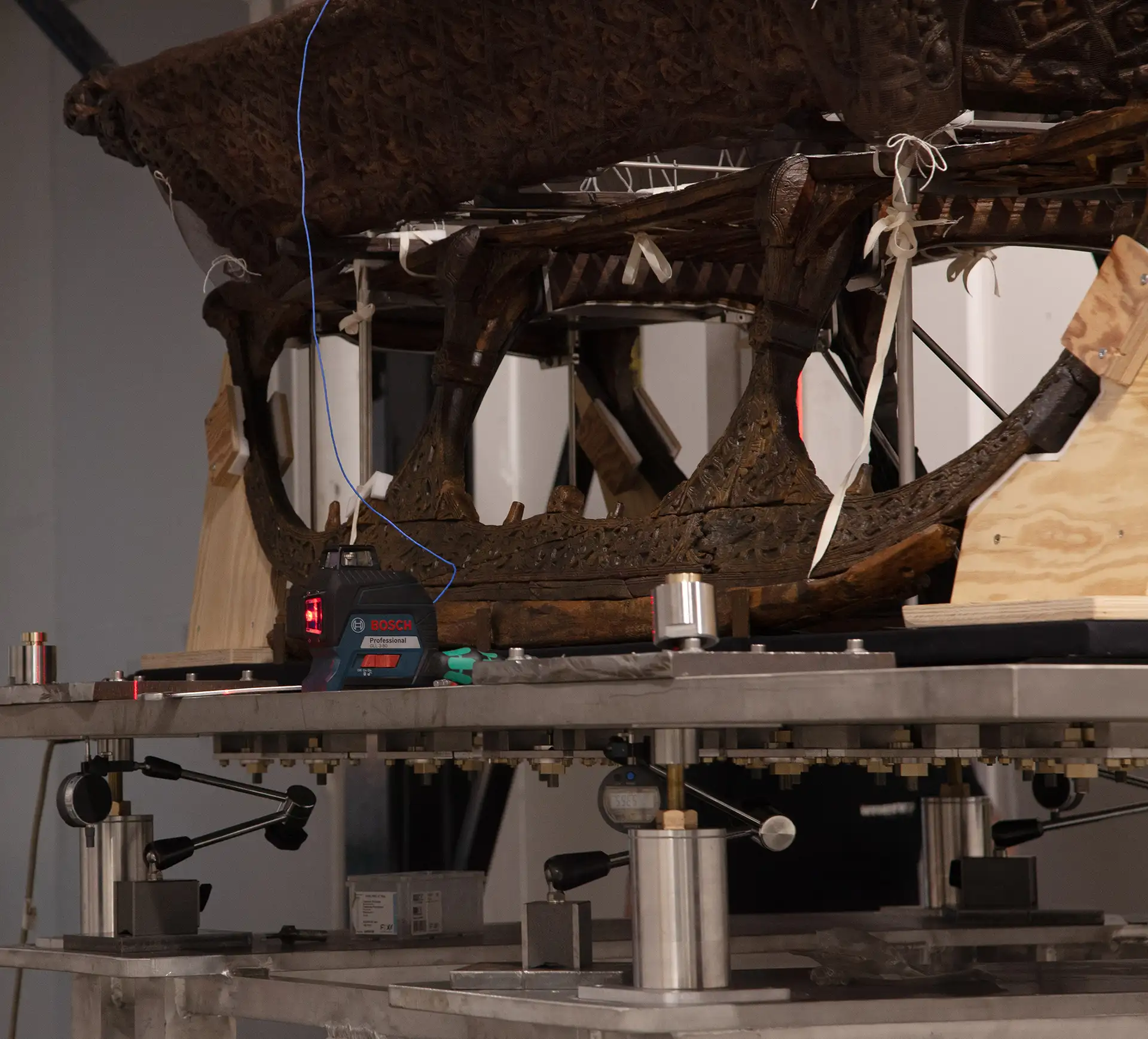
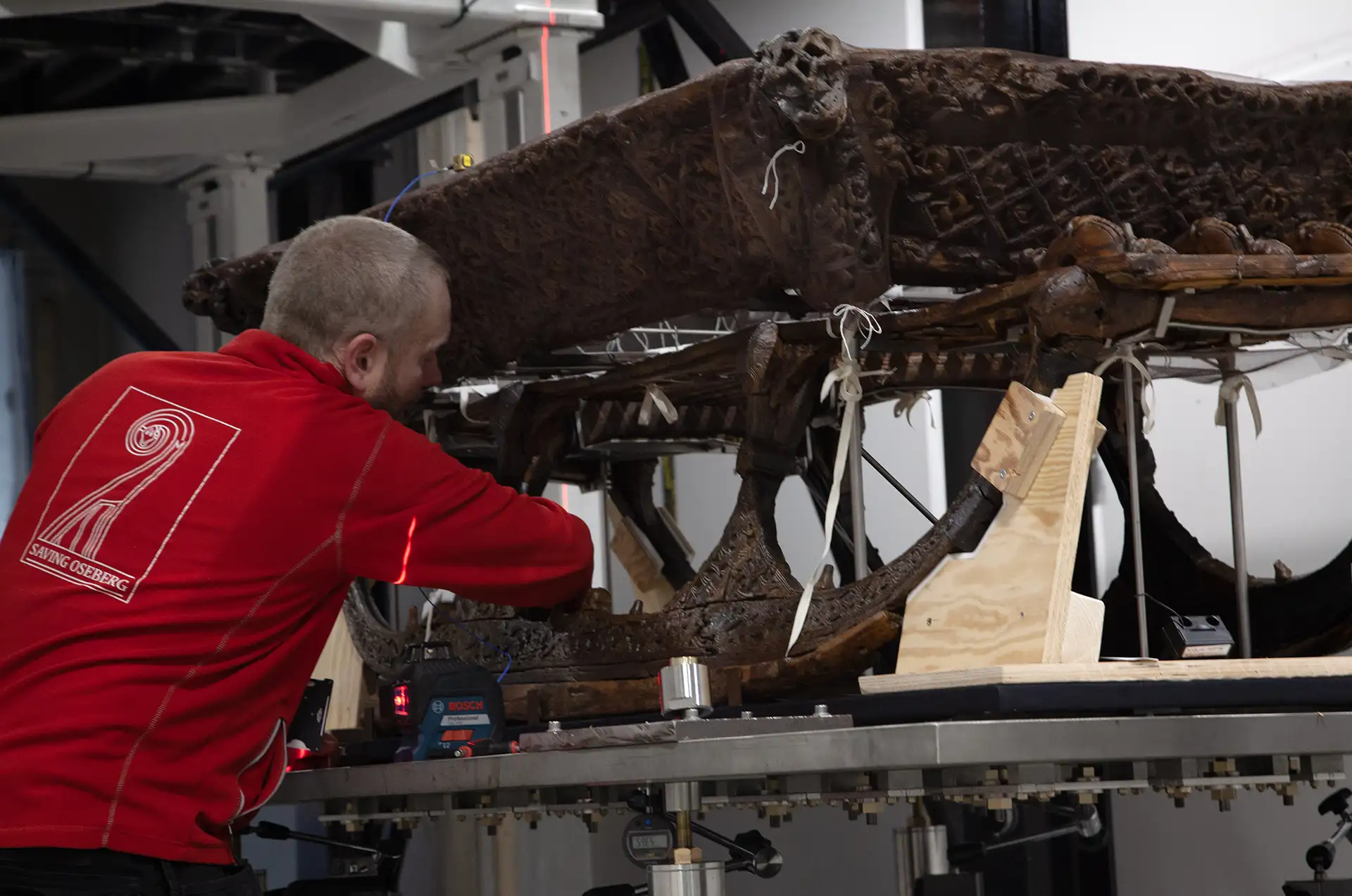
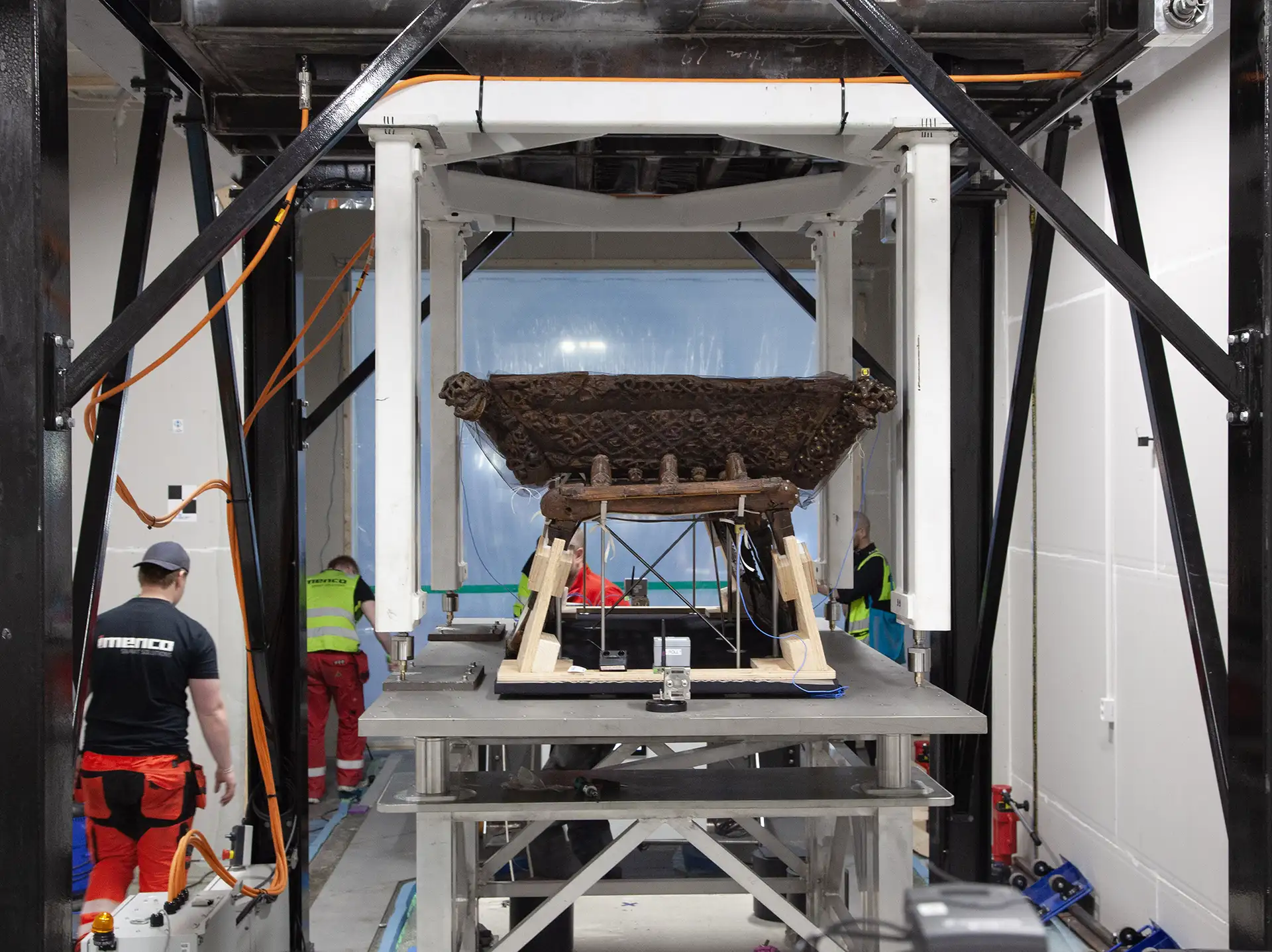
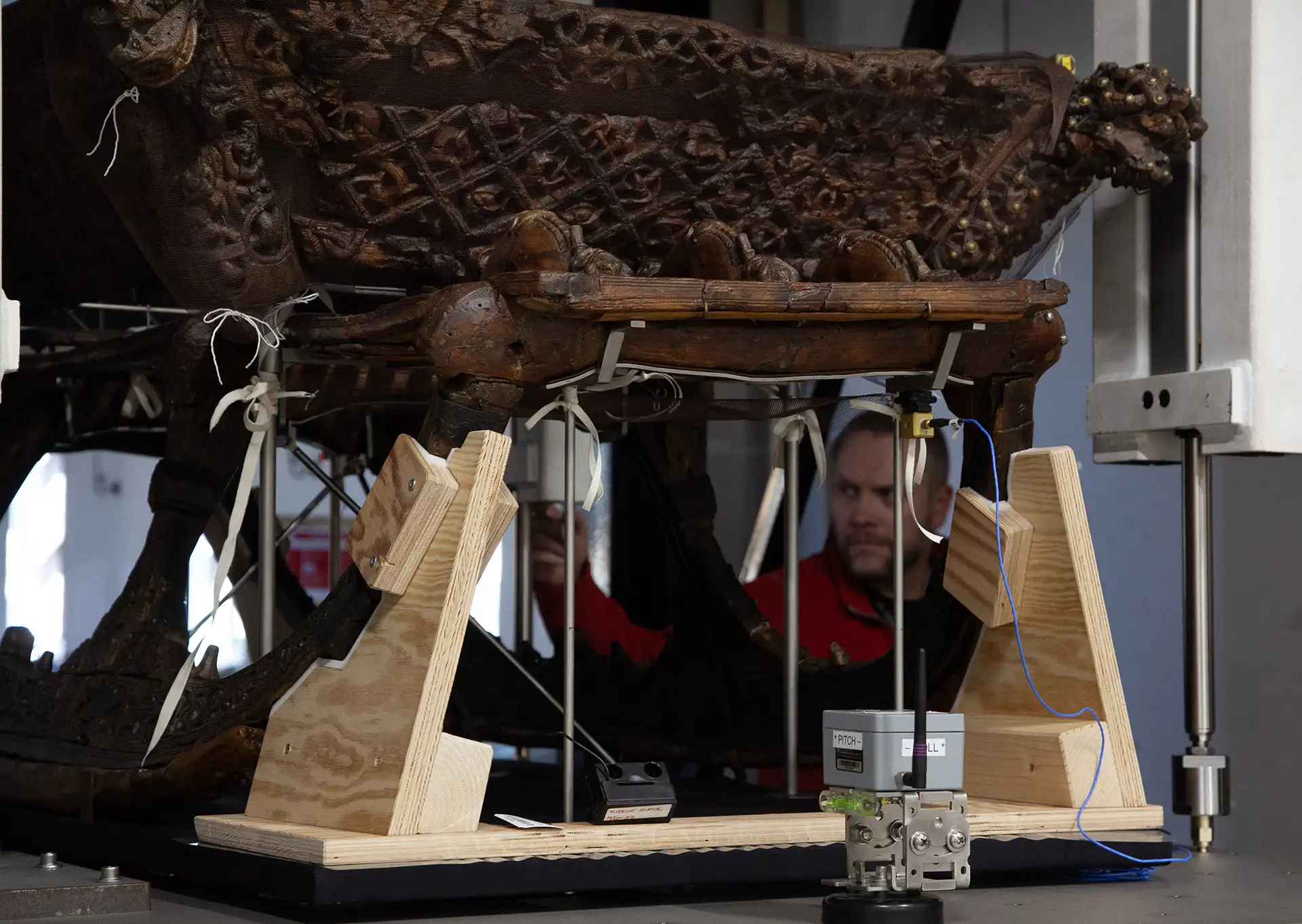
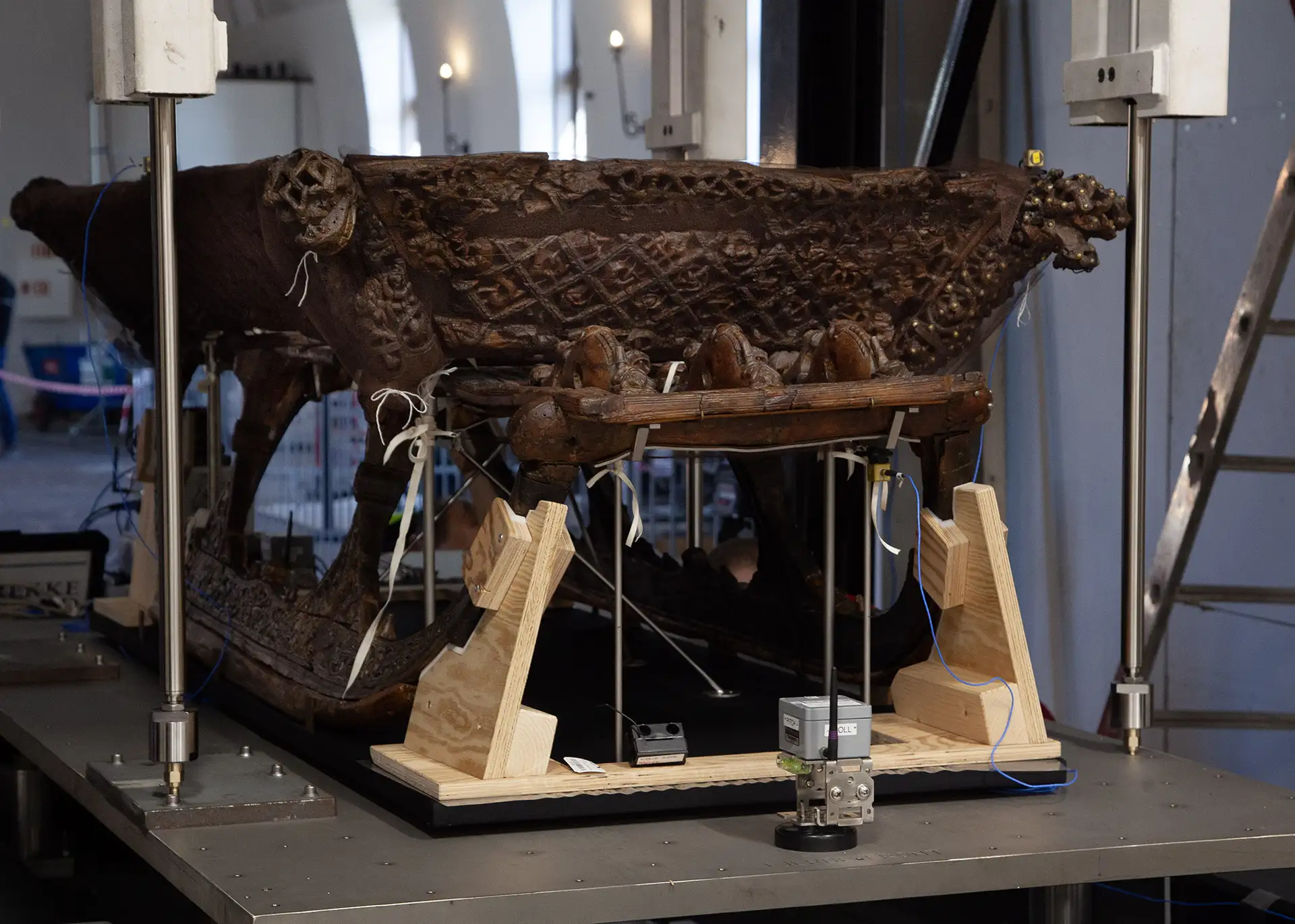
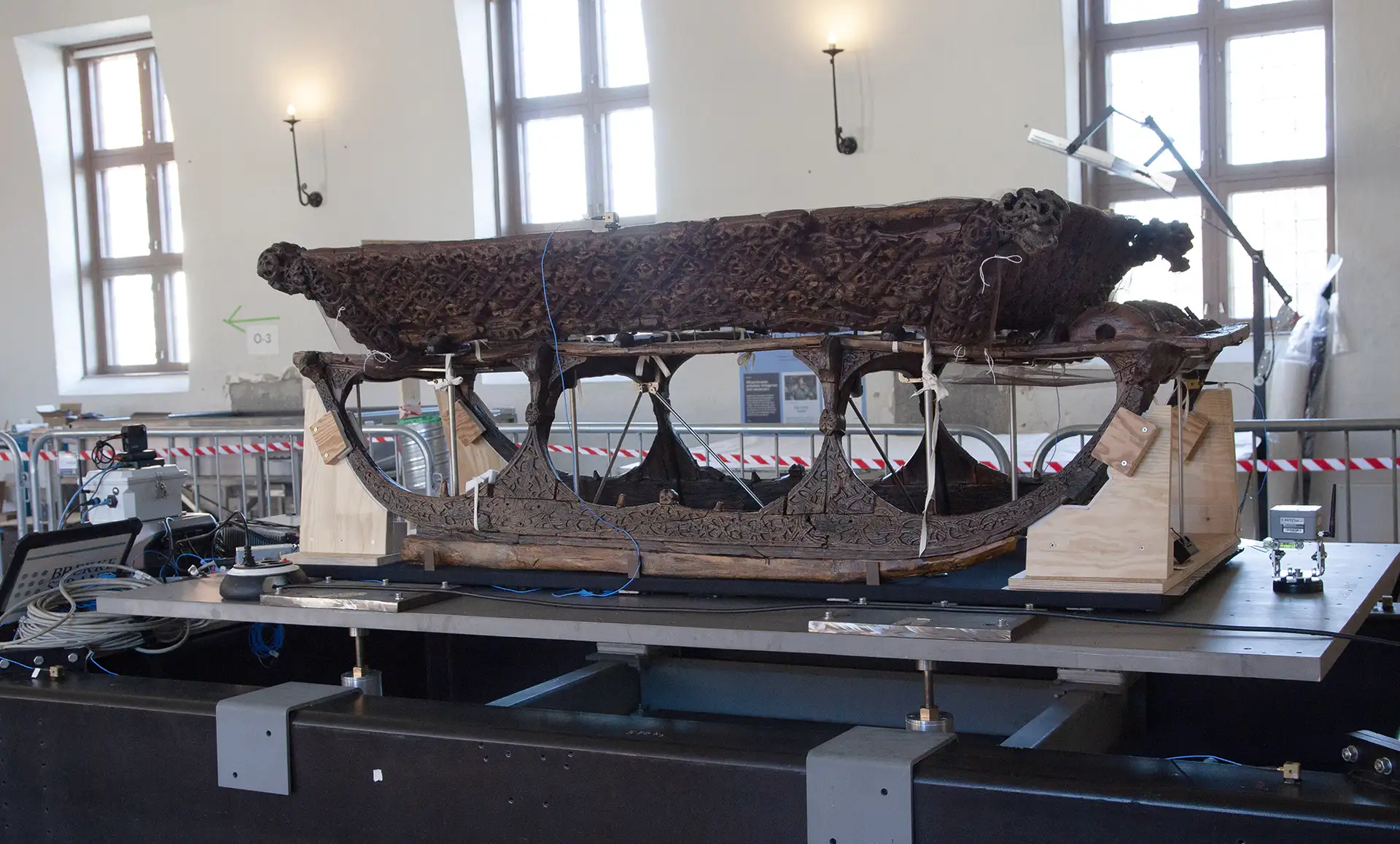
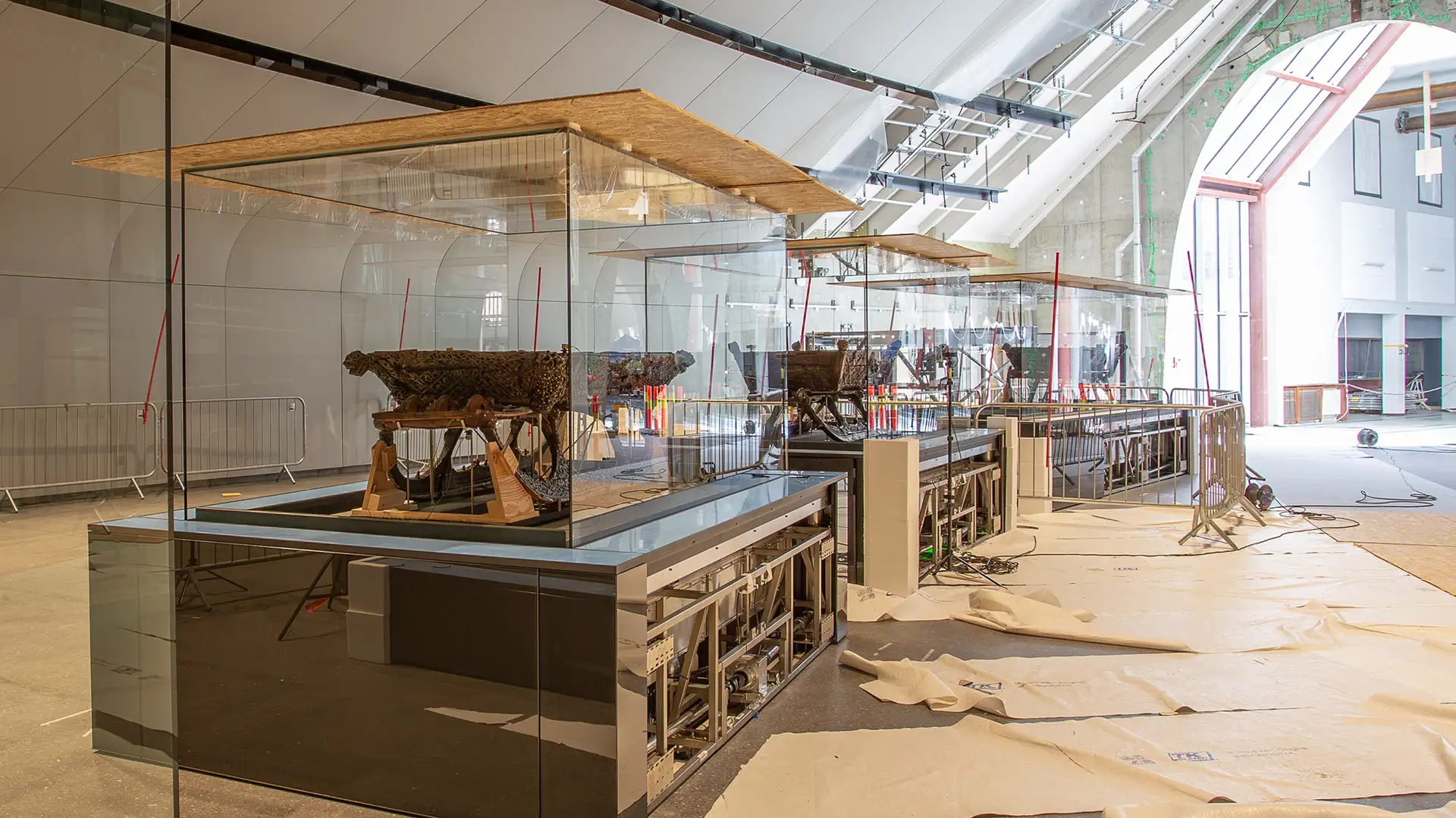
This week, the last of the three fragile sledges was moved into its glass display case in the new museum. With that, Norway’s most spectacular moving project has been completed.
“Even though the moving process was carefully planned over many years, there was of course a risk involved in moving such old, large, and fragile objects. But everything has gone according to plan, and that feels very good. To preserve this cultural treasure for future generations, the objects simply could not remain where they were,” says museum director Aud V. Tønnessen.
View the image in full size. May be used freely by the press with credit.
Photo: Alexis Pantos/Museum om the Viking Age, University of Oslo
View the image in full size. May be used freely by the press with credit.
Photo: Alexis Pantos/Museum om the Viking Age, University of Oslo
View the image in full size. May be used freely by the press with credit.
Photo: Alexis Pantos/Museum om the Viking Age, University of Oslo
View the image in full size. May be used freely by the press with credit.
Photo: Alexis Pantos/Museum om the Viking Age, University of Oslo
View the image in full size. May be used freely by the press with credit.
Photo: Eva Brænd/Museum om the Viking Age, University of Oslo
View the image in full size. May be used freely by the press with credit.
Photo: Alexis Pantos//Museum om the Viking Age, University of Oslo
View the image in full size. May be used freely by the press with credit.
Photo: Alexis Pantos/Museum om the Viking Age, University of Oslo
View the image in full size. May be used freely by the press with credit.
Photo: Eva Brænd/Museum om the Viking Age, University of Oslo
View the image in full size.. May be used freely by the press with credit.
Photo: Eva Brænd/Museum om the Viking Age, University of Oslo
View the image in full size. May be used freely by the press with credit.
Photo: Eva Brænd/Museum om the Viking Age, University of Oslo
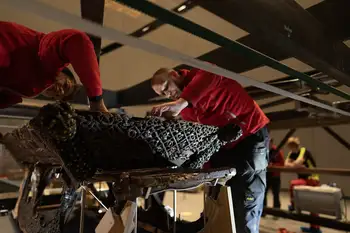
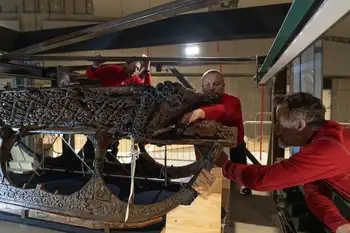
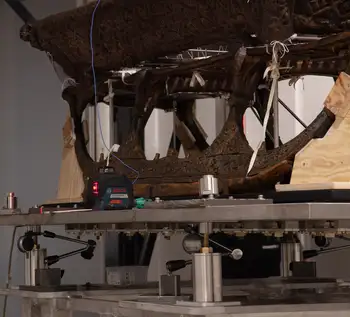
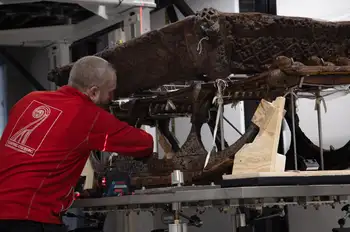
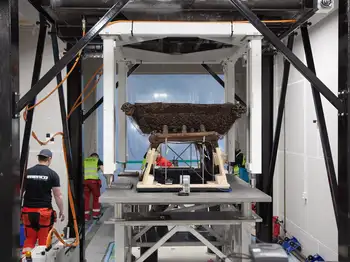
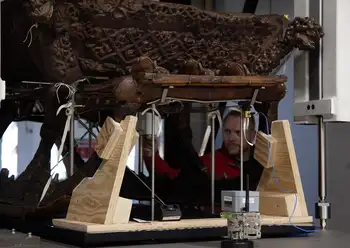
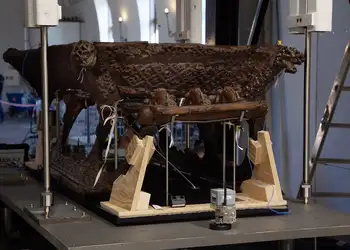
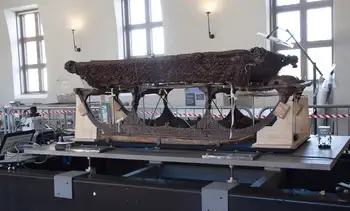
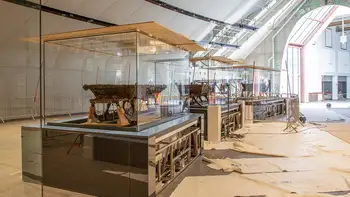
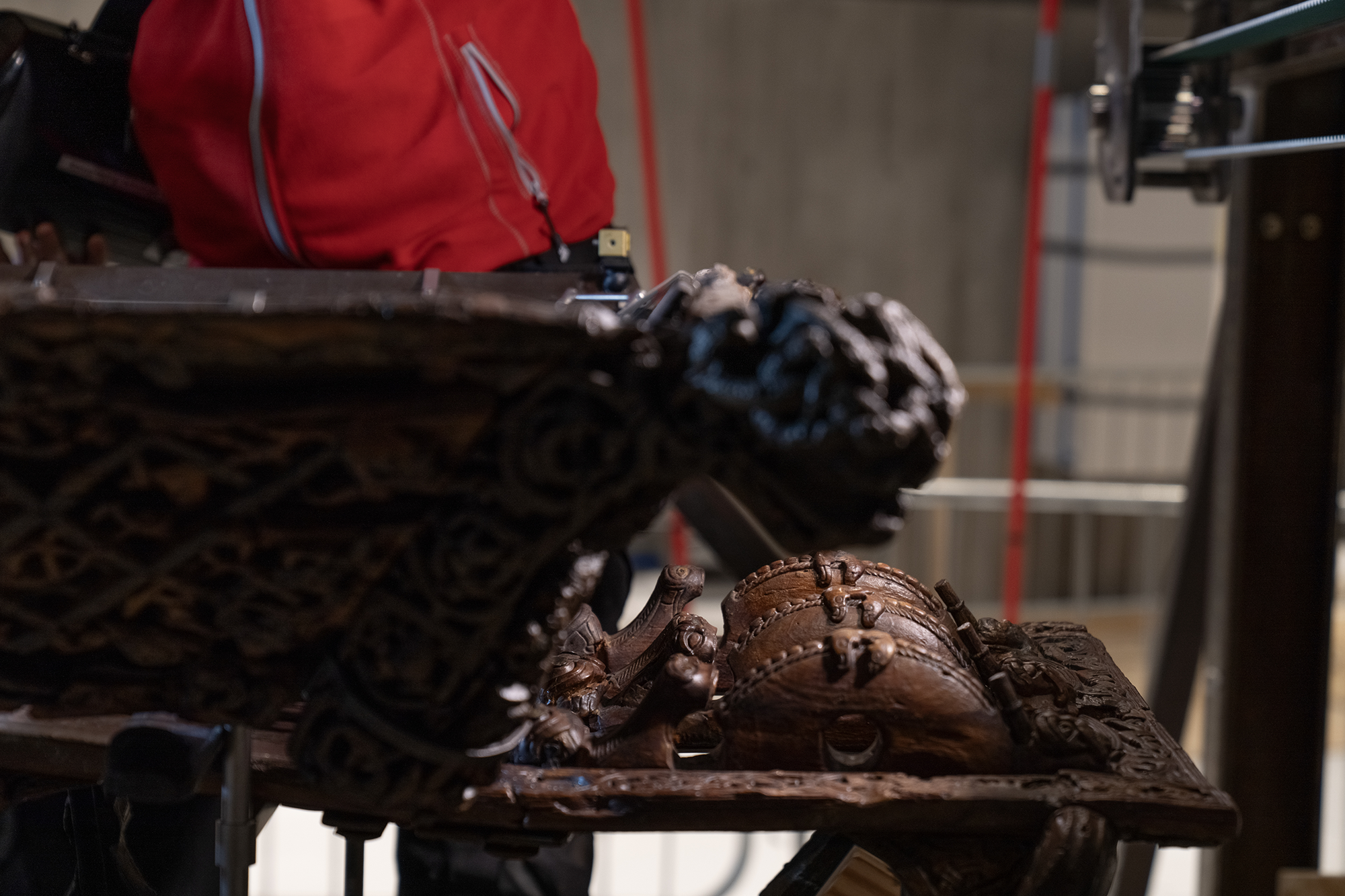
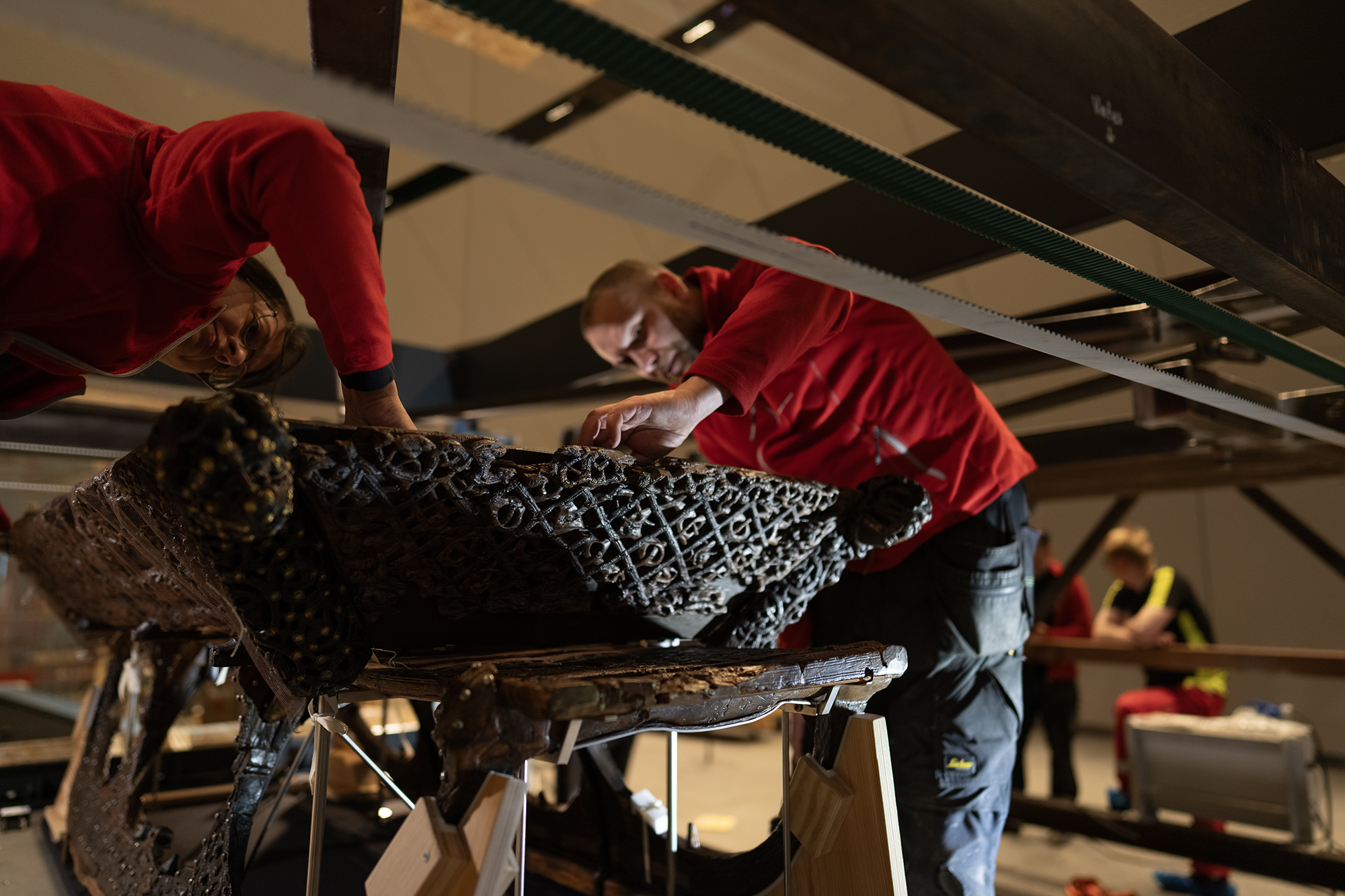
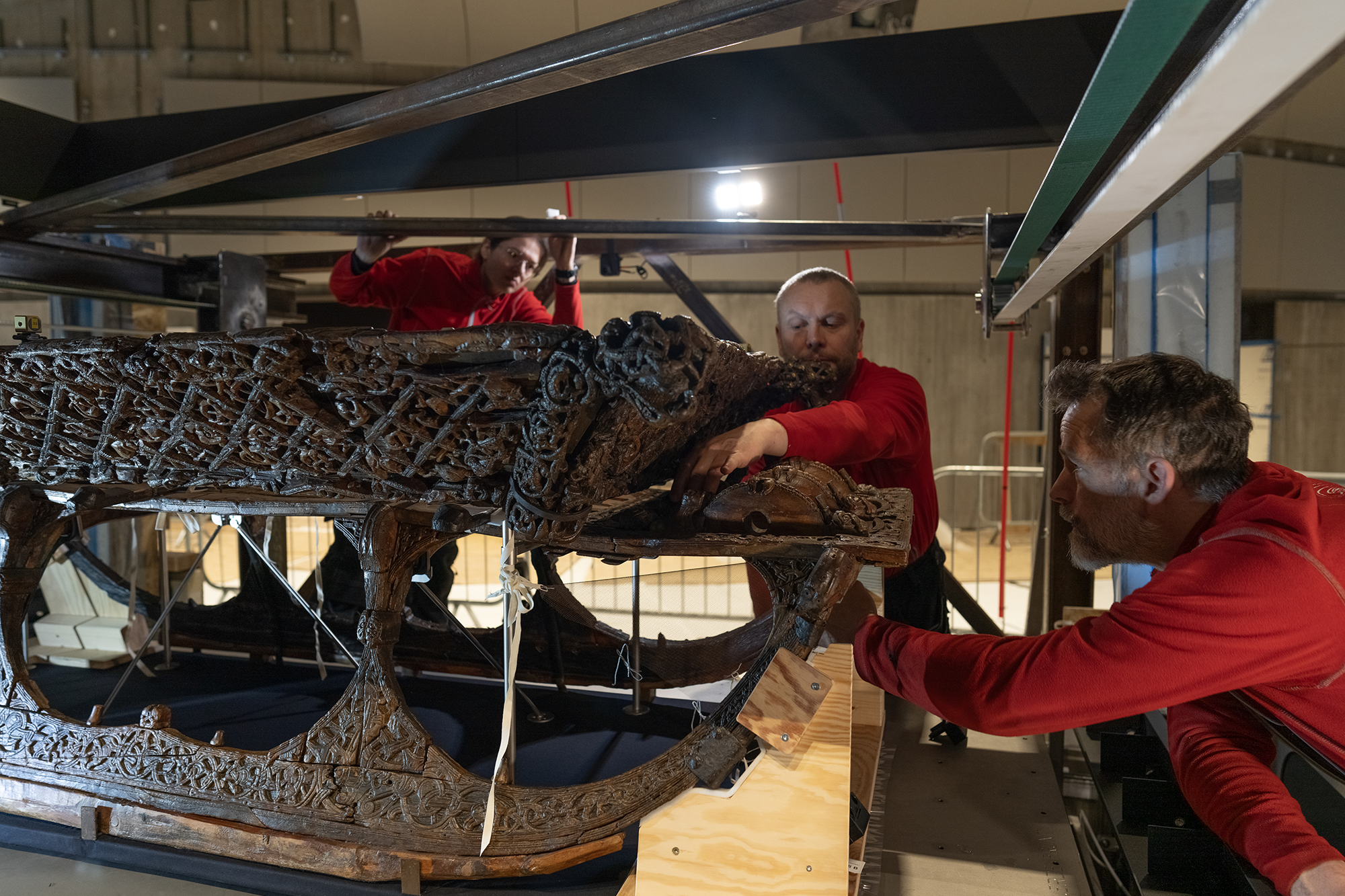
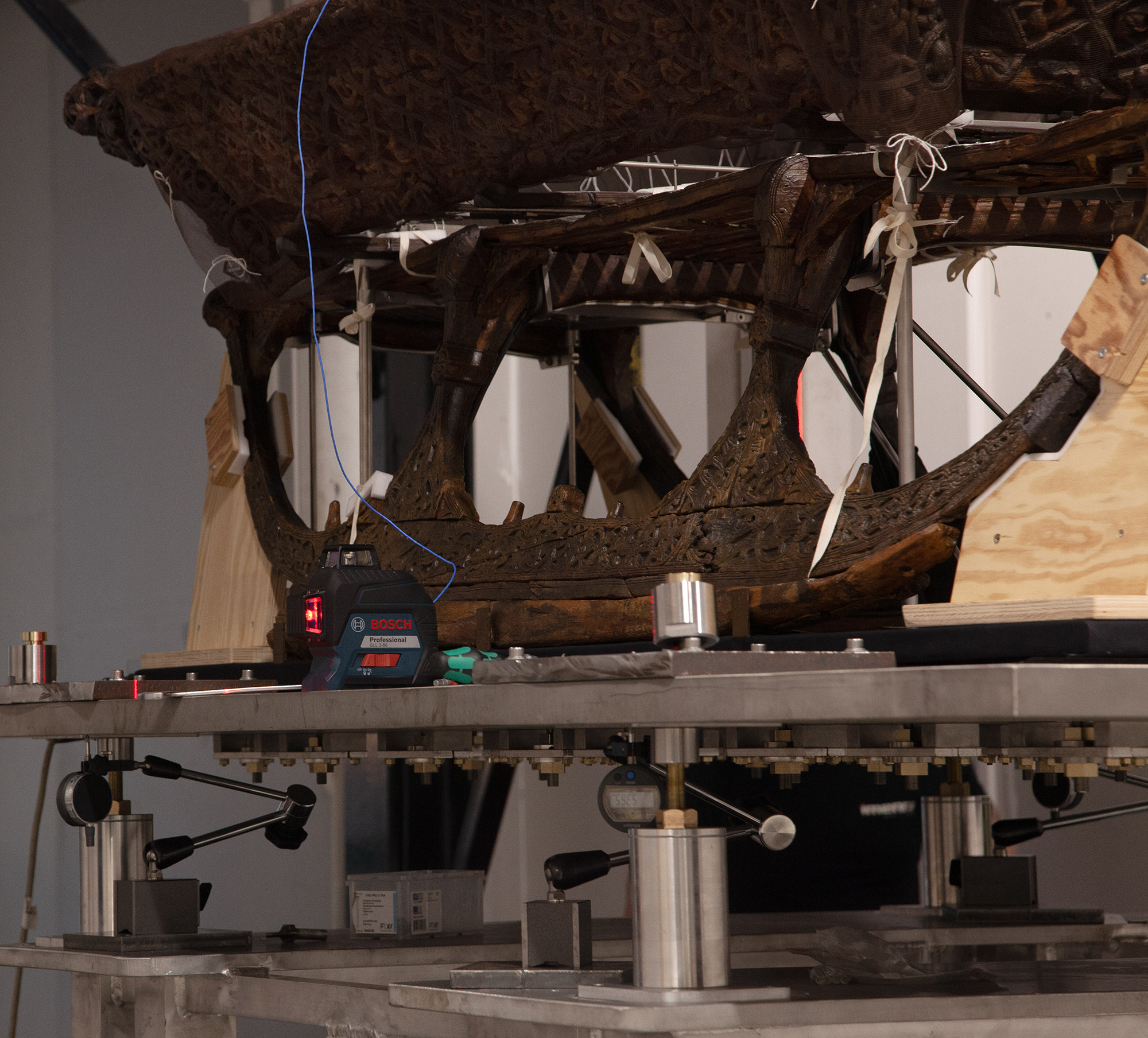
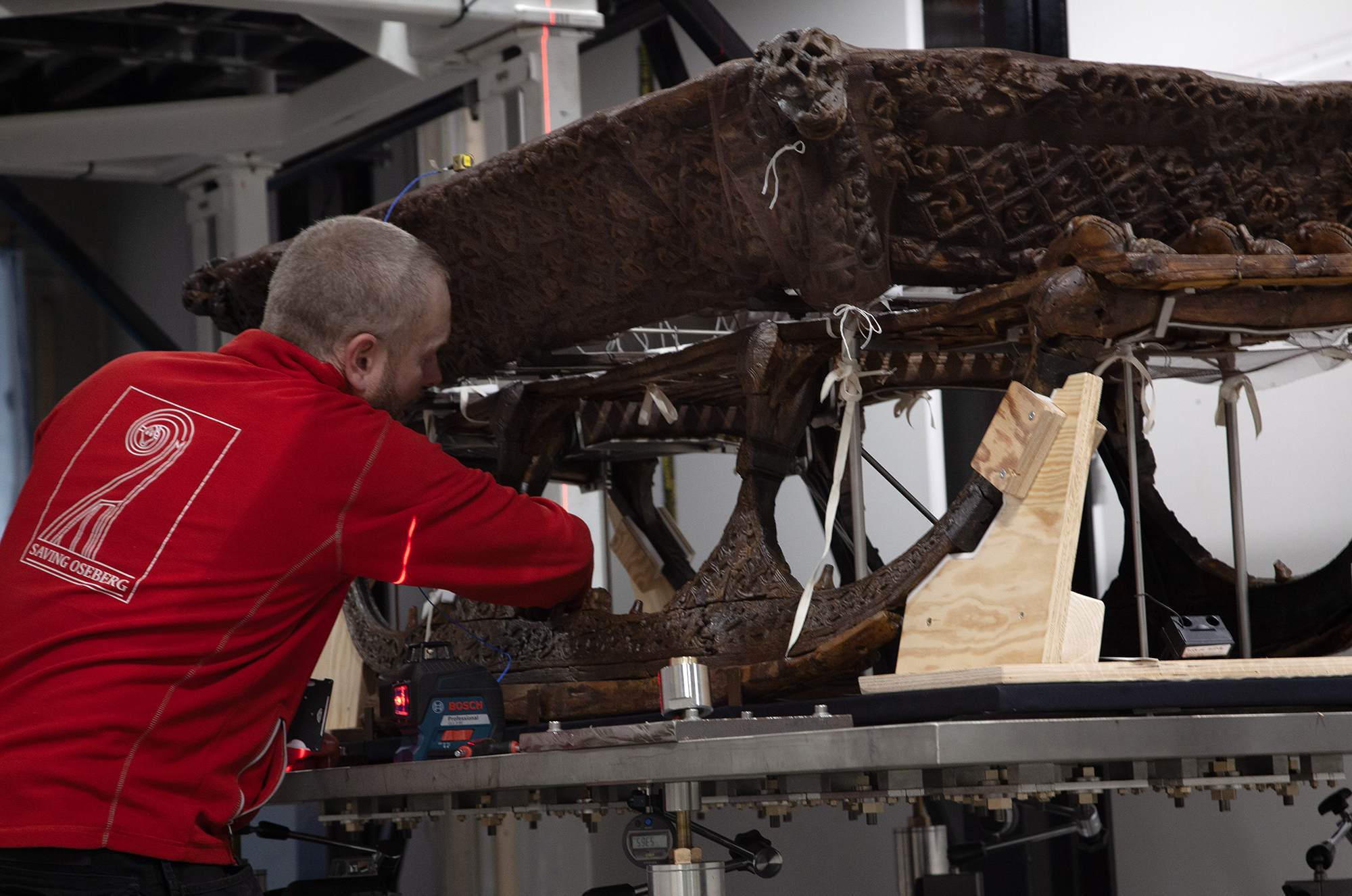
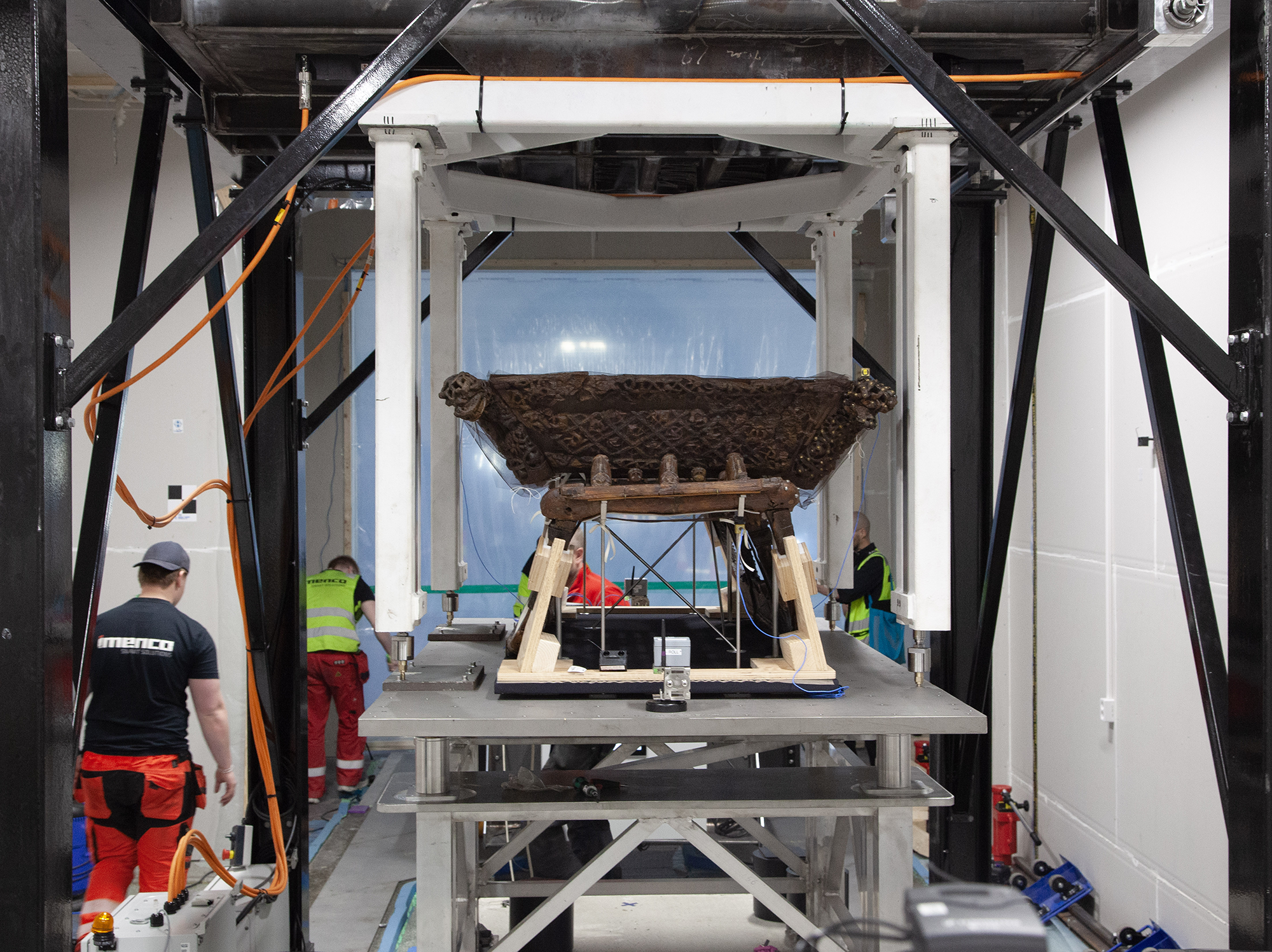
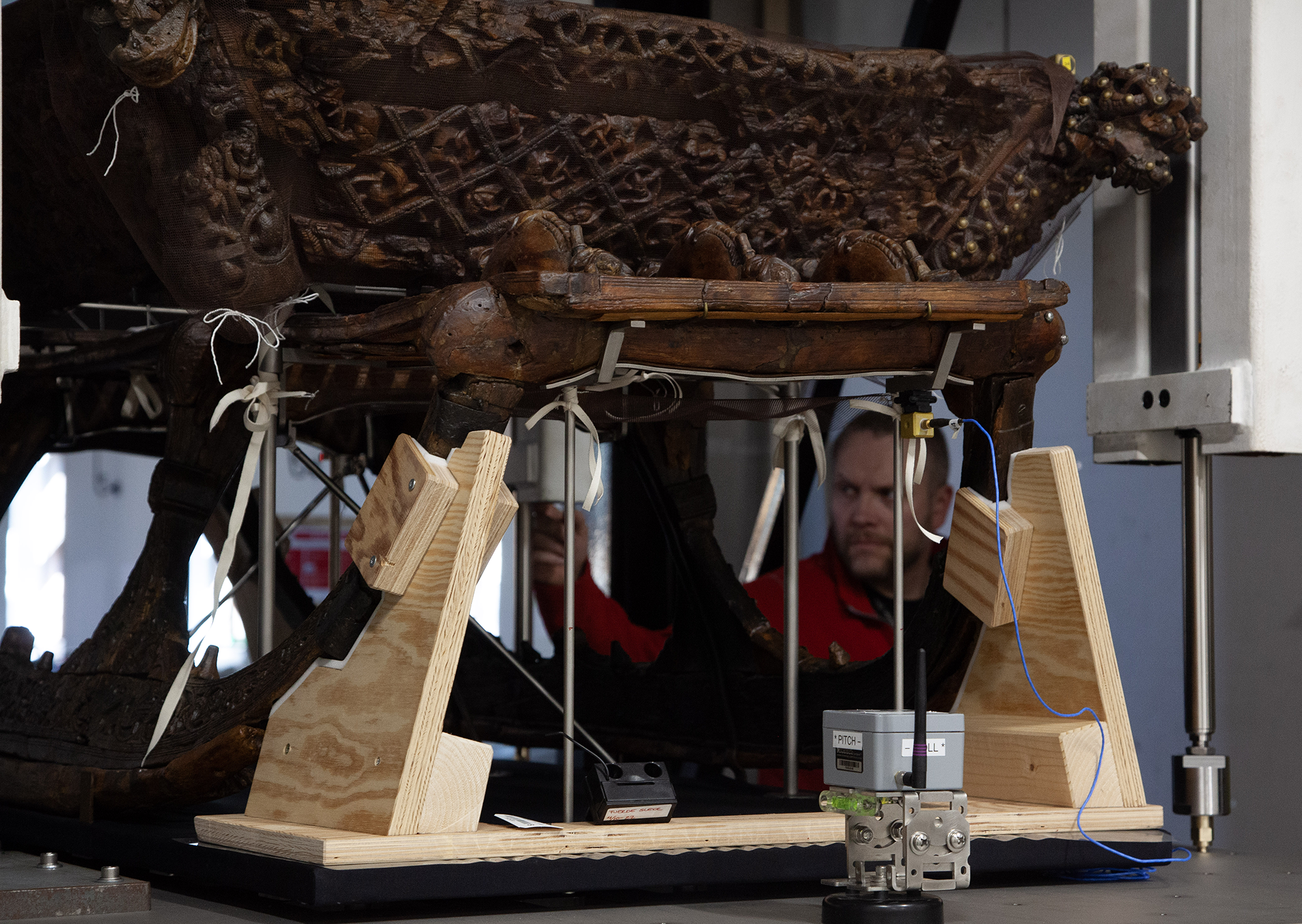
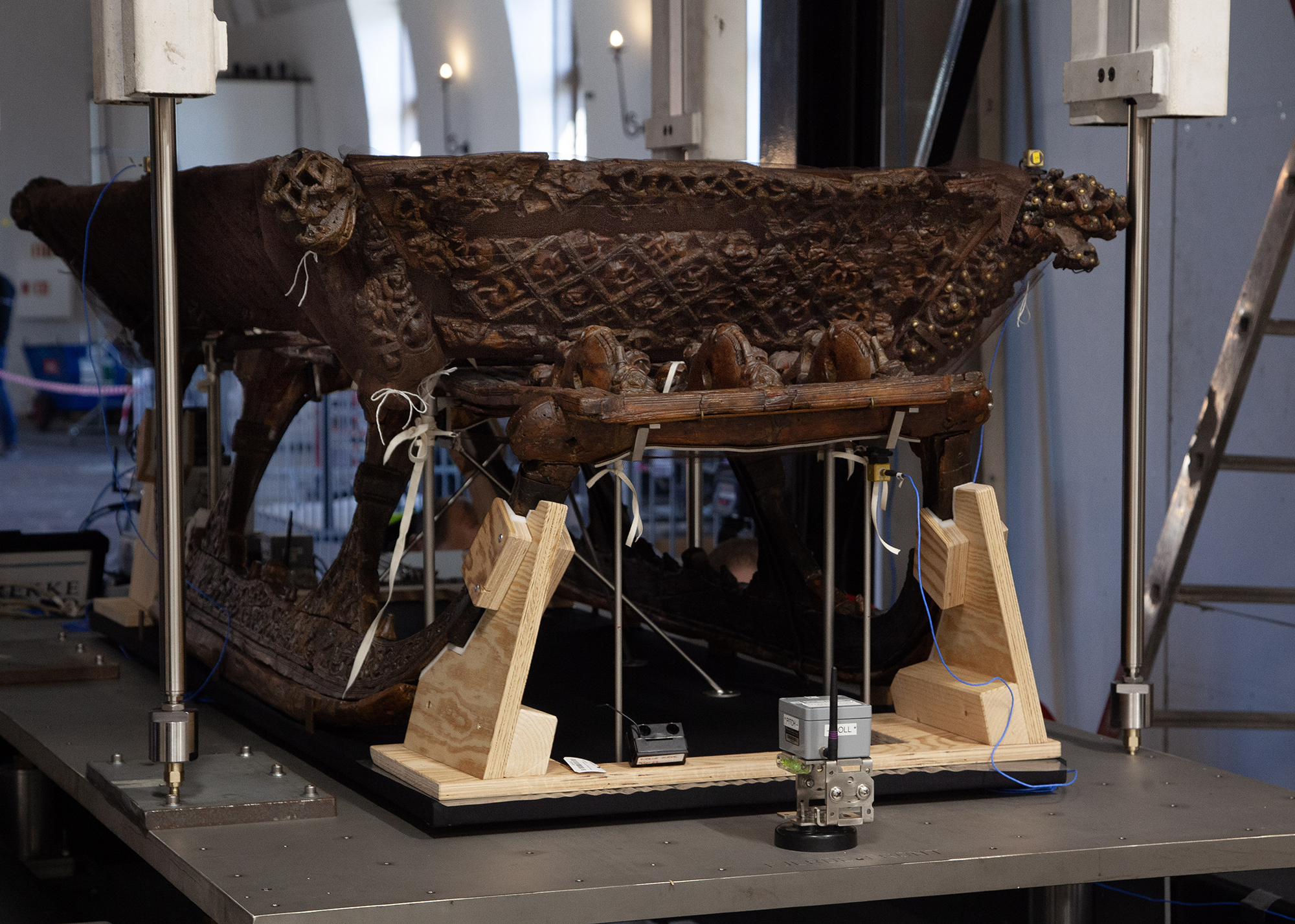
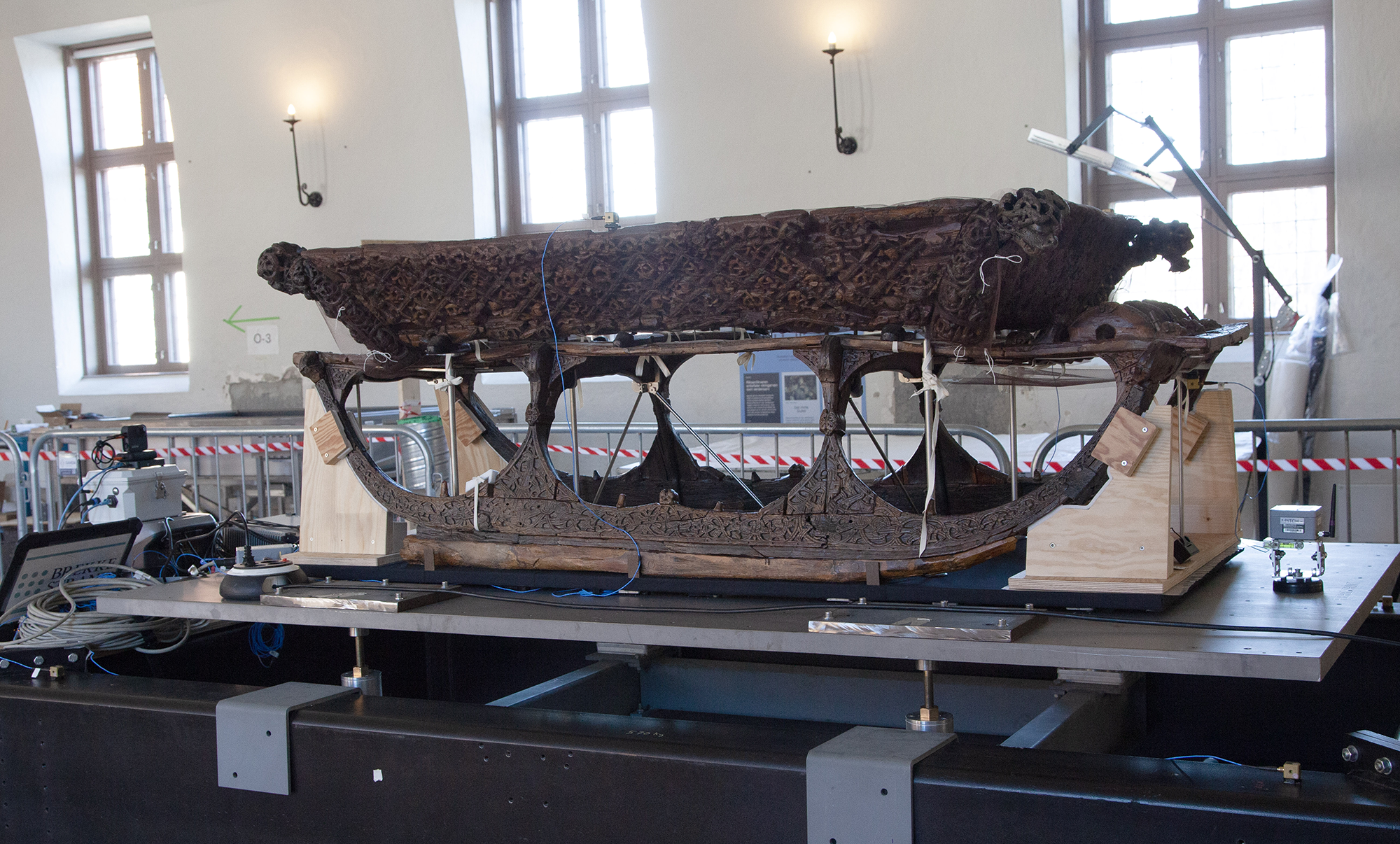
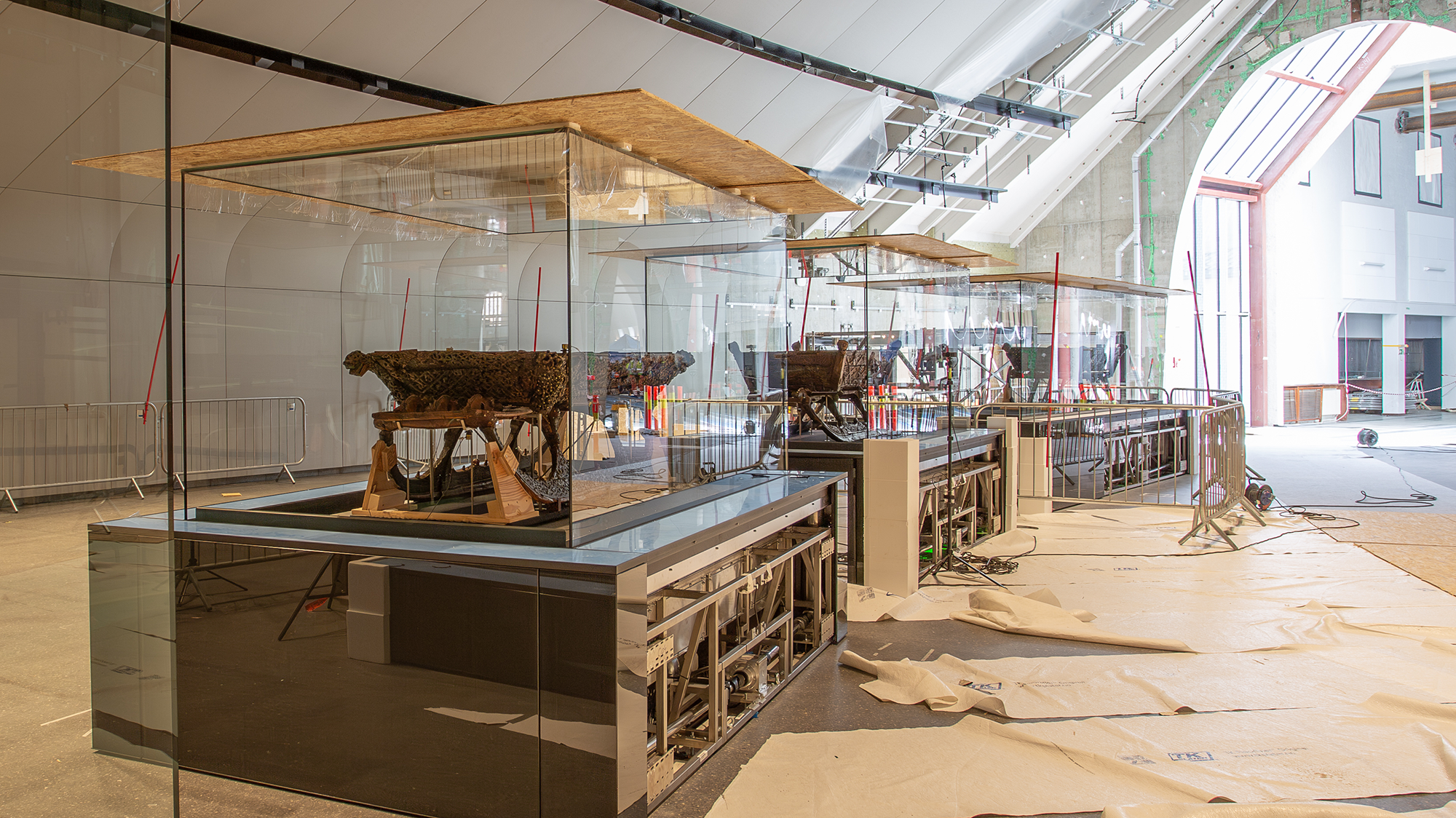
The whole world followed along when the Oseberg ship was moved in September 2025. It took ten hours to move the ship 106.5 metres from the old to the new museum, before it was lowered one floor down to its new home on a vibration‑proof and earthquake‑secure foundation. In the months that followed, the Gokstad ship and the Tune ship were also brought into the new museum, and finally the three delicate and beautiful sledges from the Oseberg burial were moved into their new glass cases.
Preserved for the future
The relocation project has been planned for many years. As early as 2012, a government‑appointed expert committee concluded that the Viking ships could not remain in the old Viking Ship Museum. The old building was not suitable for preserving the ships because of large fluctuations in humidity and vibrations in the floor. In addition, the support system around the ships was inadequate, and without necessary measures they would eventually have collapsed over their supports.
The foremost task of the new Museum of the Viking Age is to safeguard these cultural treasures for new generations. The cultural heritage is given optimal conditions with climate control, vibration‑proof bases, and new support systems.
Over 5,000 objects to be installed
Even though the ships and sledges are now in place in the new museum, a lot of work remains before the museum can, according to plan, open its doors next year. Construction work is ongoing both outside and inside, and the Viking ships are still standing in large specially constructed steel cradles that will keep them safe throughout the building phase. Later this year, these will be dismantled and replaced with an entirely new support system. In addition, more than 5,000 other objects from the Viking Age are to be installed in the new museum.
The old museum building, which stands wall‑to‑wall with the new museum, has now been completely emptied of museum objects. In the time to come, the building will be rehabilitated and prepared for new uses.
“Among other things, the entrance area, shop, and school and activity rooms will be located there. The new museum will offer fantastic experiences when it is finished, and we are very much looking forward to opening the doors,” says Tønnessen.