Published
Sep. 30, 2026 8:02 PM
More than 5,000 artefacts are to be moved from the museum’s storage facilities to the new museum. The first shipment has now arrived at Bygdøy.
More than 5,000 artefacts are to be moved from the museum’s storage facilities to the new museum. The first shipment has now arrived at Bygdøy.
The revised national budget secures the necessary maintenance and renovation of the former Viking Ship Museum at Bygdøy, Oslo.
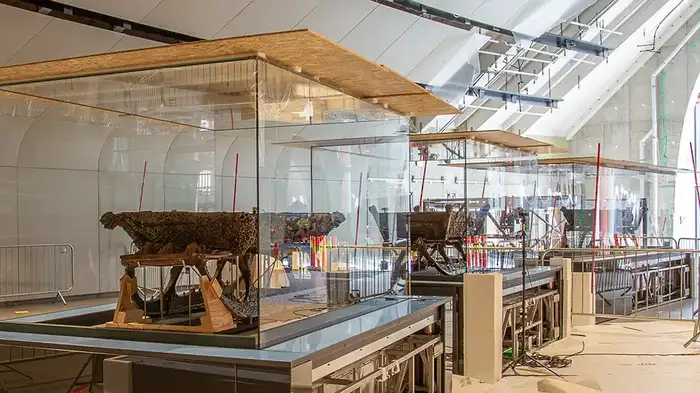
It has been a few nerve‑racking months. But now all the Viking ships and the unique sledges from the Oseberg burial are safely in place in the new Museum of the Viking Age.
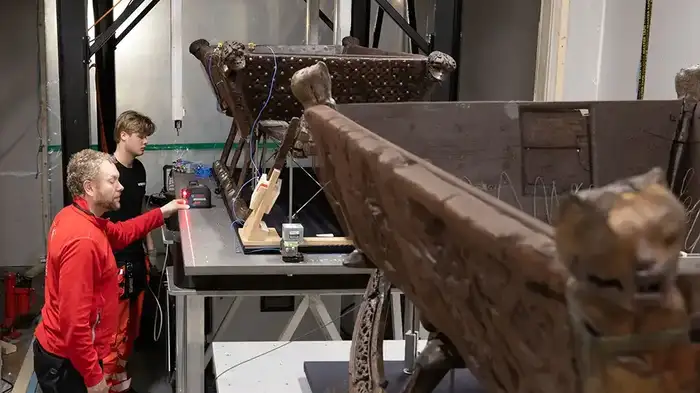
The second sledge is now safely installed in its display case in the new Museum of the Viking Age. The move took two days and requires millimetre precision and special clothing.
Moving the fragile sledges from the Oseberg find is more demanding than moving Viking ships. The first one has now been installed.
David Hauer, Head of Conservation for the relocation, talks us through the condition of the sledges and why they are almost impossible to move.
The move to the new Museum of the Viking Age has reached its most nerve-racking phase – bringing the fragile Oseberg sleds safely into the new museum.
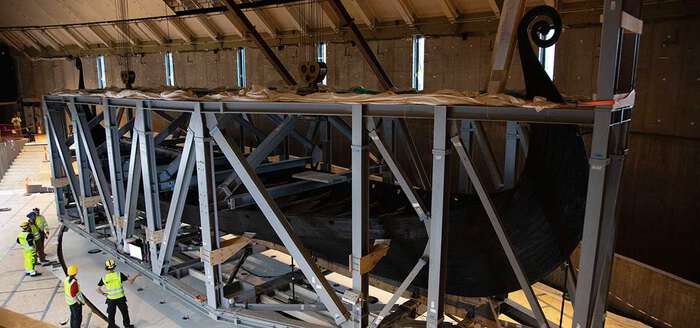
After a journey of 130 metres, and a nerve‑racking descent down one level to the floor below, the last Viking ship is now safely installed at the Musem of the Viking Age.
23 February will be the starting point for the relocation of the third and final Viking ship, as the Tune Ship sets out on its journey from the former Viking Ship Museum and into the Museum of the Viking Age.
Norway’s most spectacular relocation project continues. Next up is the move of the Tune ship and the fragile, magnificent sleds from Oseberg.
Seven Viking ship burial mounds are recommended for Norway’s tentative list for UNESCO World Heritage.
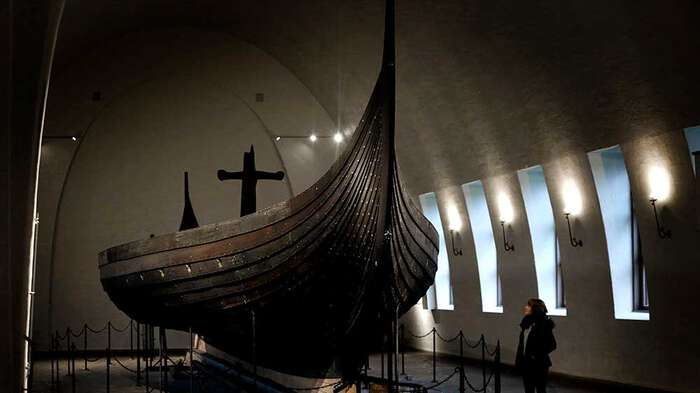
After about ten hours and 94 meters, the Gokstad Ship has also been positioned in the new museum building. With this, the world's two best-preserved Viking ships are securely housed in the Museum of the Viking Age.
The day is finally here; the Gokstad Ship, the world's largest preserved Viking ship, has been moved to its new location in the new museum building.
Why do the Viking ships need to be relocated? What are the chances of encountering problems during the process? In this piece, we provide answers to essential questions about Norway's most remarkable relocation project.
The Gokstad Ship prepares for part two of Norway's most spectacular relocation project on October 29th.
100 meters, 10 hours, and one Viking ship. The Oseberg Ship is now safely placed in its new home.
After around ten hours and 106.5 meters, the Oseberg ship has reached its destination. Norway's most spectacular relocation project is safely in harbor.
This is the world's best-preserved Viking ship, and it plays a key role in our understanding of the Viking Age.
The Oseberg Ship was discovered in 1903 outside Tønsberg in Vestfold. It turned out to be the most magnificent Viking grave ever found, and it remains the world's most significant discovery from the Viking Age.
Later this year, the Viking ships will be moved for the first time in nearly 100 years in what is likely Norway's most spectacular moving project.
The UNI Foundation has awarded the 2025 Preservation Prize to the University of Oslo for the construction of the Museum of the Viking Age. Along with the prize comes a donation of 70 million Norwegian kroner.
After more than 100 years in storage, the original serpent's head from the Oseberg Ship will be displayed to the public for the very first time.
Sigrun G. Aasland (Labor Party) gained insight into the complicated construction project, where much is proceeding as planned. However, there are still challenges that need to be resolved before the museum can open its doors.
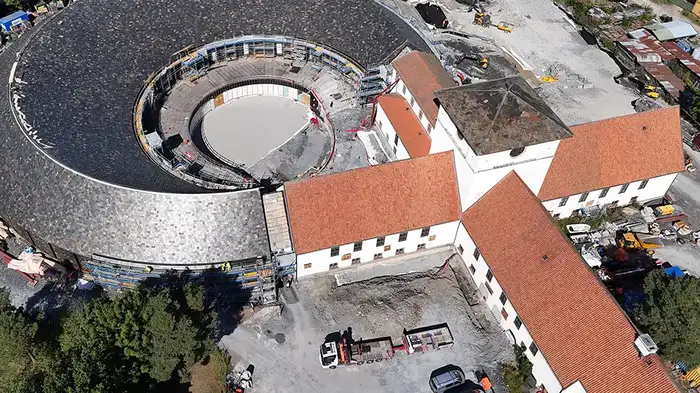
This week, another milestone was reached for the Museum of the Viking Age with the roof installation completed on the new museum building.
Tuesday was a historic day for the Museum of the Viking Age when the foundation stone was laid at Bygdøy, Oslo.




.jpg?alt=listing)