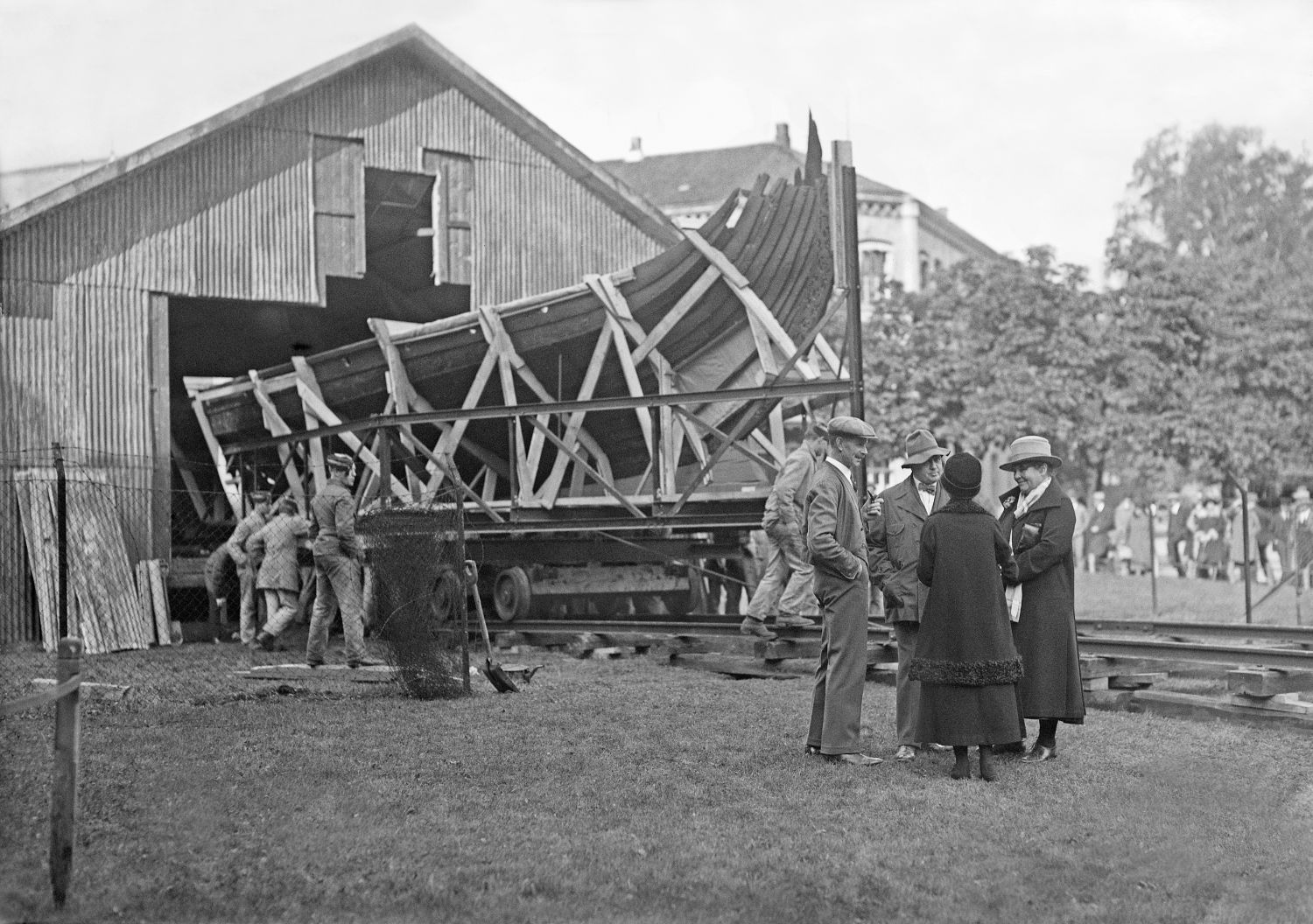
The interest in the Viking Ship Museum, with its Viking ships and objects was enormous from the first moment, right from the archaeological excavations in the 19th and 20th centuries. The Tune ship was excavated in 1867, the Gokstad ship in 1880 and the Oseberg ship in 1904, and a debate about where the ships should be exhibited started almost immediately. The ships were first placed in a shed in the University Garden, but conditions were poor.
In June 1914, architect Arnstein Arneberg was awarded 1st prize in the architectural competition for the new museum for the Viking ships, with the project named «The Queen of Oseberg». The Viking Ship Museum was built in several stages. Initially, only the wing that housed the Oseberg ship was opened in 1926. Then the wings with the Gokstad ship and the Tune ship were buildt. These opened in 1932. The war postponed construction for a few years, and it was not until 1954, that the vestibule and wing with the objects from the Oseberg ship could be opened and the Viking Ship Museum, as we know it today, was completed.
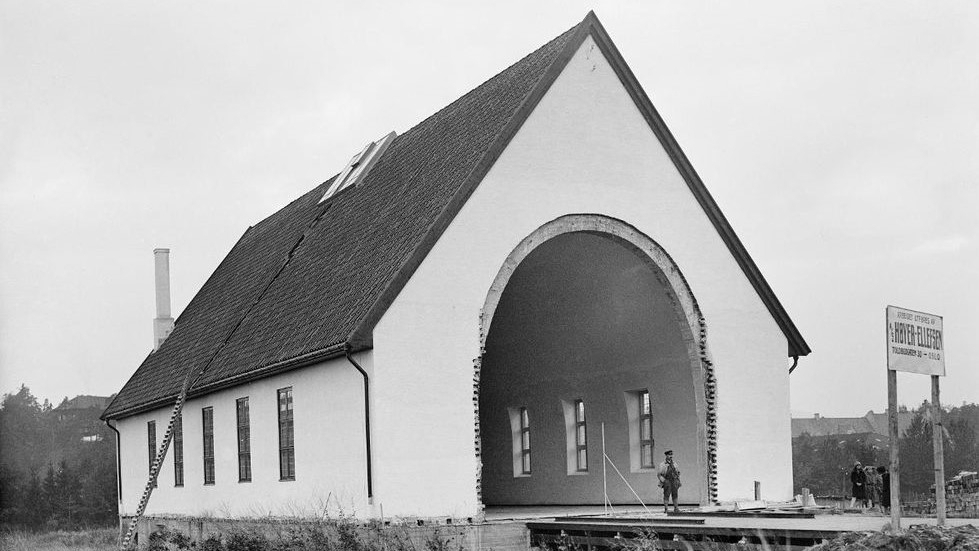
First construction stage, before the Oseberg ship moved in. From 1926.
Second construction stage. Photographed in 1930.
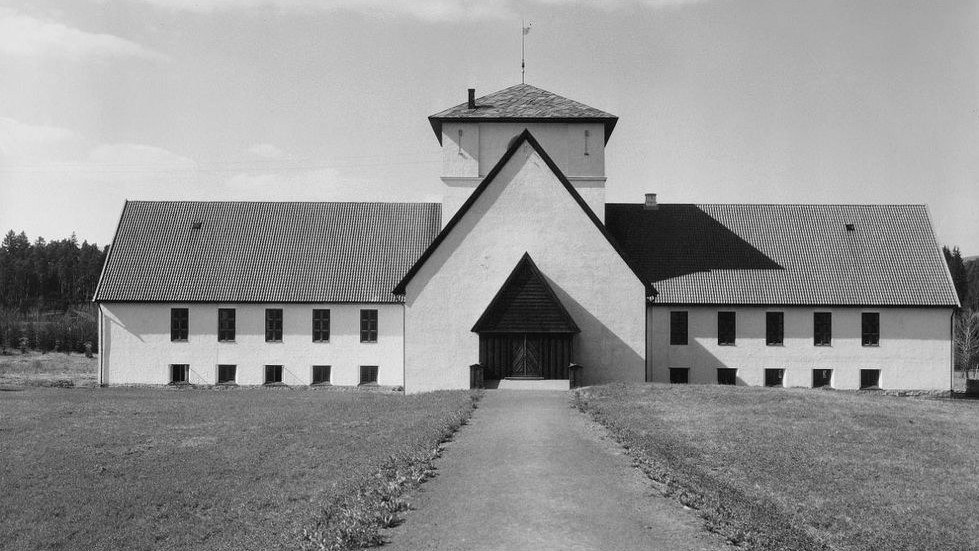
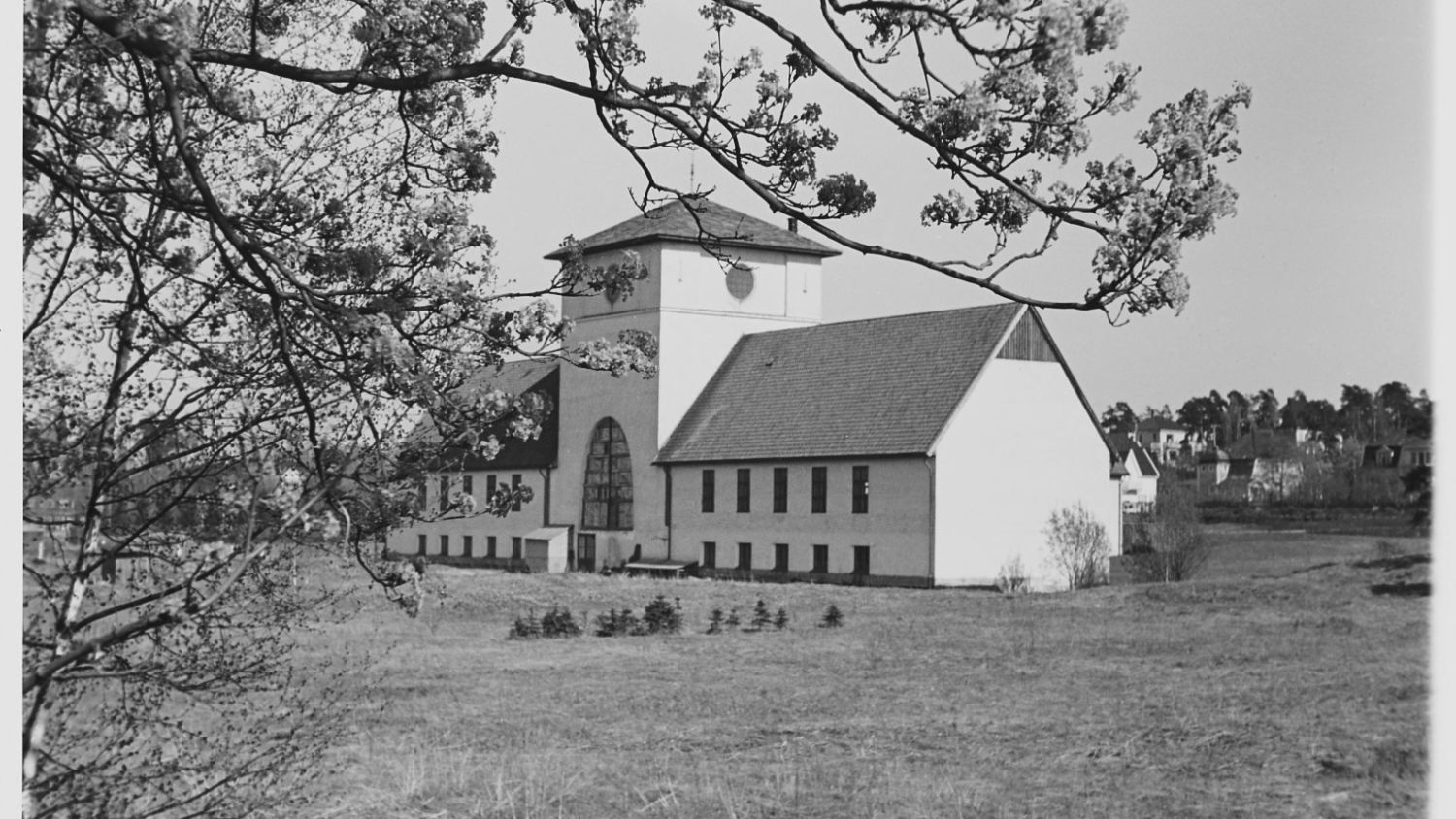
Second construction stage. Photographed in 1932.
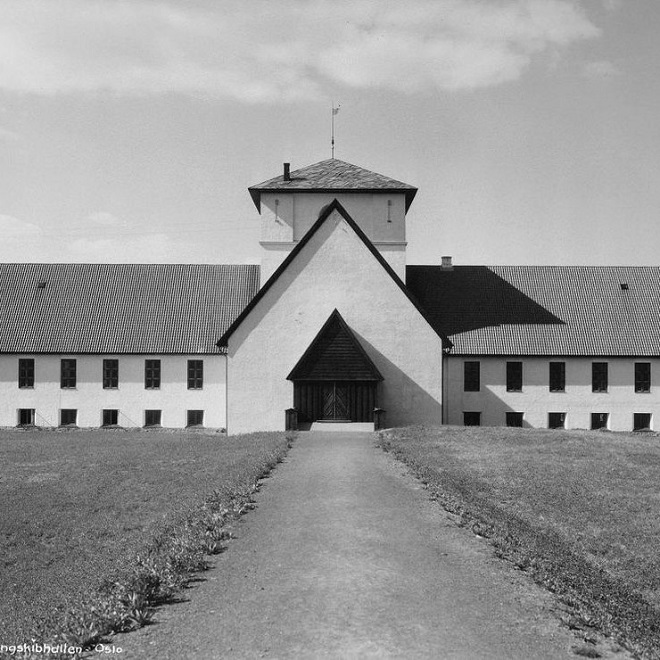
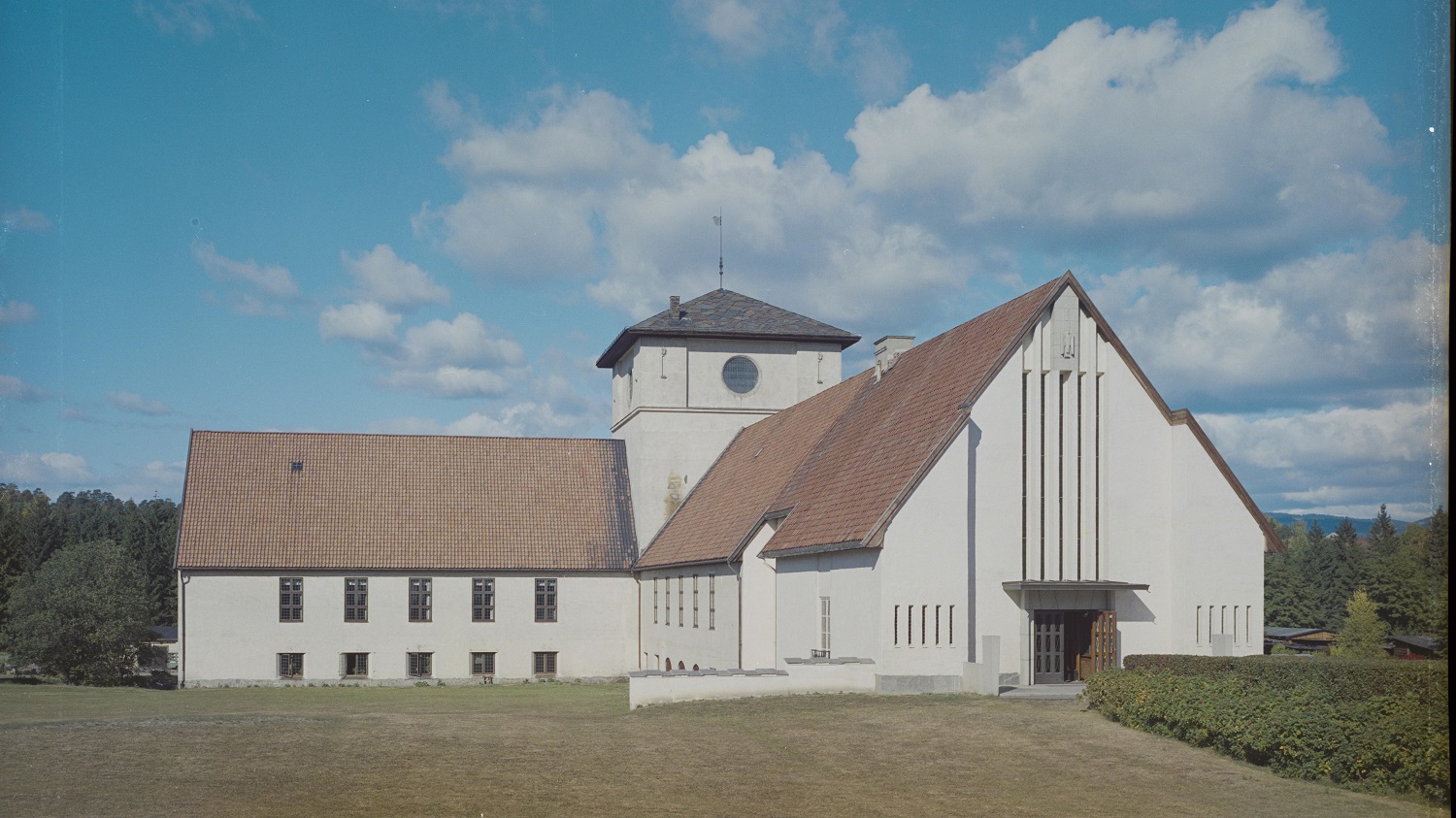
Last construction stage with finished facade. Photo from 1955.
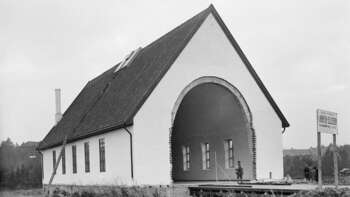
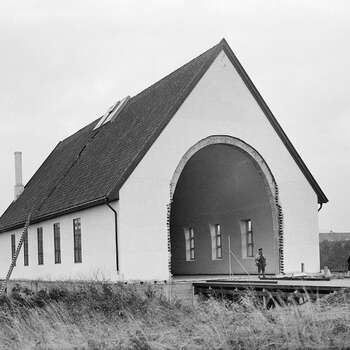
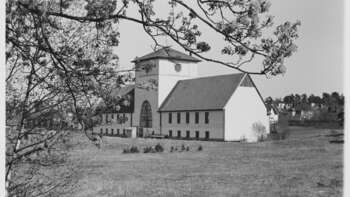
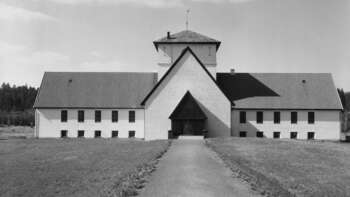
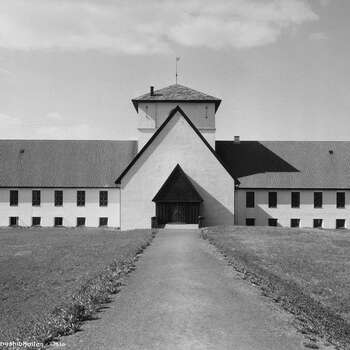
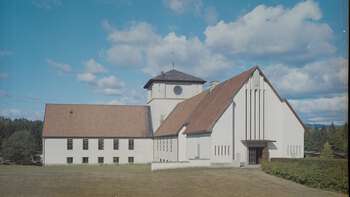
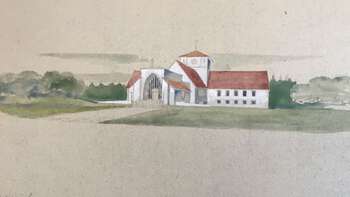
Arnstein Arneberg's winning project from 1914 was a seemingly square building characterized by Nordic neo-baroque with strong references to the medieval Romanesque and Gothic style. The finished museum got a quite different look than what had been Arneberg's original intention. Instead of a manor-like appearance, the building has compared to a church. In the shape of a cross, the original entrance, the central tower, the interior vaults and the rough-plastered, lime-treated walls of course contribute greatly to the association.
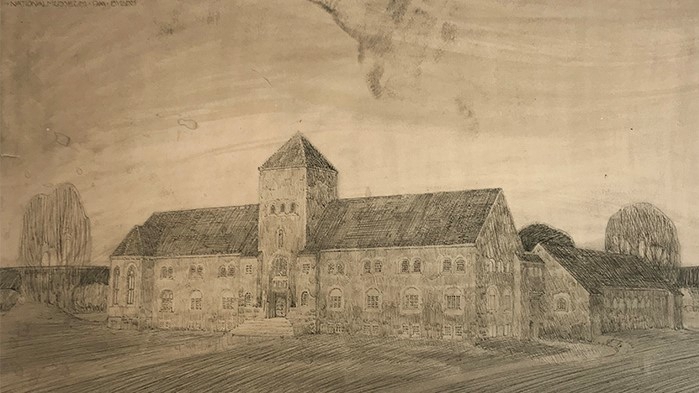
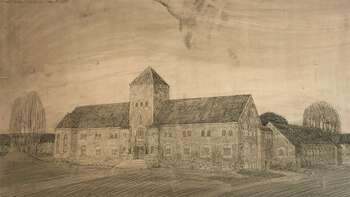
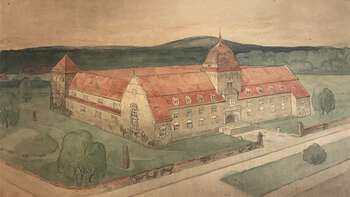
Arneberg's original competition drawing for "The Queen of Oseberg".
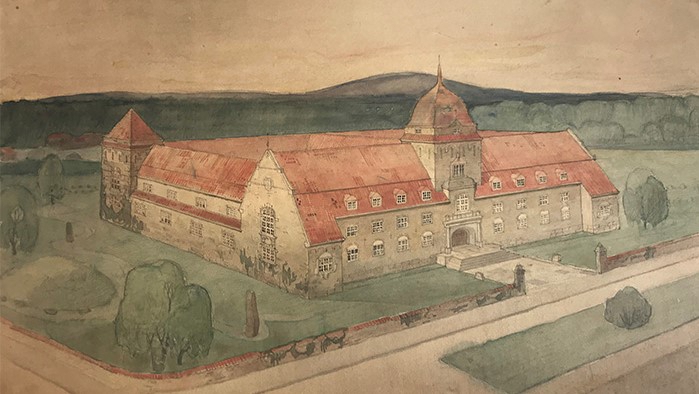
Arneberg adapted the winning project in 1914 into a more refined expression in the Nordic neo-baroque style.
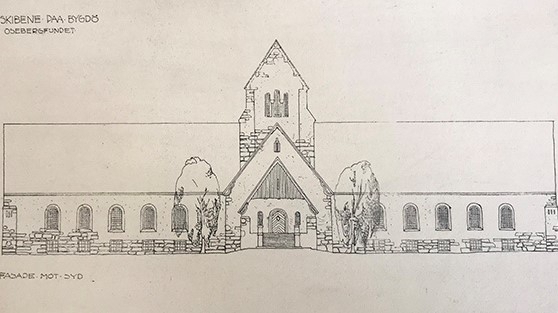
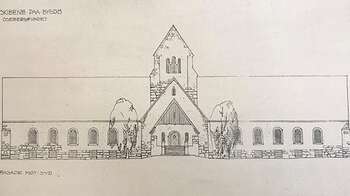
Sketch by architect Arneberg from 1915, of the entrance to the south.
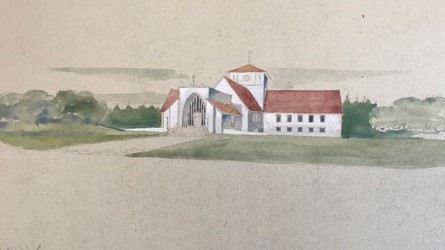
One of Arneberg's drafts for the third construction phase. It is dated July 1953.
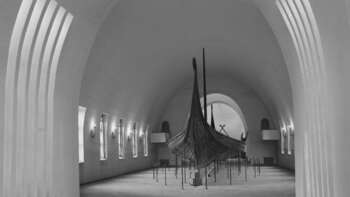
Inside the Viking Ship Museum, the design of the halls emphasizes the ships and creates spatial experiences through form, light and shadow. The architecture was to both subordinate itself and reinforce the historical objects. Soft, whitewashed vaults go all the way down to the floor in the wings where the ships are displayed. Here, there are no disturbing lines between the roof and the walls that affect the experience of the ships' own lines.
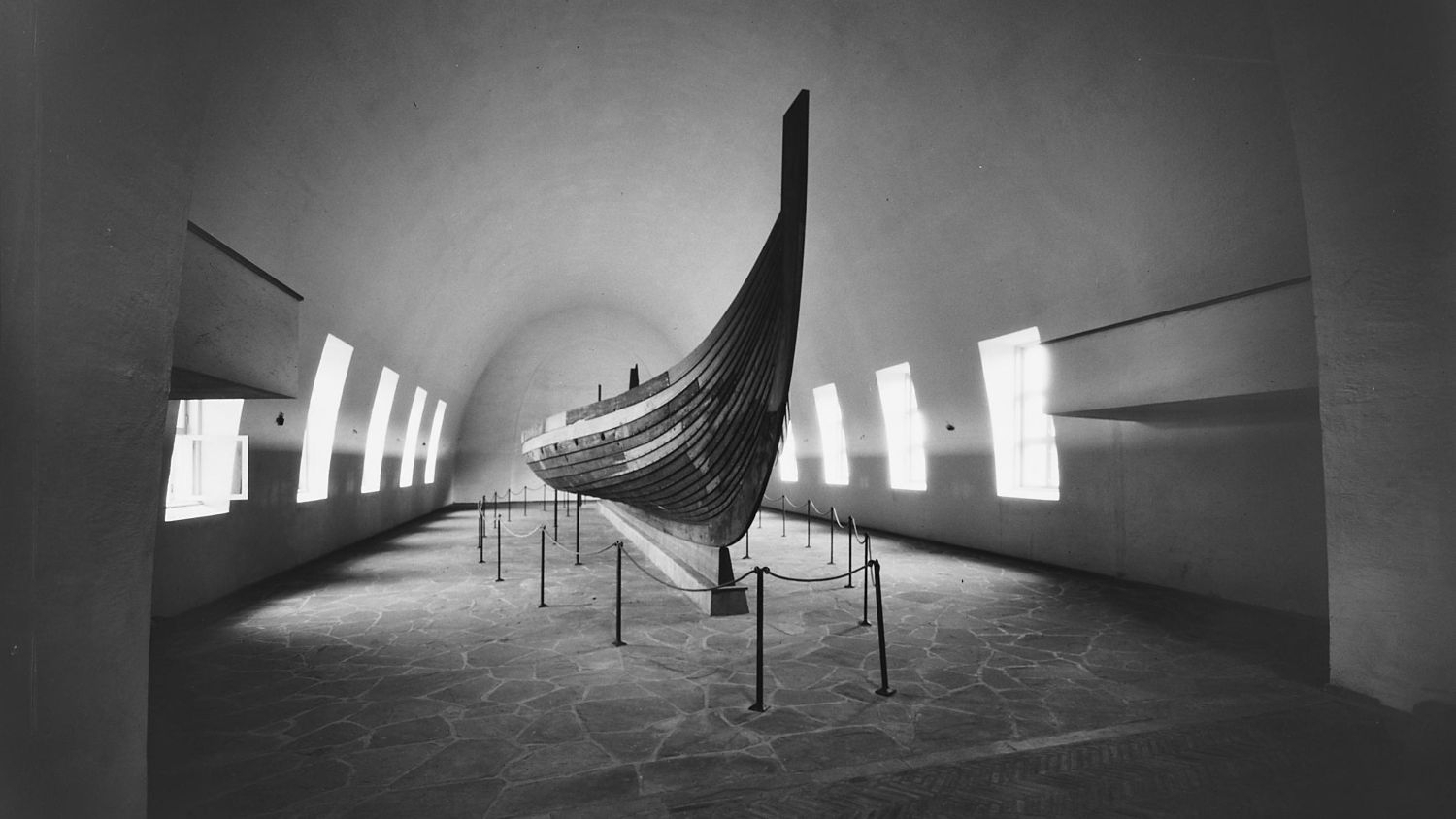
The Gokstad Ship in 1932. Photographed by Anders B. Wilse.
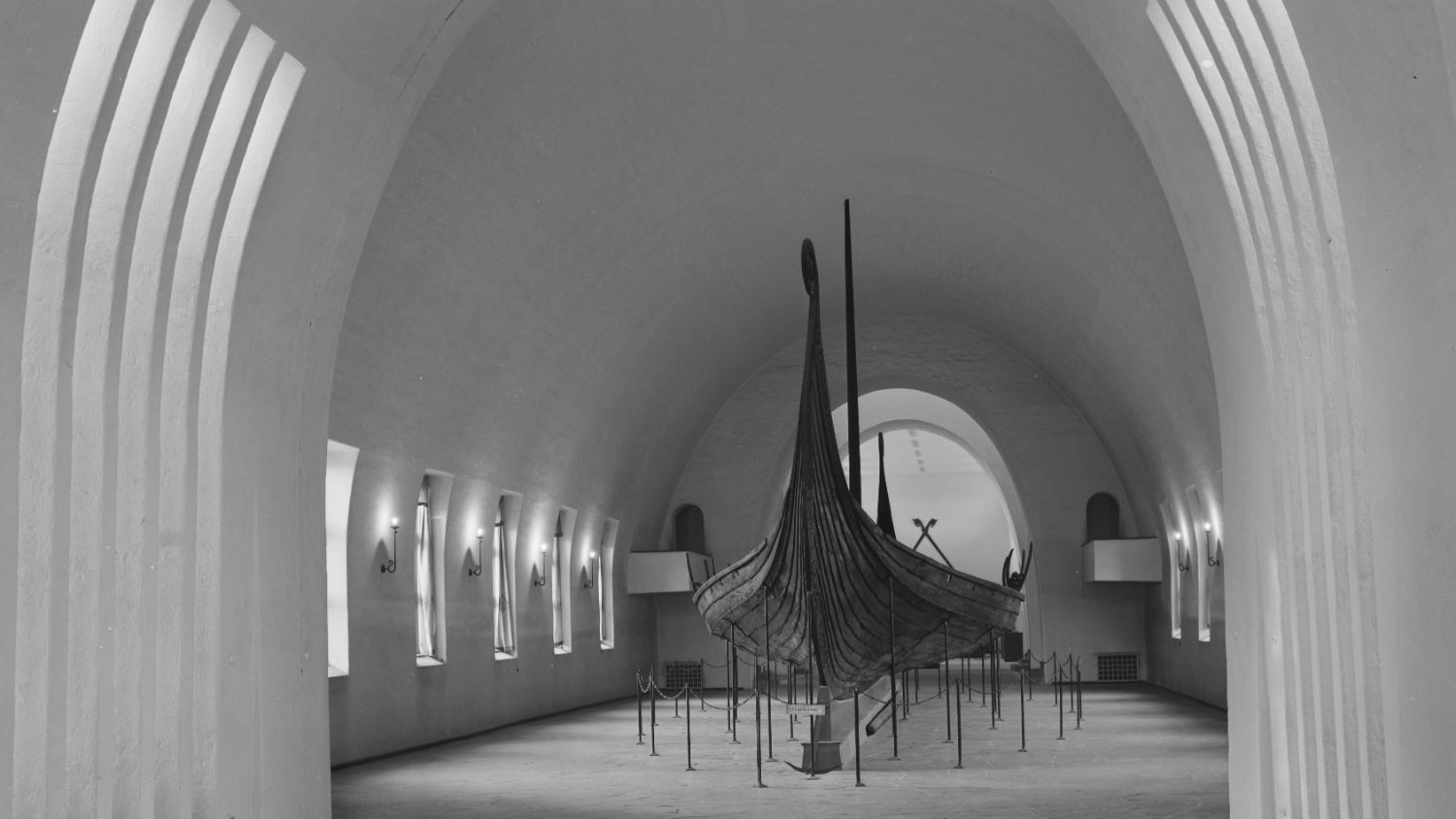
The Oseberg ship photographed in 1958. Mittet & Co AS.
Parts of this article have previously been published by the Museum of University History at the University of Oslo.