
On August 8, 1903, archaeologist Gabriel Gustafson, the manager of the University’s Collection of National Antiquities, experienced a day out of the ordinary. Not only because it was his 50th birthday, but also because he received a visit from farmer Oskar Rom, who had made a trip to the capital to share something extraordinary that he had found on his property. The farmer had examined a large burial mound and found remains of a ship.
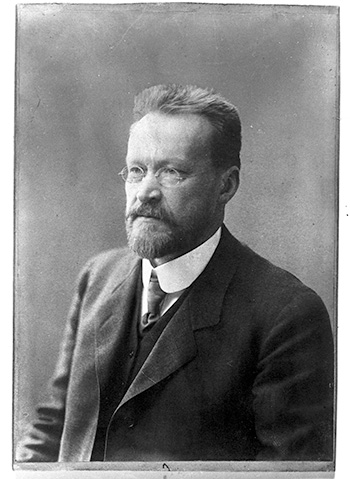
The farmer had examined a large burial mound and found remains of a ship.
Professor Gustafson did not waste time. Just two days later, he began conducting investigations at the Lille Oseberg farm in Slagen, Vestfold. He found several parts decorated with Viking Age ornamentation and realized that the burial mound concealed a ship grave from the Viking Age.
This marked the start of an archaeological adventure that no one could have envisioned.
To avoid issues with the autumn weather, they did not start the dig until the following year. The excavation generated significant public interest. The area had to be secured with railings, signage, and a guard to ensure that no one disturbed the work or got too close to the objects. In his diary, Gustafson complains about having to work on display.

He quickly understood that this was an extraordinary discovery. Crushed under masses of stone and clay, numerous spectacular items were discovered. These included a wagon, magnificent sleds, carved animal heads, kitchen utensils, food, beds, tents, textiles, two cows, six dogs, fifteen horses, and much, much more - a total of several hundred objects that the deceased had been given for their last journey.
Human remains were found in the burial chamber, and they turned out to be the remains of two women. The site also suggested that someone had accessed the grave not long after the burial.

In 1904, there was no law stating that cultural heritage should belong to the state, as it does today. That means that the owner of the farm where the ship was found could sell it to the highest bidder. The state had already allocated 5000 kroner for the excavation work, making it challenging to acquire more funds for the purchase of the ship and its necessary restoration. This must have been a desperate situation for Gustafson and the other employees at the University’s Collection of National Antiquities. Would the ship end up on private hands? And possibly abroad?
Fortunately, landowner Fritz Michael Treschow purchased the entire find for 12,000 kroner and donated the ship with its contents to the University’s Collection of National Antiquities. Brewery owner Ellef Ringnes and consul Axel Heiberg also became museum saviors when they donated the staggering amount of 6,000 kroner aimed at preserving and restoring the Oseberg Ship in 1905. The city of Kristiania also contributed 10,000 kroner.

The excavation took three months, but the longest and most demanding work remained. It took 21 years for the ship and most of the objects to be fully conserved and reconstructed.
The ship was dried very slowly before being assembled. The original wood was used where possible, and today the reconstructed ship consists of more than 90% original wood.

The Oseberg discovery has had a tremendous impact on our knowledge of the Viking Age. The discovery provides insight into aspects of material Viking culture which are rarely preserved, like objects made of wood and other organic materials. The find has helped us understand many aspects of Viking culture such as seafaring and shipbuilding, clothing, decoration, symbolism, and textile craftsmanship. It has also provided invaluable insight into burial rituals and the high status of women in society.
Key events
- 1903: Farmer Oscar Rom discovers a Viking ship in a burial mound on his property
- 1904: The Oseberg find is excavated
- 1907: The Oseberg ship is exhibited in the University Garden in Oslo
- 1926: The Oseberg ship is relocated to Bygdøy
- 1926: The Oseberg wing of the Viking Ship Museum opens to the public
- 1957: The objects from the Oseberg grave gets their own wing at the Viking Ship Museum
- 2012: Experts conclude that the Oseberg ship needs different conditions to be preserved for the future
- 2019: Funding is granted to start the construction of a new museum building
- 2022: The Viking ships are secured to endure the construction of the new museum
- 2025: The Oseberg ship is moved into the new museum building
- 2027: The Viking Age Museum opens, and the Oseberg ship can once again be displayed to the public