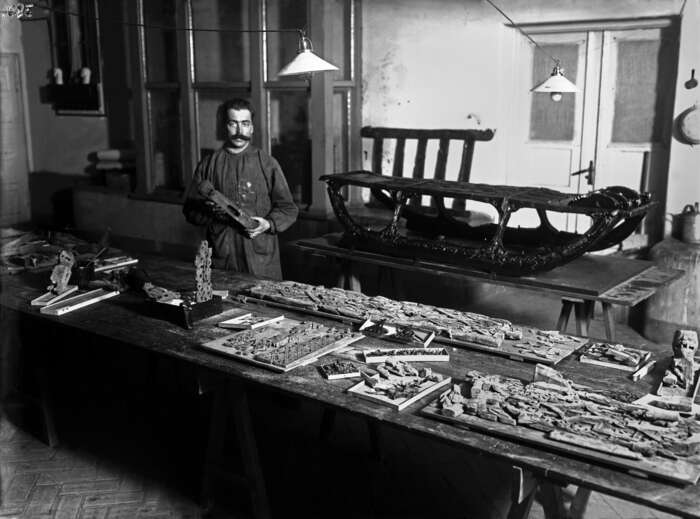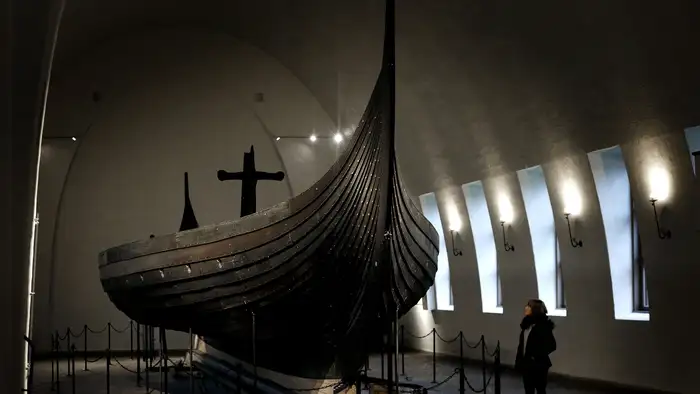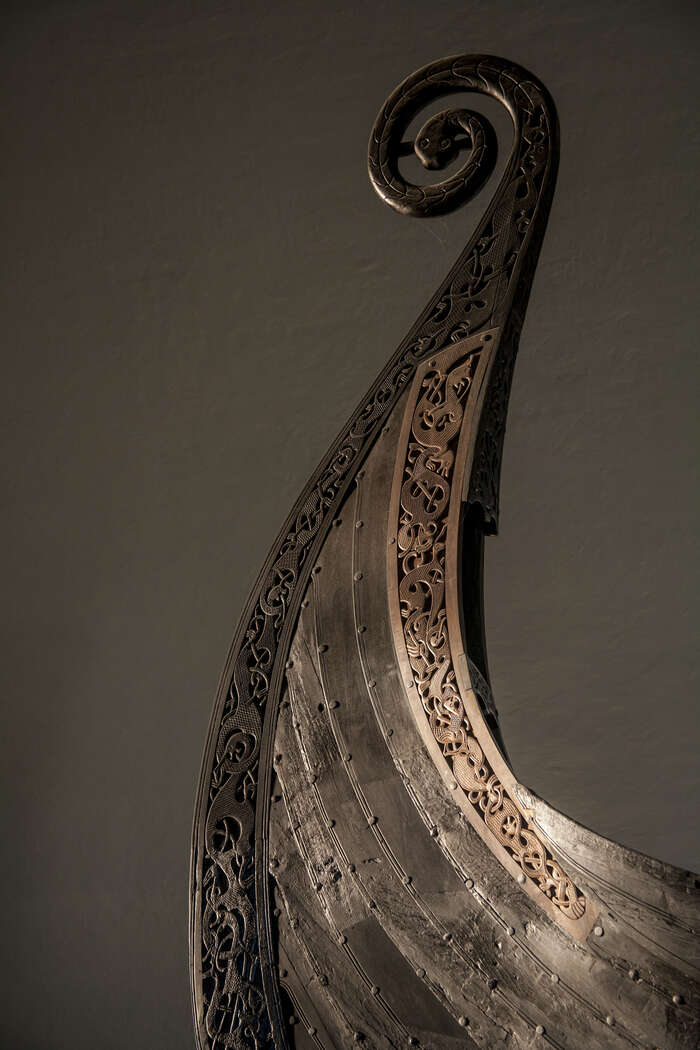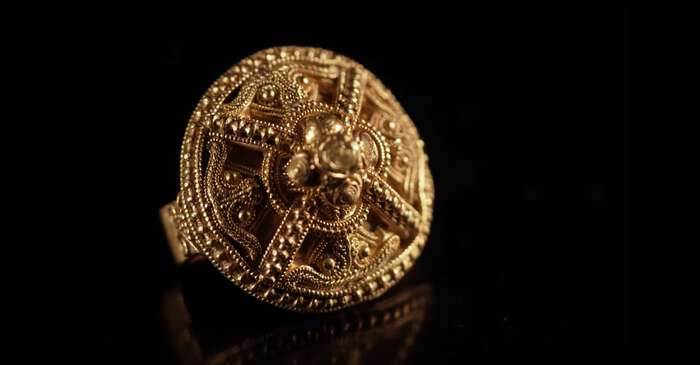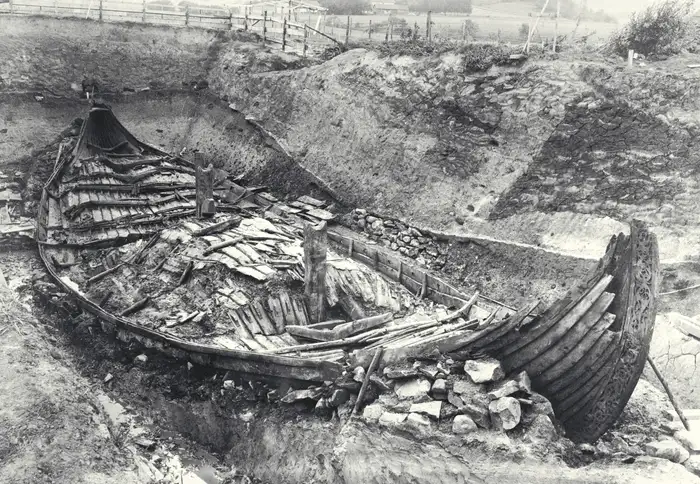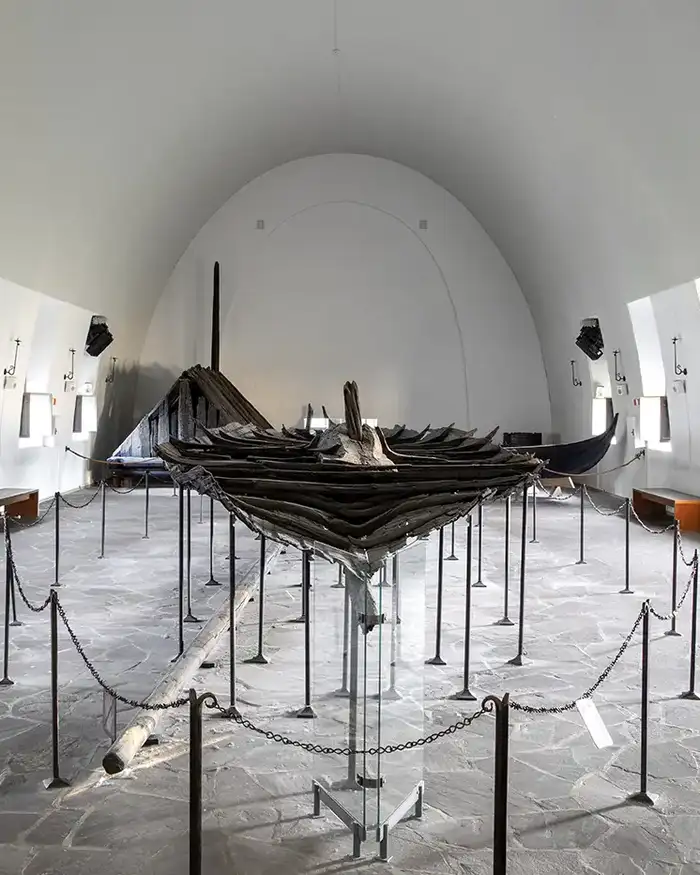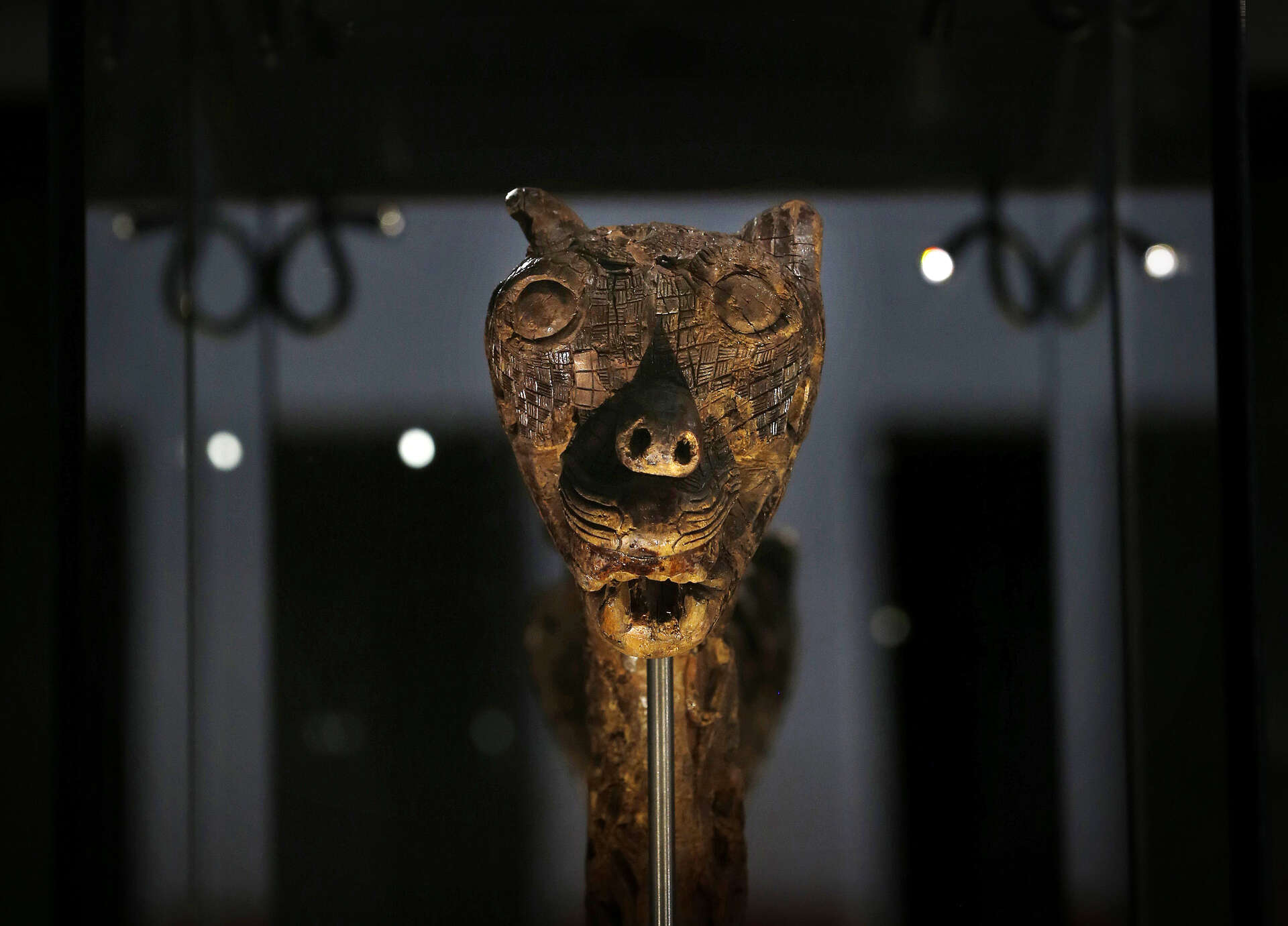
The Oseberg ship is mainly made of oak. A small number of other objects found with the ship, were also made of oak, as well as pine, yew and ash. All of these could be dried slowly. However, many objects were made of other types of wood which were so degraded that they had to be treated with alum salt before they could be dried.
Alum treatment
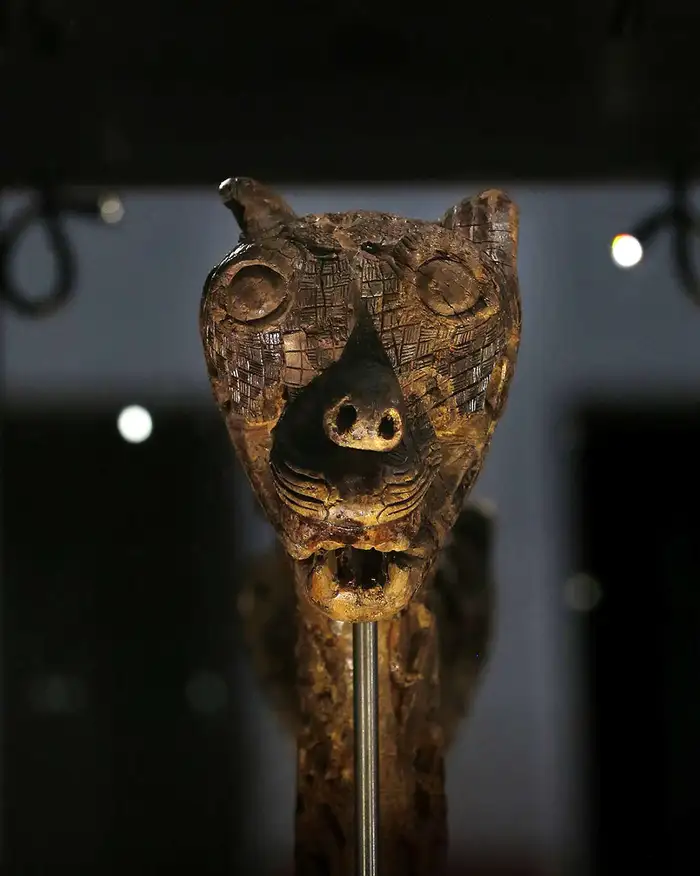
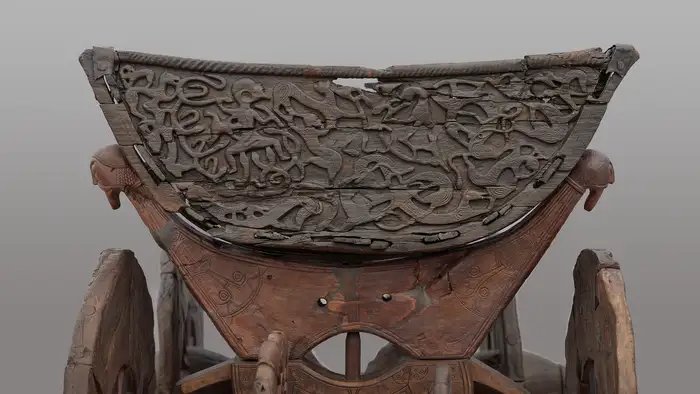
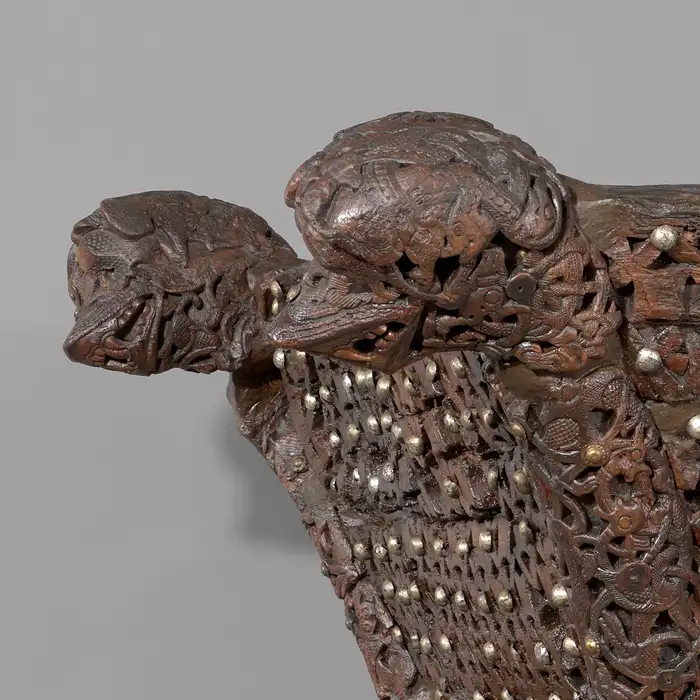
Using alum salt to preserve historical objects was a method which had been in use at the National Museum of Denmark since the 1860s. Professor Gabriel Gustafson, Museum Director and Head of excavations of the Oseberg ship, decided that it was the best method for the most degraded wooden finds. He soon discovered a major drawback - the treatment softened details in the finest carvings. He had treated one of the animal head posts and did not like the results at all.
The conservation of the six objects with the finest carvings — the four remaining animal heads and two sled pulls — would have to wait until better methods were developed.
Exhibited in water
The breakthrough would not come until the 1950s. In the meantime, the objects had to be kept constantly soaked. Gustafson had expected that it would take time before a good treatment method was developed, but he still wanted to exhibit the beautiful objects. So when the Oseberg exhibition opened at the Historical Museum in 1912, the animal heads were placed in specially designed aquariums.
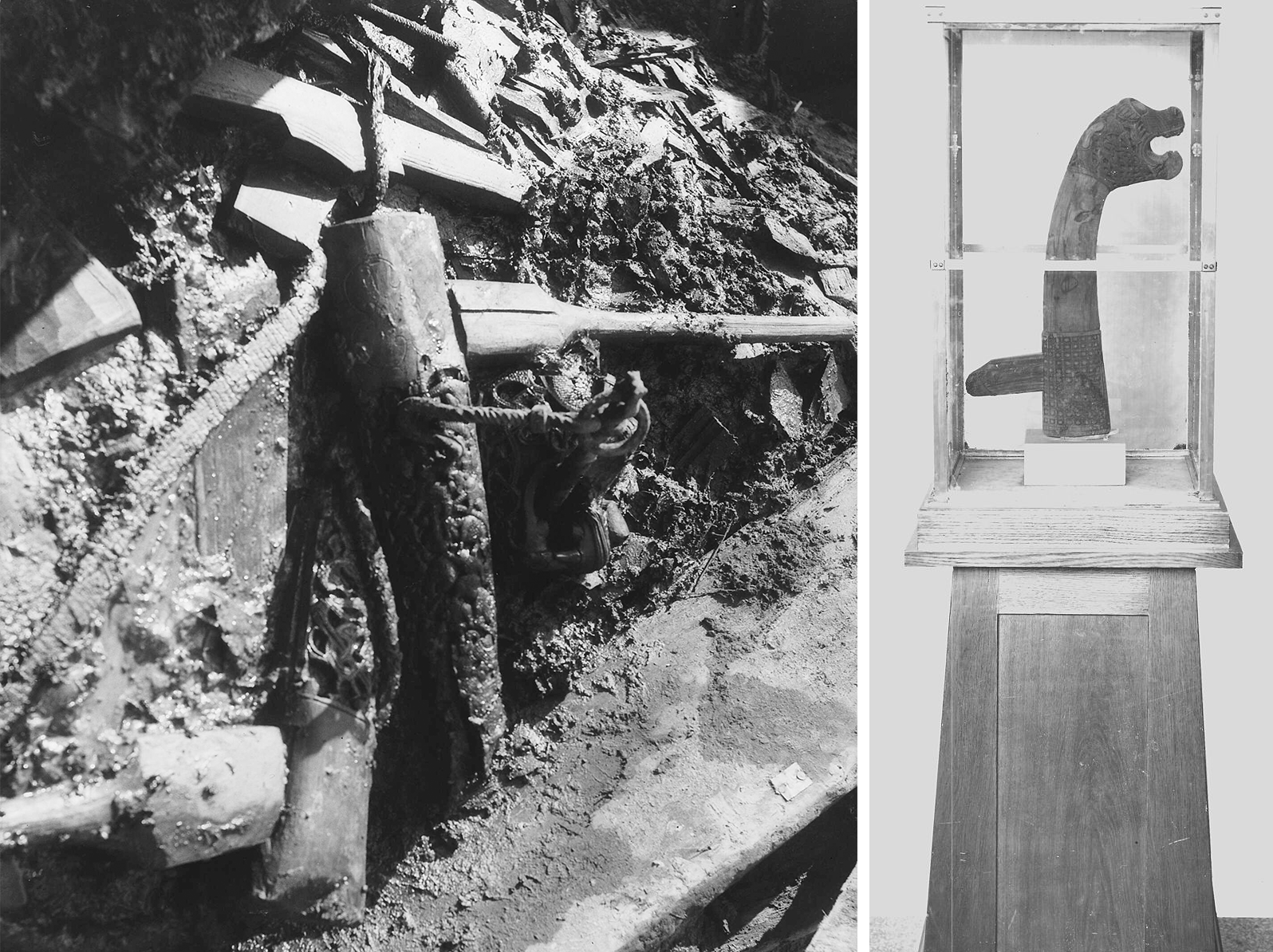
But this method was not without its problems. Over time, algae bloomed in the tanks and the water became hazy. It was necessary to refill the aquariums constantly, and during the second World War this turned into a major challenge. The museum objects were packed up and stored in a safe place, but one of the water tanks leaked. As a result, one of the animal head posts was damaged beyond repair.
Testing various chemicals
To maintain good water quality in the aquariums, a number of chemicals were tested, including hazardous substances such as mercury and formaldehyde.
We know this because the museum's archives have preserved Gustafson's notes for a lecture he gave to the chemistry group at the Polytechnic Association in 1913.
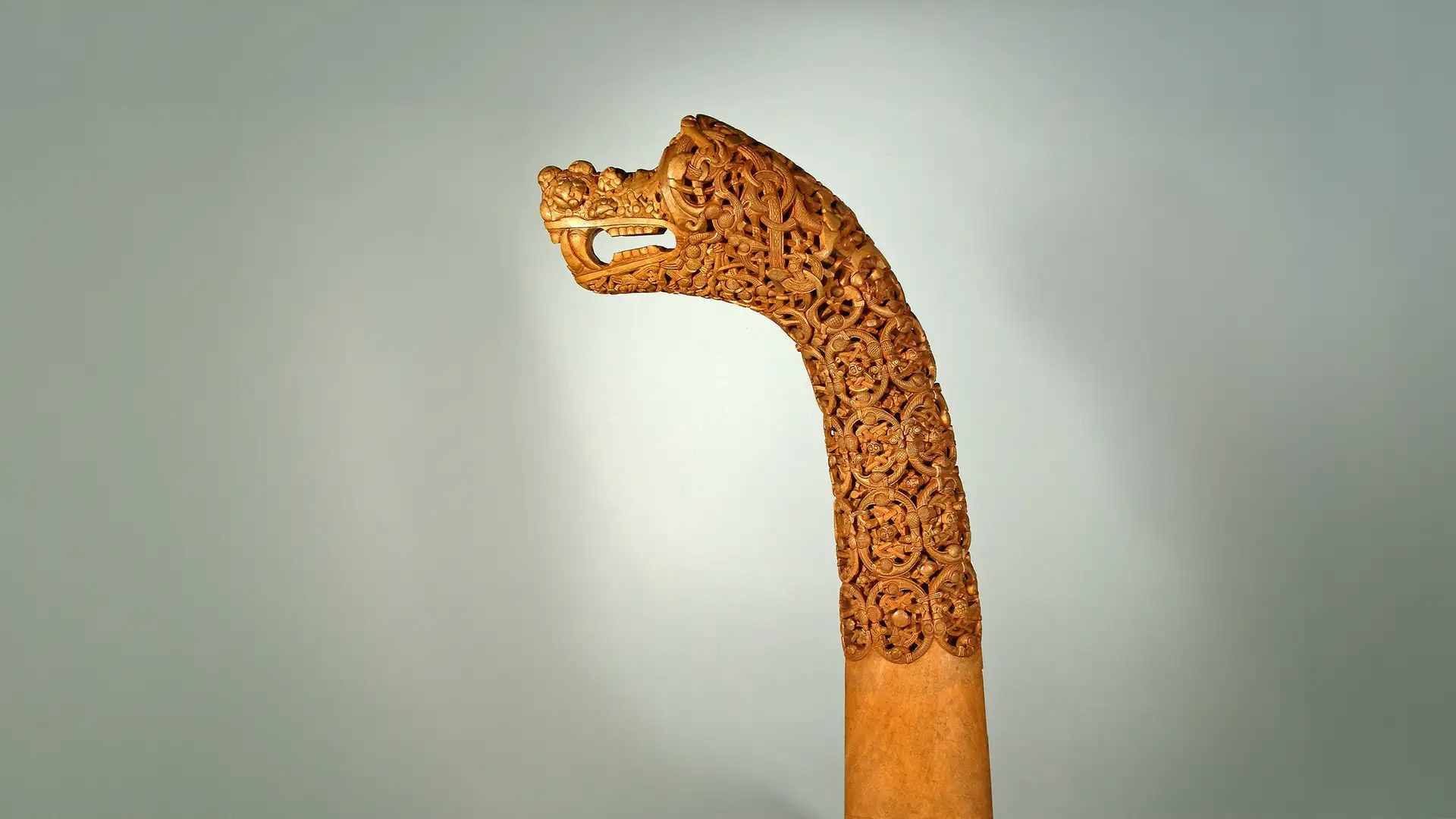
Knowing how fragile these finds were, Professor Gustafson had the the foresight to ensure the preservation of these six objects in another way. Just two years after the Oseberg excavation, he commissioned woodcarver Jørgen Eriksen to make replicas of the posts.
Several woodcarvers suceeded Eriksen, producing many replicas from the Oseberg finds. Today these valuable objects at the museum act as security copies, and are used in exhibition and loans to showcase the exquisite woodcarving of the Viking Age.
The decision to await new methods was an exceptionally good judgment. So was the decision to make replicas of the heads, even though the solution was a costly one.
– Conservator Susan Braovac, Researcher in the project Saving Oseberg
Finally preserved
Half a century after the excavation, the chemist and conservator Annemor Rosenqvist was given the task and challenge of conserving the remaining five objects.
The treatment of these objects was completed in time for the opening of the new wing at the Viking Ship Museum in 1957. Rosenqvist replaced the water with t-butanol, which was then removed during vacuum drying.
The major challenge was that once the t-butanol was removed, there was nothing left to support the wood.
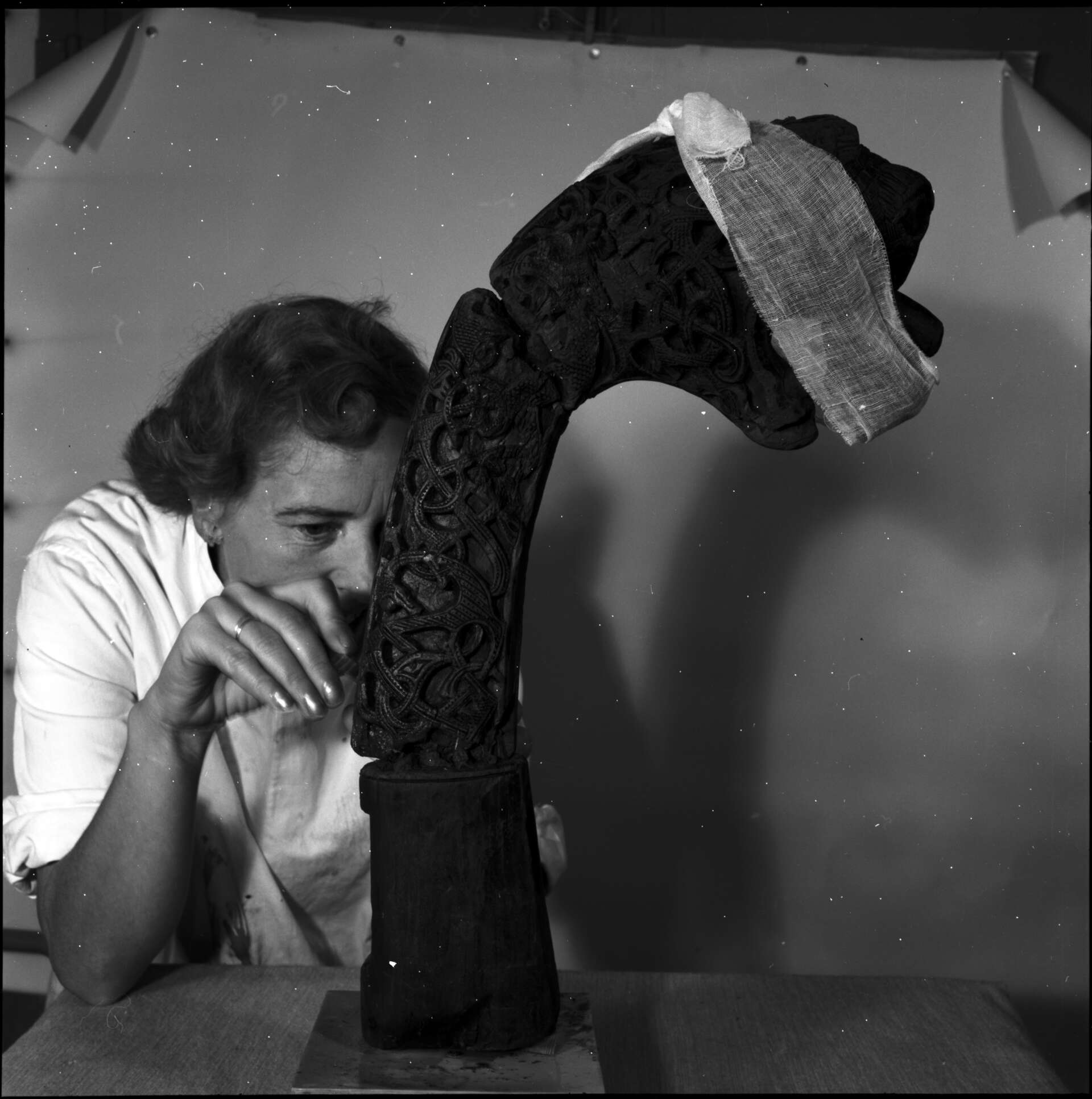
But it was not absorbed by the wood, staying at the surface, and not strengthening the inner wood. As a result, the objects are now extremely fragile and lightweight.
Safely preserved for the future
Conservator Rosenqvist had estimated the original weight of the animal head posts, when they had been newly made, to be between two and three kilograms. After being buried for nearly 1,100 years and after conservation, they now weigh less than one kilogram each.
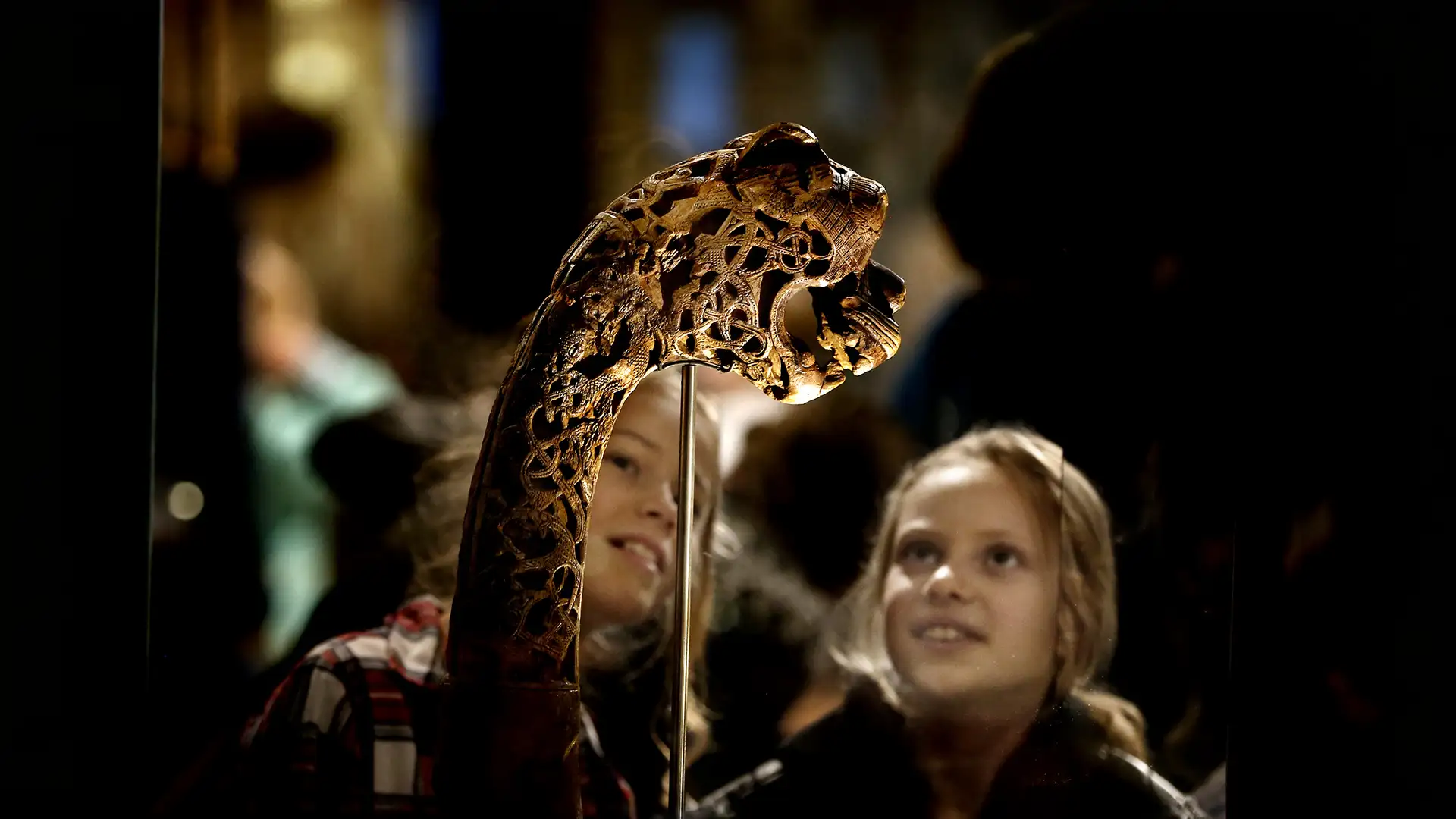
But what about the damaged animal head?
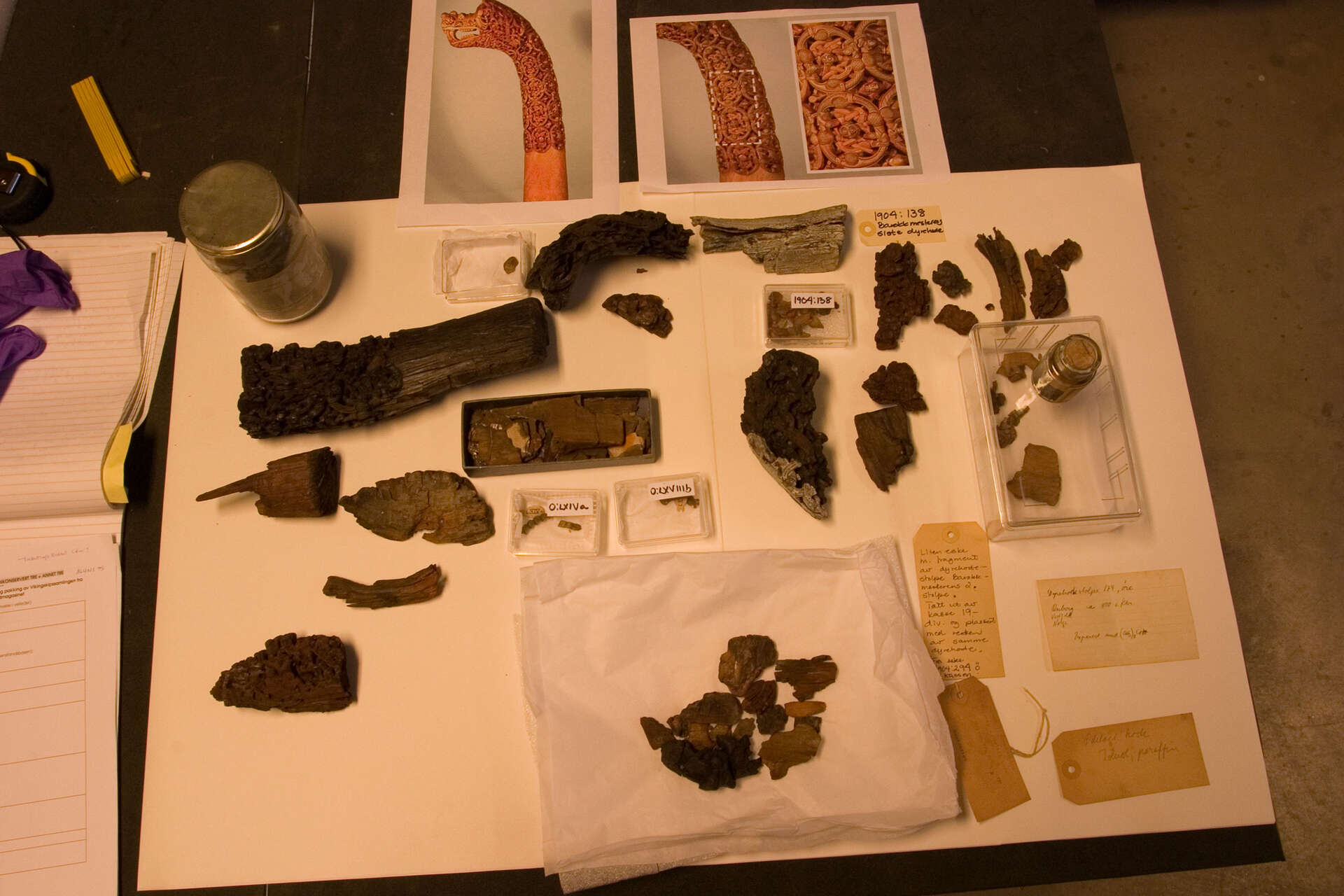
It now spends most of its time in a box in the museum storage. But despite being absolutely ruined, it remains an important object for conservation research. In the 1950s, pieces of it were used to test surface treatments. In the Saving Oseberg project, samples were taken for advanced analysis so they could be compared to samples of very degraded alum-preserved wood.
How did Rosenqvist solve the preservation problem?
At the National Museum in Copenhagen, pioneering research into vacuum conservation had given new hope for the treatment of severely degraded wood.
This method was much gentler than conventional air drying, since substances could now be removed directly in the form of a gas from a frozen or solid state.
The liquid state, which can cause irreparable damage, could thus be avoided. The destruction of the animal head post in the 1940s was proof of this.
For the five remaining objects, the water, was replaced by another substance, tertiary butanol (t-butanol). It is an alcohol that is solid when its temperature is below 25.5°C.
Once it had completely replaced all the water in the objects, it was removed from the ‘frozen’ state in the freeze dryer, keeping the object’s shape, and preserving the fine details in their carvings.
Today, freeze-drying can be done at much lower temperatures and pressures than what used to be possible, which means that even water-based mixtures can be frozen. Polyethylene glycol (PEG) is the most common chemical used to replace most of the water in wood. PEG is not toxic or flammable and is therefore much safer than t-butanol. In addition to this, PEG remains in the wood and provides support even after drying.