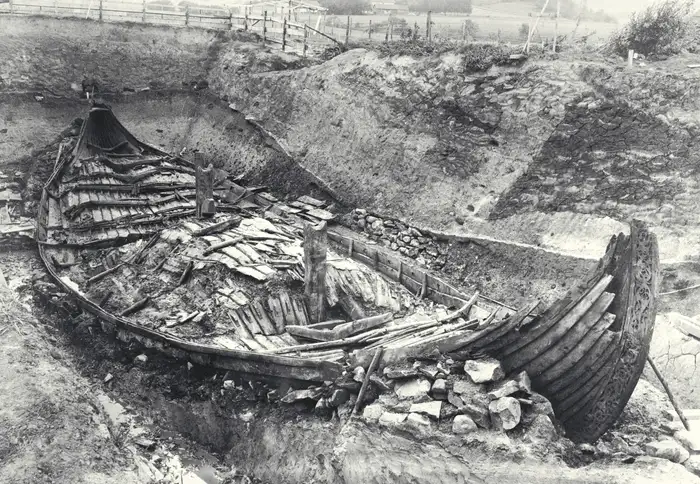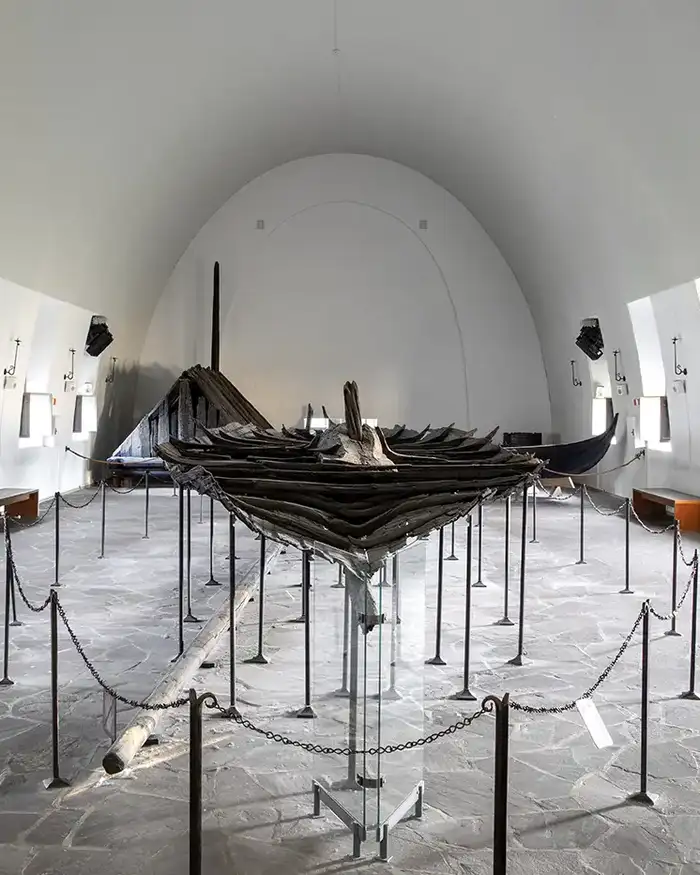
The artifacts from the Oseberg ship have provided us with unique insight into Viking Age craftsmanship and ornamentation. The magnificent wagon, which the two women buried inside the ship would bring with them into the afterlife, is unparalleled among preserved objects from the Norwegian Viking Age.
The fantastic ornamentation of the Oseberg wagon
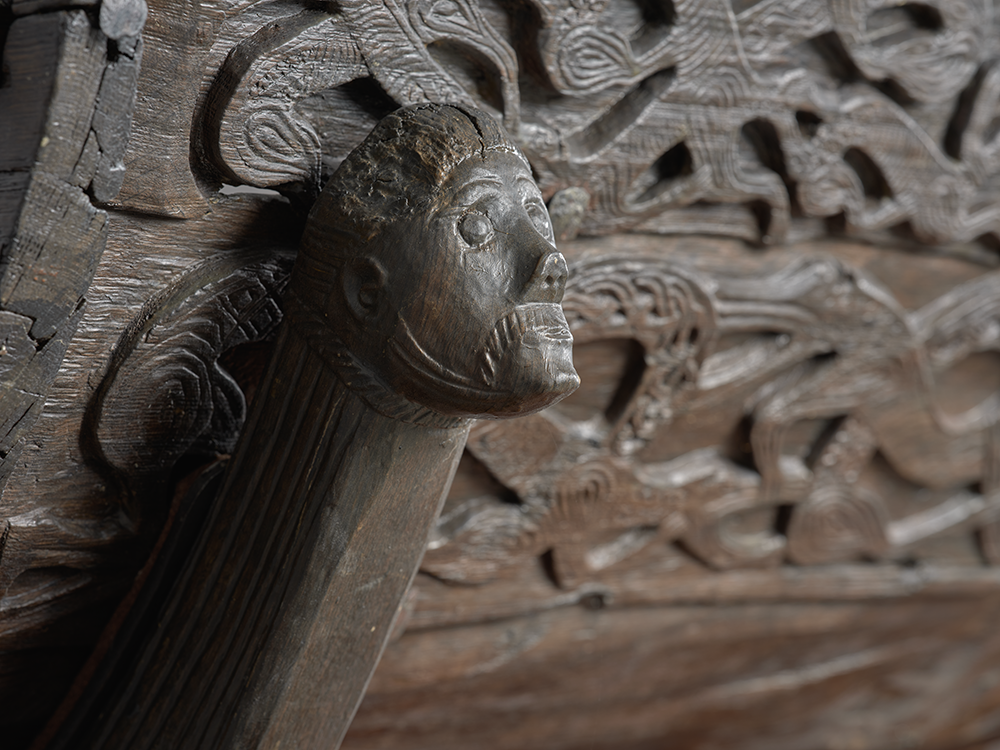
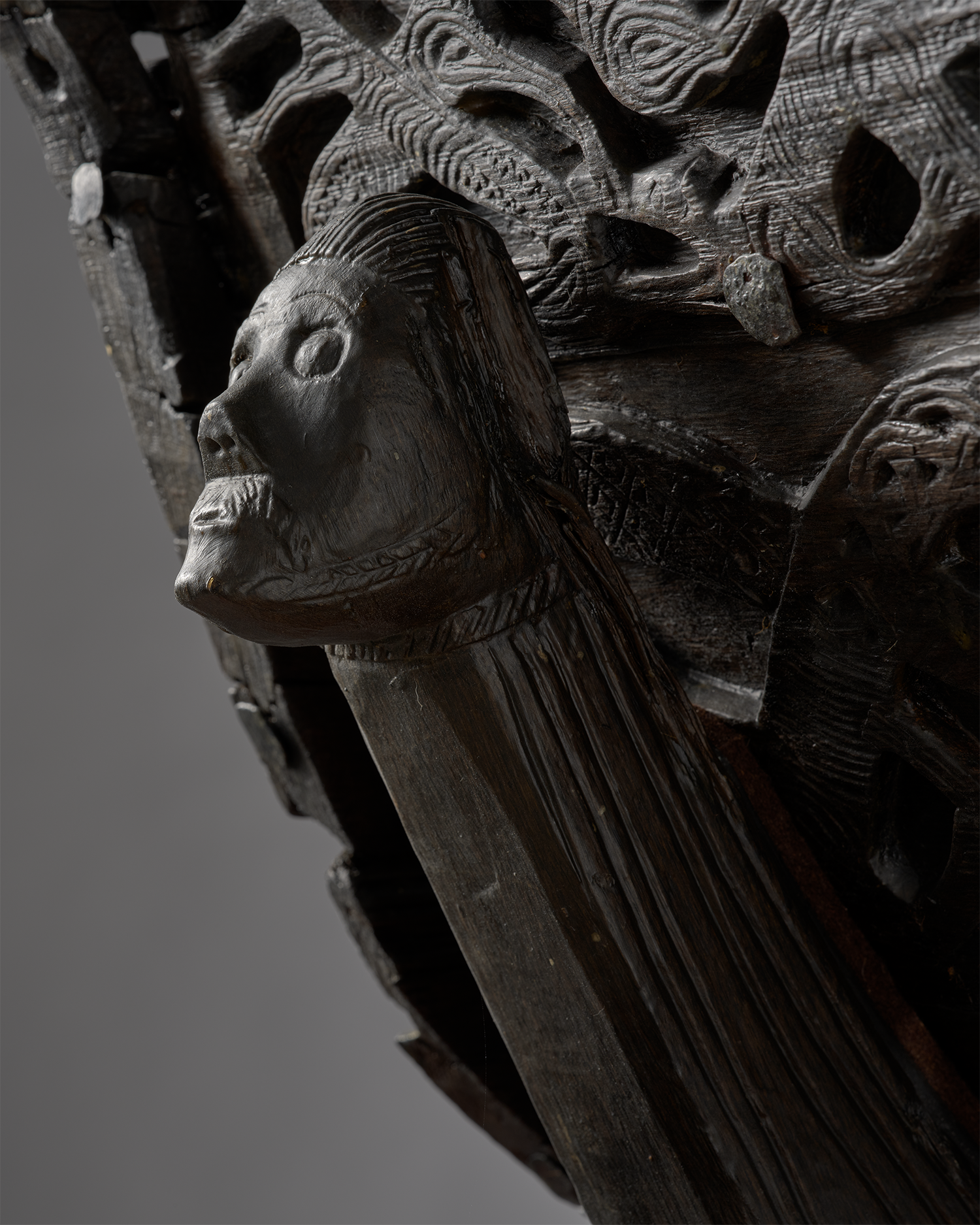
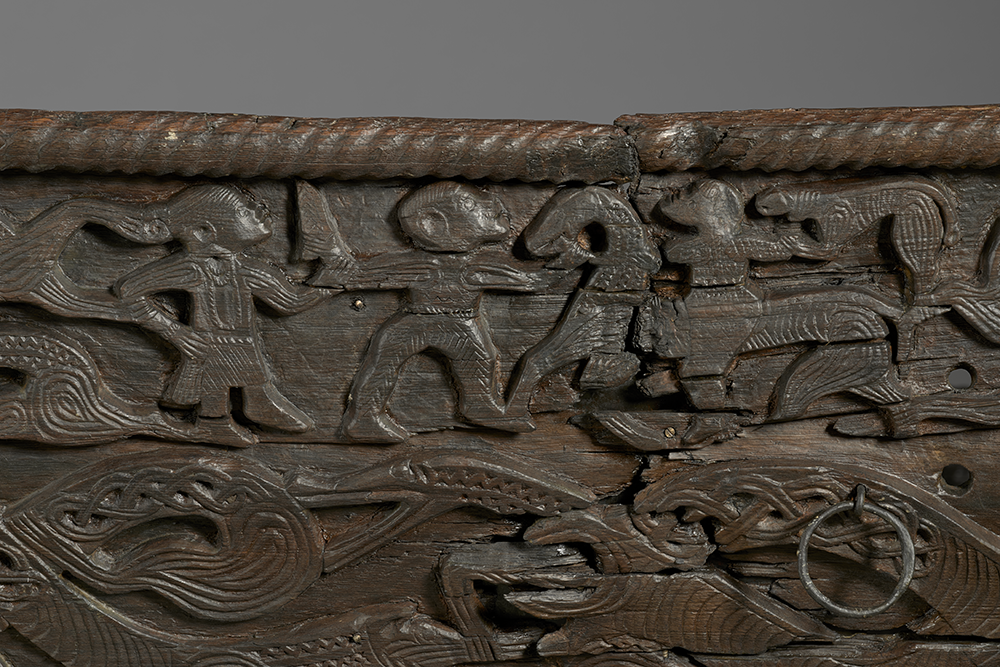
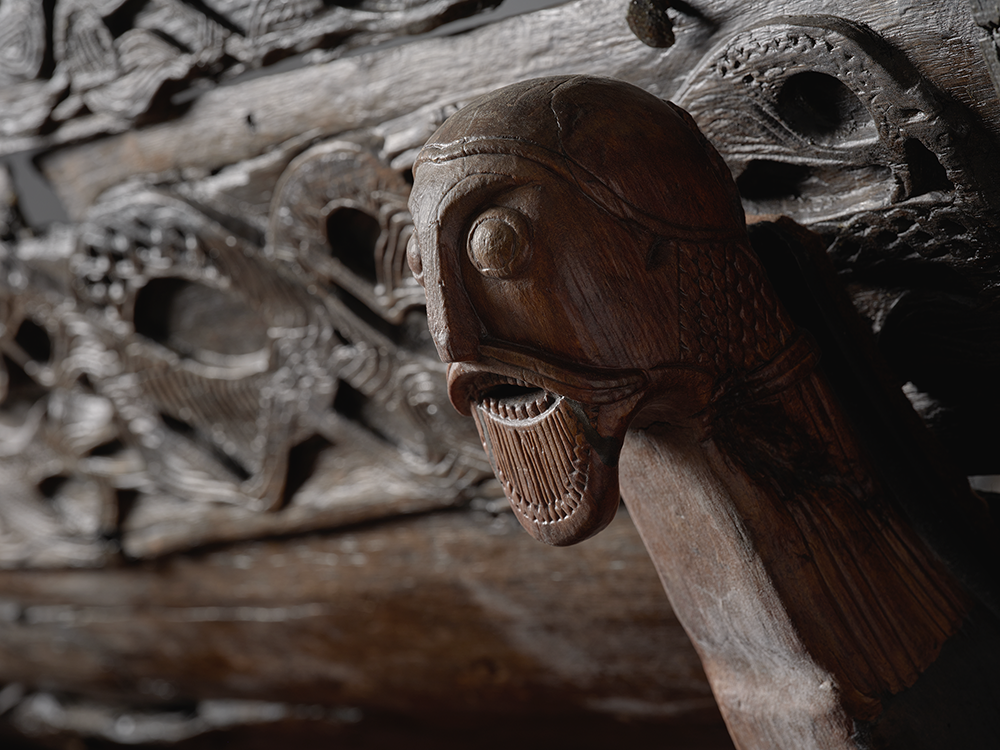
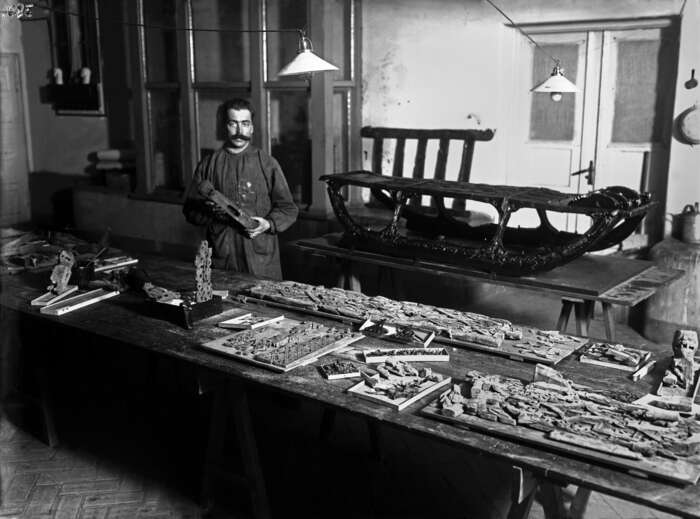
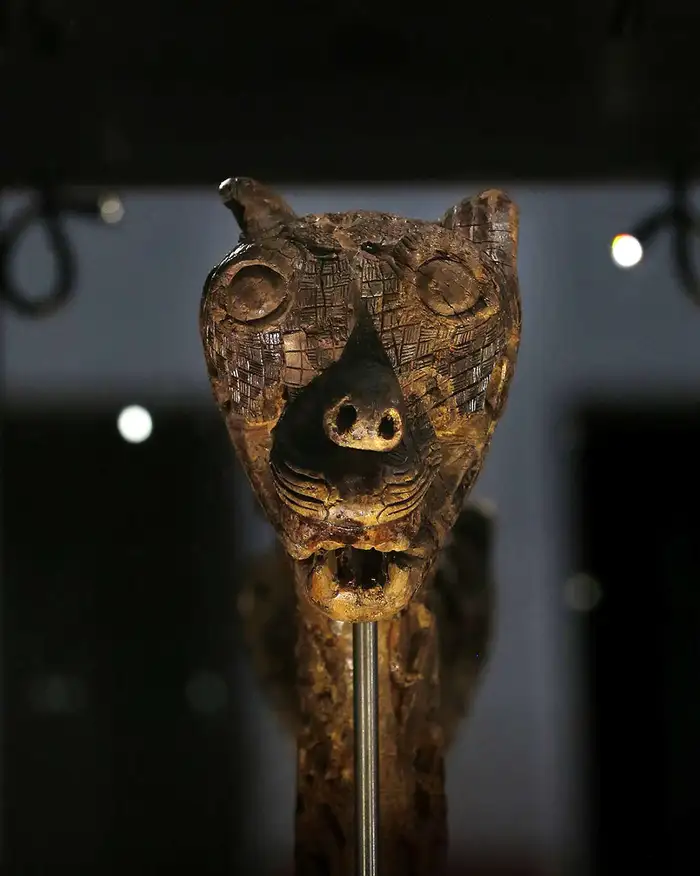
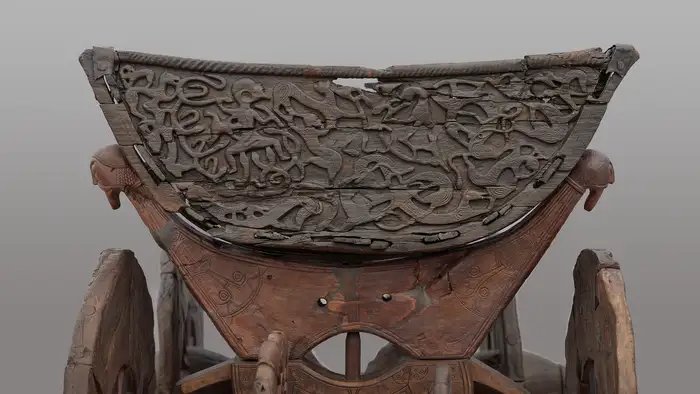
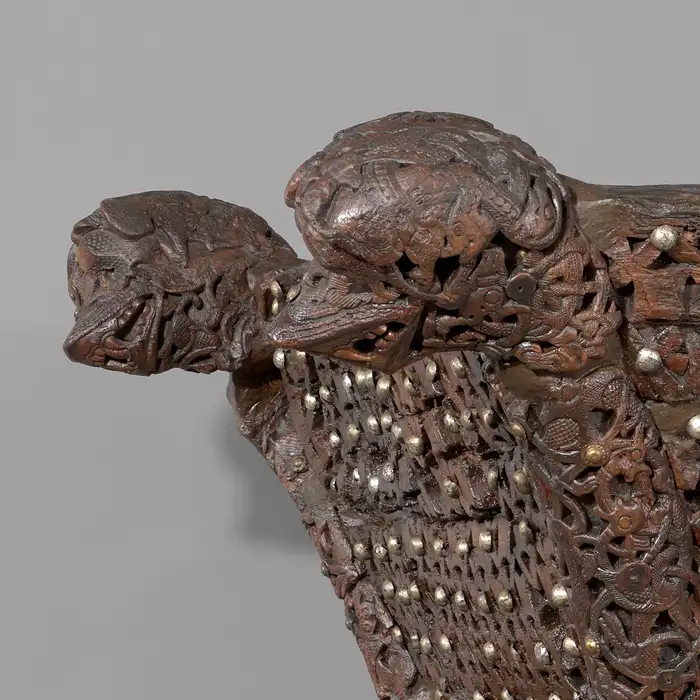
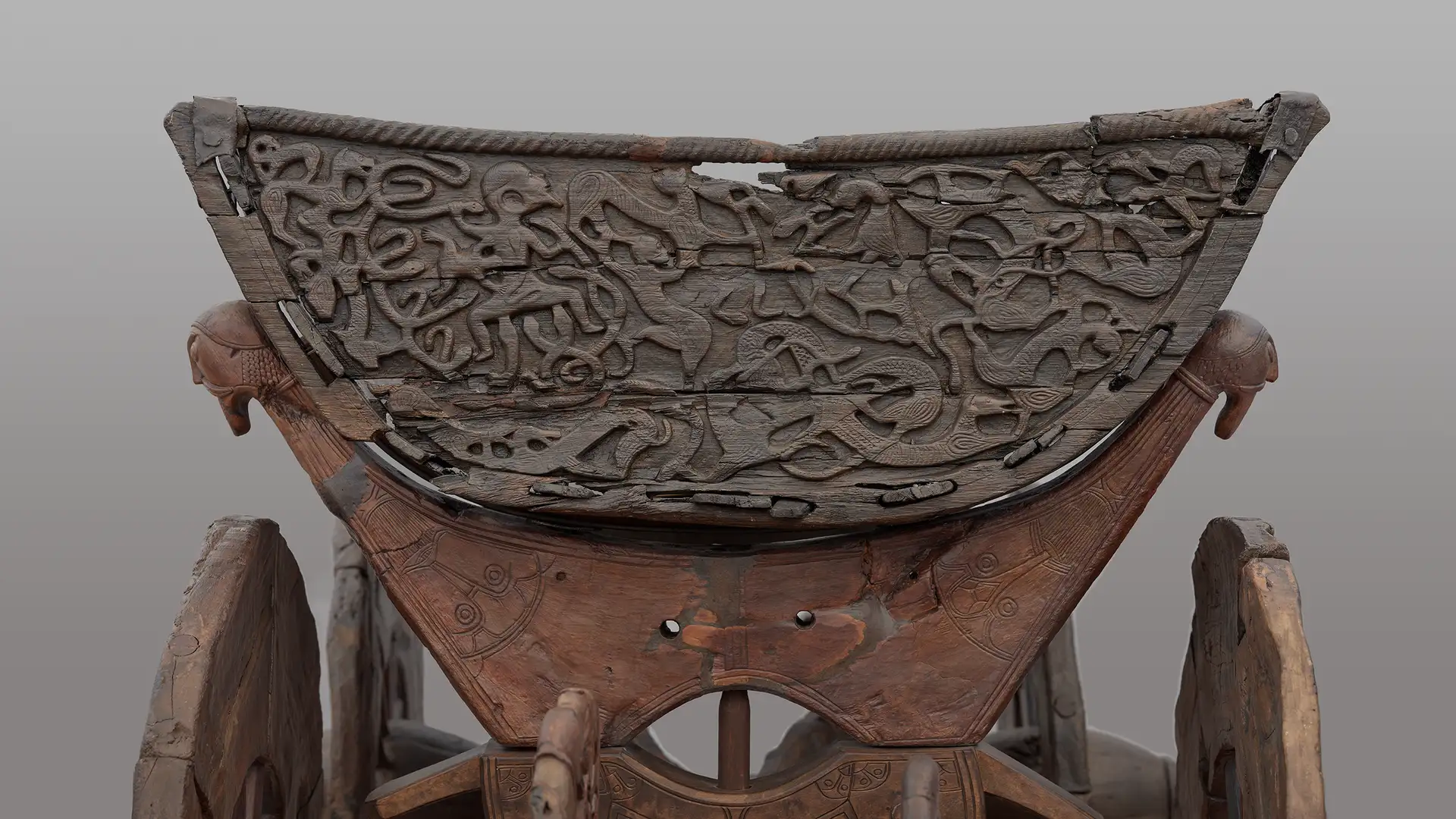
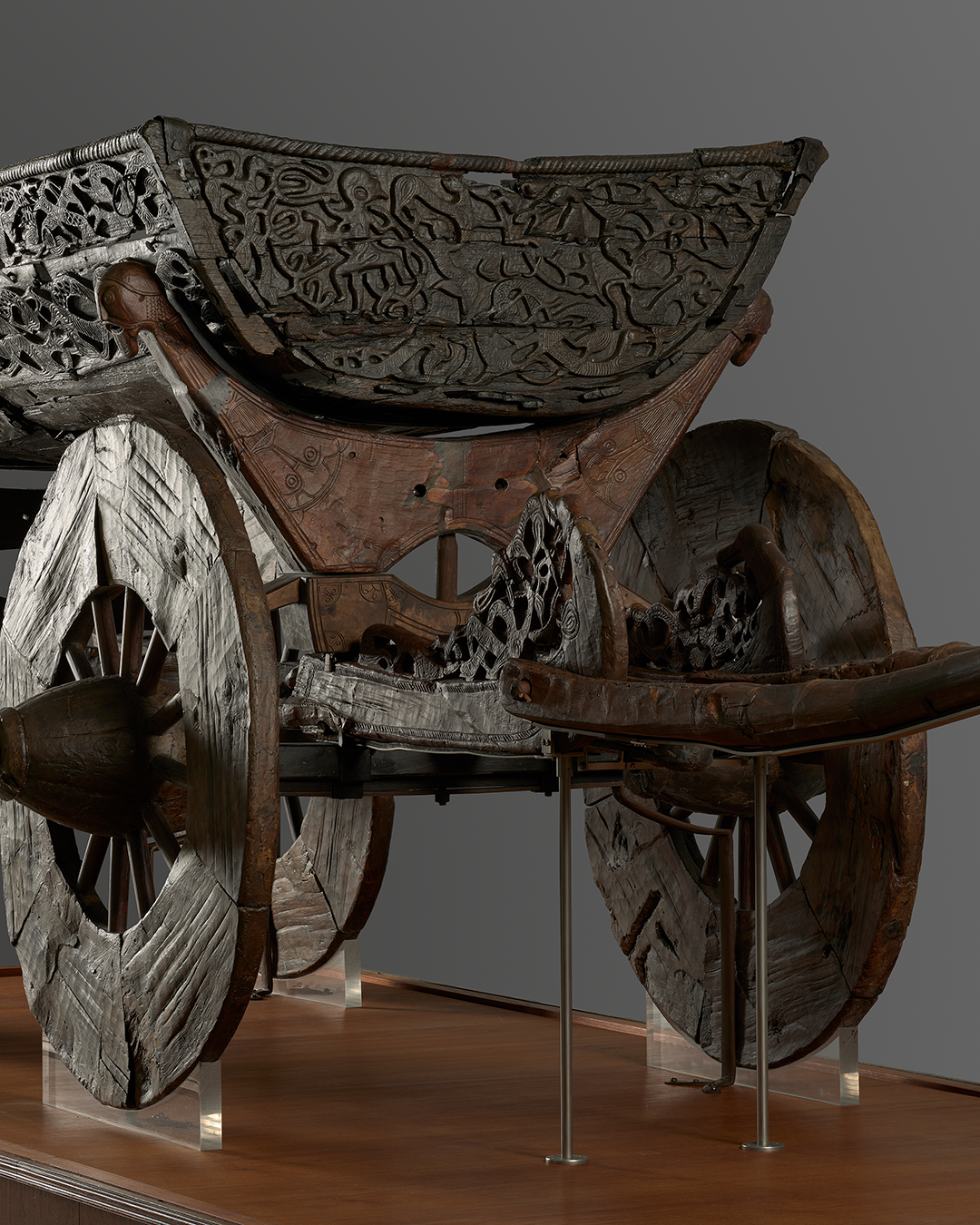
The Oseberg wagon is lavishly decorated with carvings of gripping beasts that bite and cling to one another, intertwining serpents, animals with human-like faces, and human figures in various positions.
"The motifs on the wagon are almost dramatically captivating. They are vivid and powerful, despite the teeming nature of the composition."
– Archaeologist Haakon Shetelig, who participated in the 1904 excavation
Some of the figures resemble dogs, while others have facial features reminiscent of cats. There are birds, horses, riders, and interlaced ornamentation.
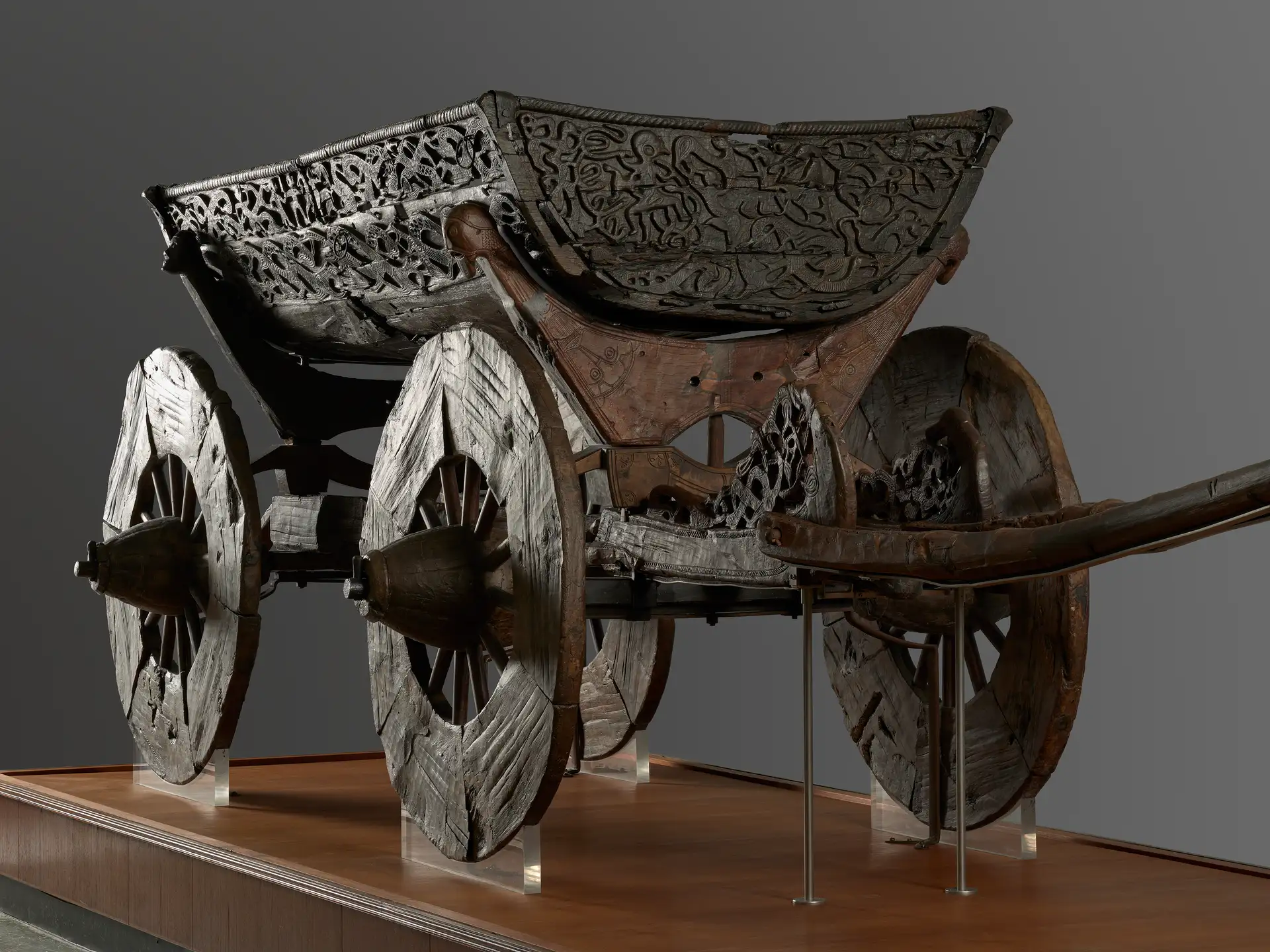
Carved men's heads adorn the trestles that support the wagon's body.
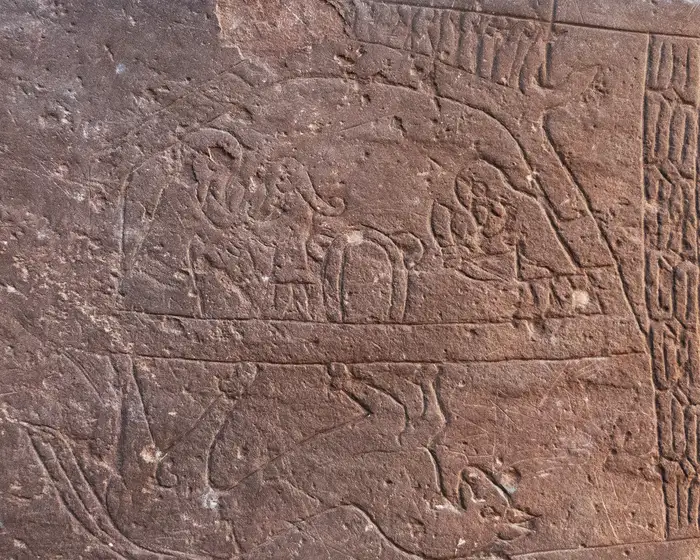
The front of the wagon depicts a man who lies on his back, and who is attacked by snakes.
Perhaps this is the story of Gunnar in the snake pit? Or Ragnar Lodbrok?
Gunnar and Ragnar in the snake pit
The story of Gunnar Gjukesson is from the heroic Edda poetry about Sigurd the Dragon-Slayer. Gunnar was cast into a snake pit with his hands bound behind his back, yet he was able to play his harp with his toes, lulling the snakes to sleep. All fell asleep except one, which bit Gunnar's heart, causing his death. There is no harp to be seen on the Oseberg wagon.
There is also another very similar myth about Ragnar Lodbrok, who was likewise thrown into a snake pit to die. He had no harp with him, so perhaps this is the myth the artist intended to depict?
The only one of its kind
No comparable wagon is known from the Scandinavian Viking Age. Not just because of its lavish decorations, but because it is the only wagon we have from this era at all.
The wagon was already old before it was placed in the Oseberg ship to be buried. It was made before the year 800, more than thirty years prior to the burial itself. It was likely drawn by two horses, one on either side of the shafts.
However, researchers disagree on how drivable the wagon actually was during its period of use. In an era with a very limited road network, it would have been an impractical means of transport in any case. Perhaps it was used ceremonially, or for storytelling in the feasting hall? Either way, it likely played an important role during the burial rituals.
The technology of the Viking Age
The wagon also bears witness to the engineering prowess and innovation of the Viking Age. It measures around two meters in length and consists of detachable parts that can be dismantled for transport if, for instance, if the wagon were to be carried by ship. Furthermore, the types of wood used for the different parts were carefully selected. For example, the wheels were assembled entirely without rivets or nails; rims made of wet beech were fitted onto spokes of dry oak, allowing the rim to shrink naturally around the spokes. In this way, the wheels are locked into a strong, solid structure.
The Oseberg wagon, which is both magnificent and mysterious, will be displayed at the new Museum of the Viking Age.