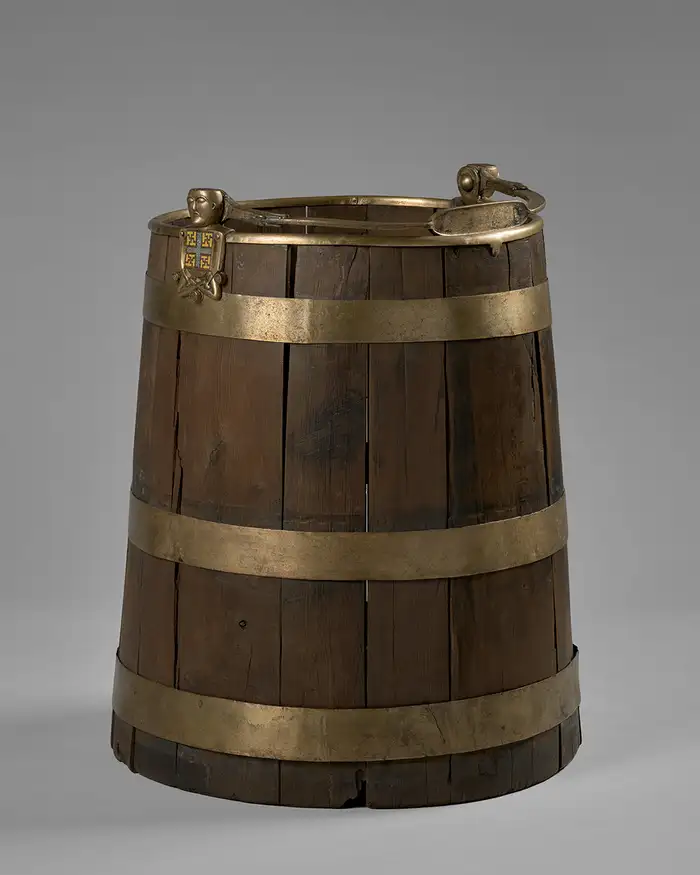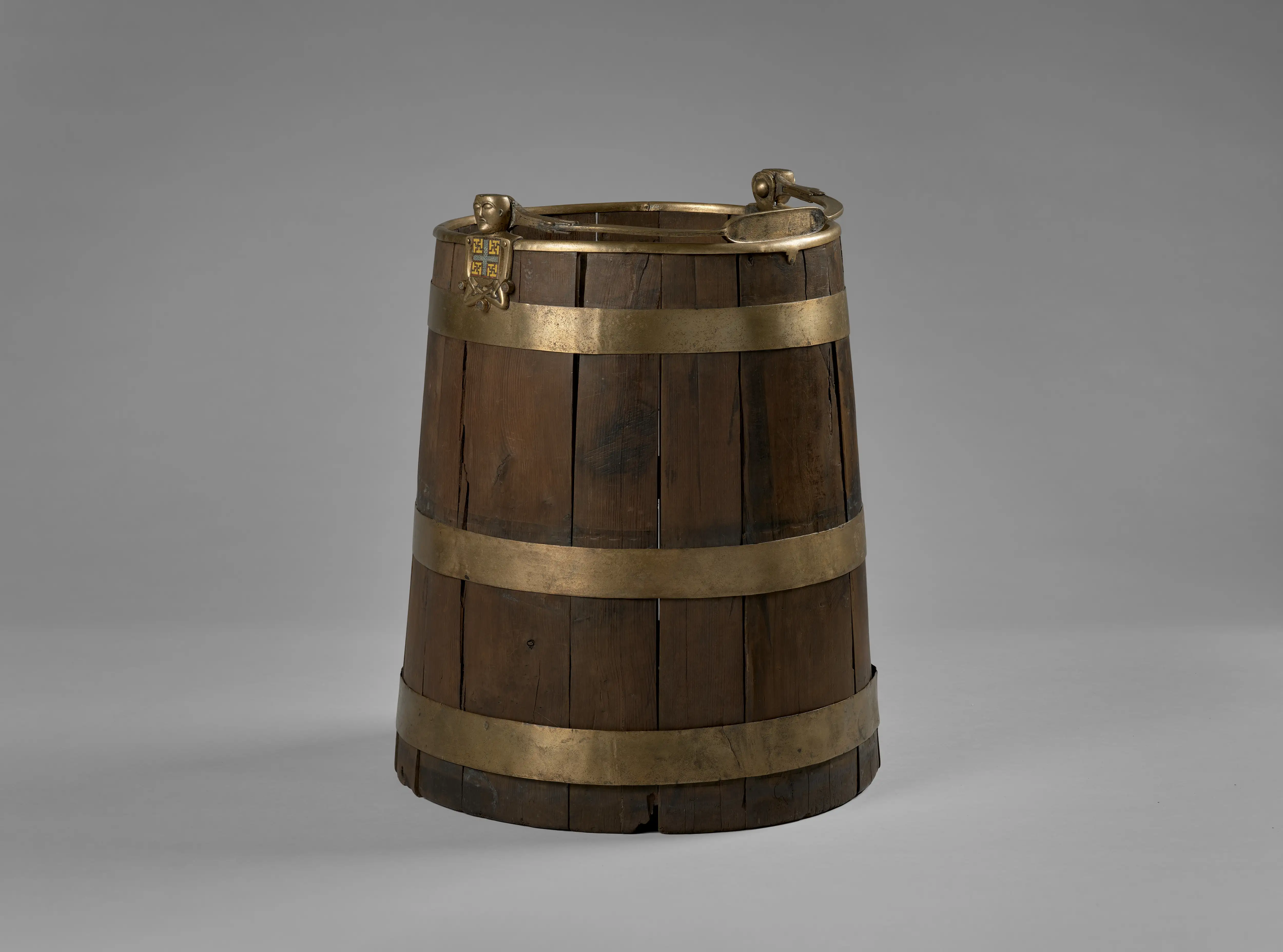
This type of container is called a stave-built vessel. This technique is particularly good for making containers especially suitable for holding liquids. Perhaps the bucket was used to serve mead?
The bucket is 36 cm high and made up of 13 vertical wooden staves of European yew. These are secured with metal bands of bronze, as well as a bronze fitting around the rim of the bucket.
Decorative fittings where the handle attaches to the vessel are what make this bucket truly special. Here, we see a small enamelled figure that appears to be sitting in a lotus position.
Prestige for the Scandinavian elite
Connections to the outside world and thus access to beautiful objects from other countries and cultures through raids, trade or political networks, became symbols of prestige and power for the Scandinavian elite.
We do not know how the bucket came into the possession of the Oseberg women. It might have been seized by Vikings, acquired through honest trade, or perhaps it was part of a dowry.
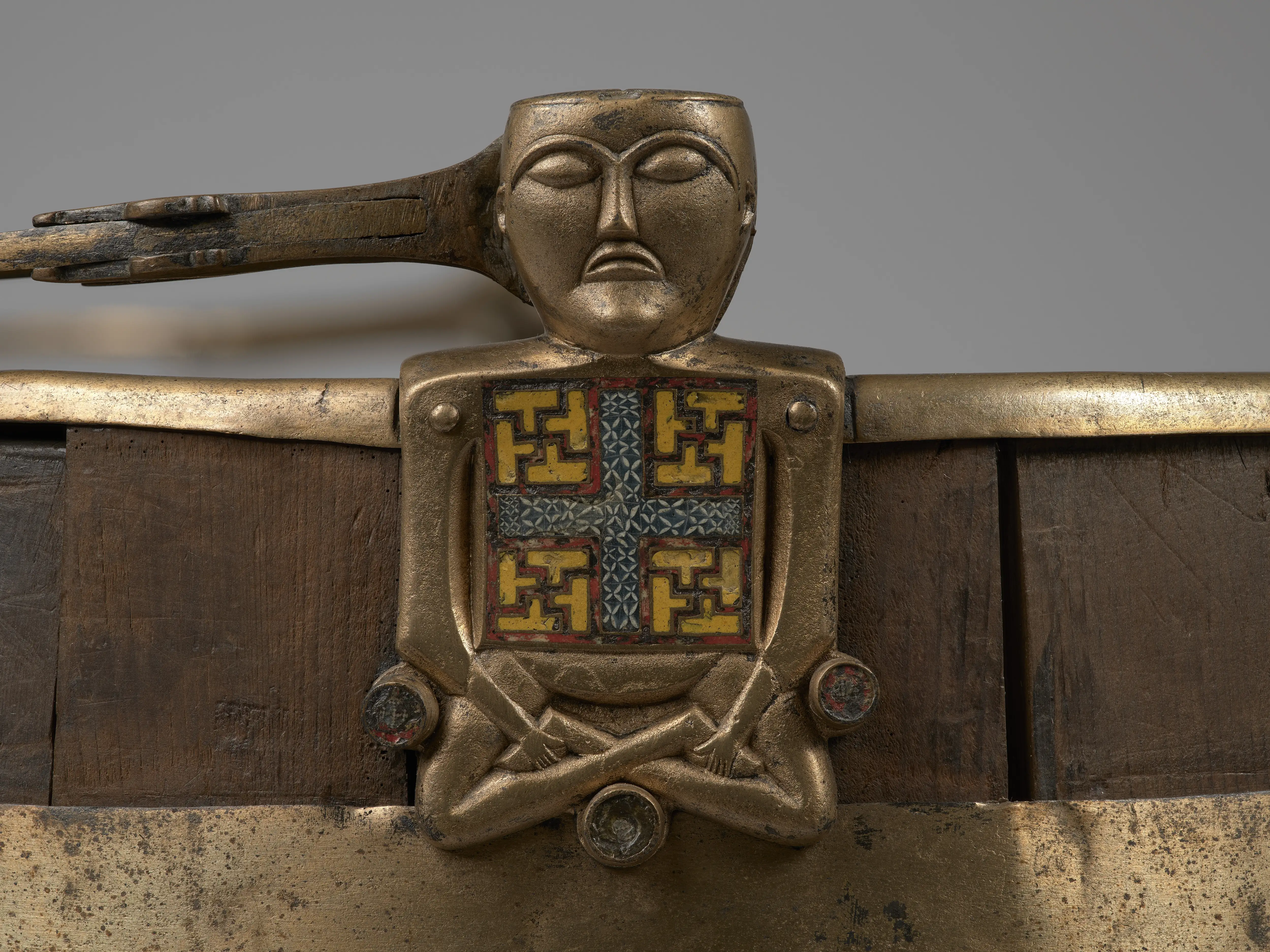
Because of this figure, the bucket was originally nicknamed “the Buddha bucket”, but it is by no means a depiction of the Buddha. The figure is Celtic and resembles other Celtic depictions of the dead.
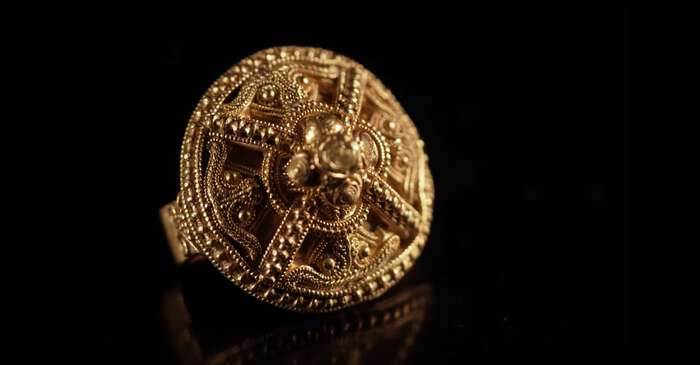
The main part of the body consists of a plate decorated with enamel. The plate is divided by an equal-armed blue-and-white cross, with sections of red and yellow enamel between its arms. The cross is made of millefiori enamelling.
Thin strips of bronze separate the different sections of coloured enamel. These thin lines are so sharp and precise that it seems almost unbelievable that the work was executed with champlevé enamelling.
The enamel also features four swastikas, an ancient solar symbol. The bent arms represented the movements of the sun.
Originally from Ireland or the British Isles
The yew bucket originated in Ireland or the British Isles before eventually finding its way to Vestfold, Norway. Perhaps it made other stops along the way?
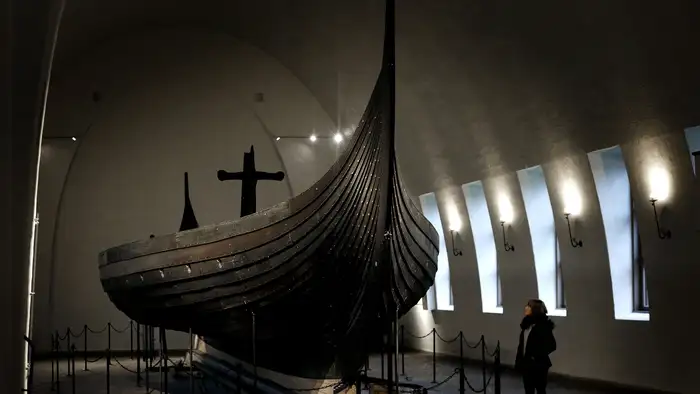
Scholars believe that this magnificent and costly bucket was displayed in the Oseberg women’s ceremonial hall and was likely used to serve important guests.
When the women were laid to rest, the bucket was perhaps ceremoniously carried aboard the ship and placed in the burial chamber. Their wealth was meant to be displayed not only in life, but also in the grave and in the realm of the dead.
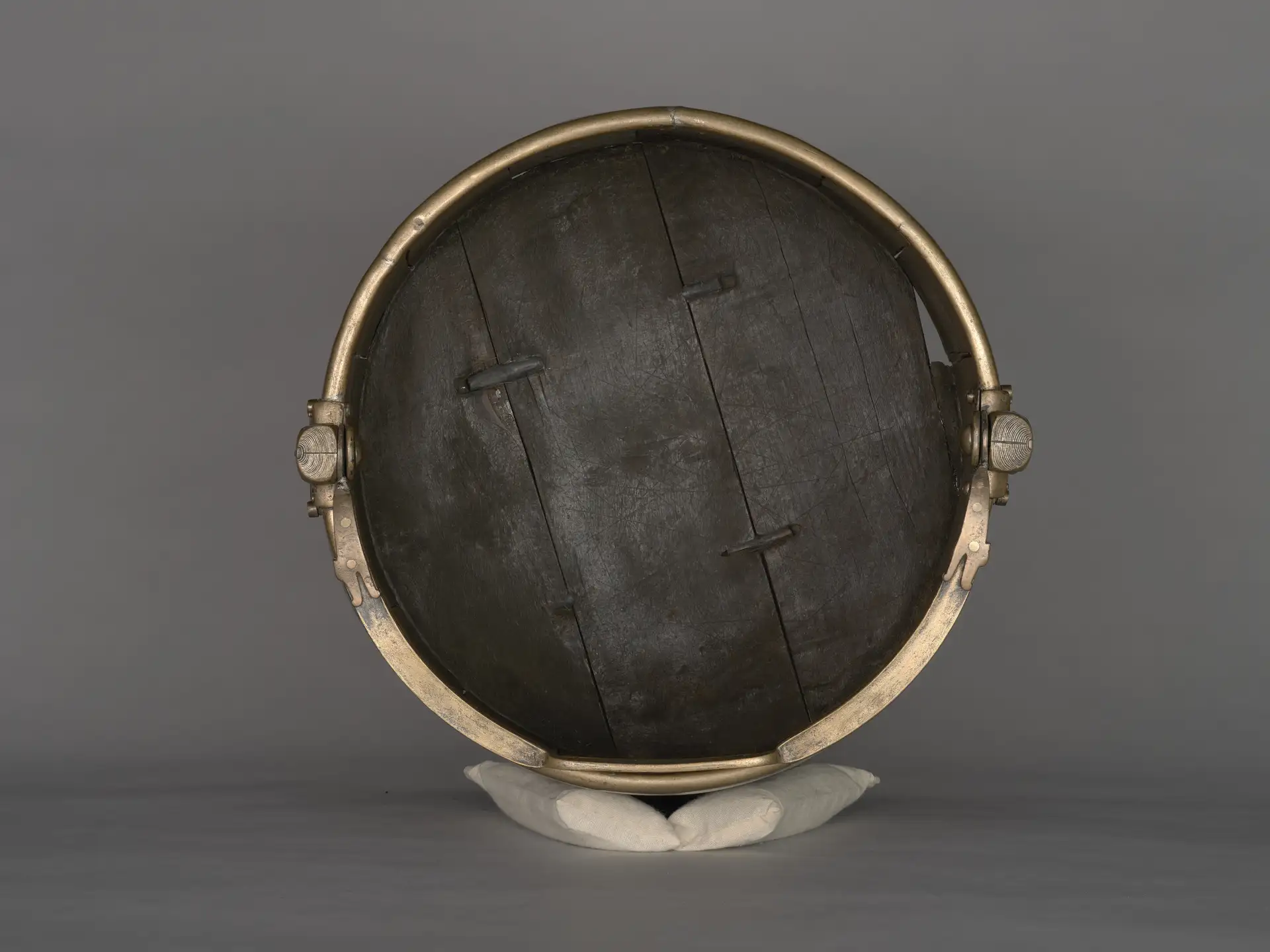
The bucket is made of yew, a tree of significance in the folklore and mythology of many cultures. This is likely because yew trees are long-lived and evergreen. Irish buckets, in particular, was made of yew.
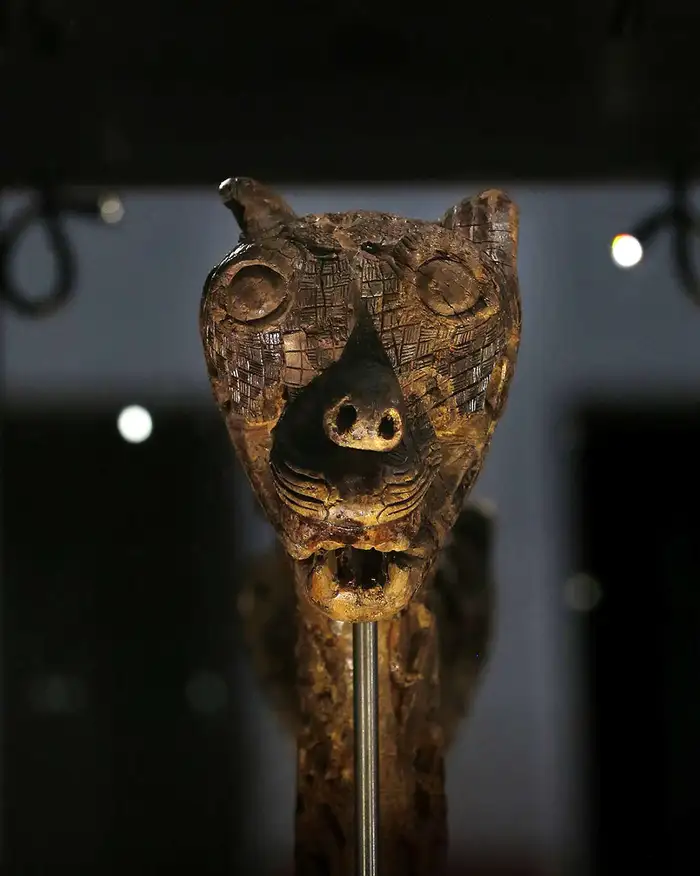
The handle has hinges shaped like animal heads with gaping jaws. The enamelled details and bronze-work are impressive examples of craftsmanship and testify to a high level of skill in metalworking.