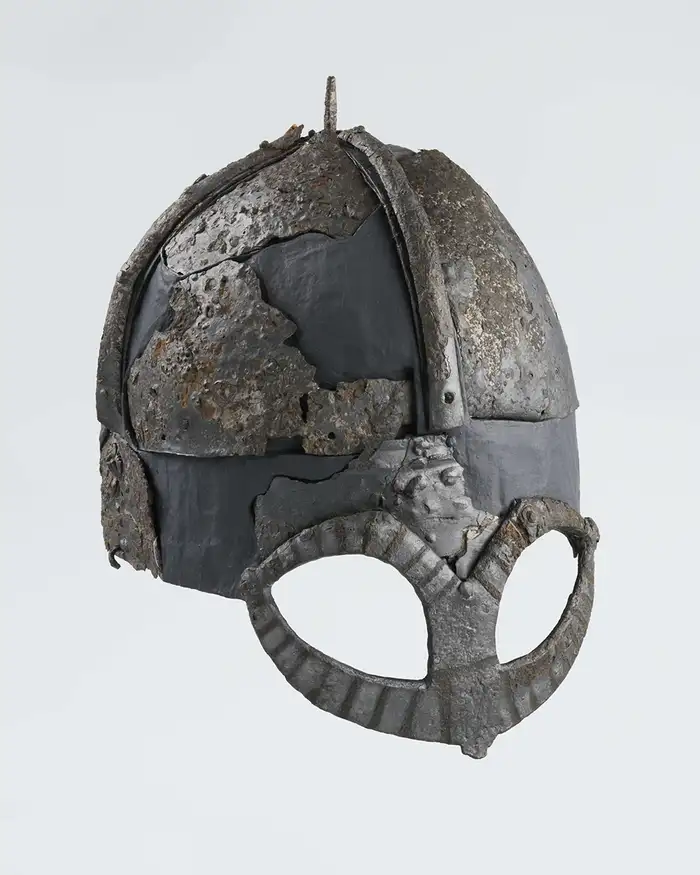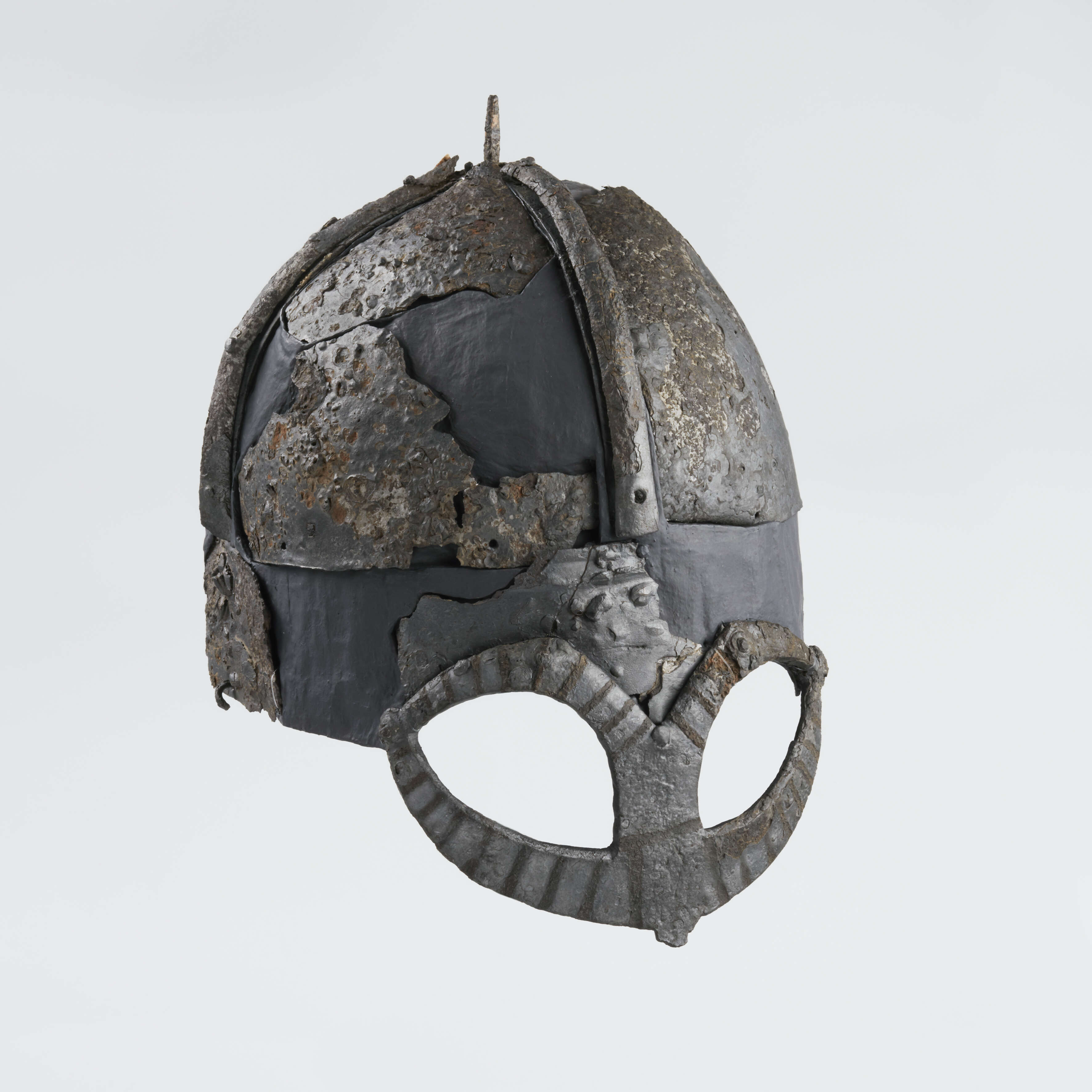
If complete, the helmet would have weighed 1.5 kilograms, roughly the same as modern military helmets. Although an inner cap of leather or wool has not survived, the helmet would have been very uncomfortable to wear without such padding.
The so-called “spectacles”, the visor, which protected the area around the eyes and nose, have been decorated with strips made from an alloy of tin and lead.
The grave is a cremation burial, in which the deceased was burned on a pyre. The objects and grave goods were burned as well, and a thin layer of fire scales can be seen on the iron.
The helmet was made between 950 and 975. Only two other helmets are known from Viking-Age Scandinavia: the Tjele helmet from Denmark and the Lokrume helmet from Gotland.
From Ringerike in Norway
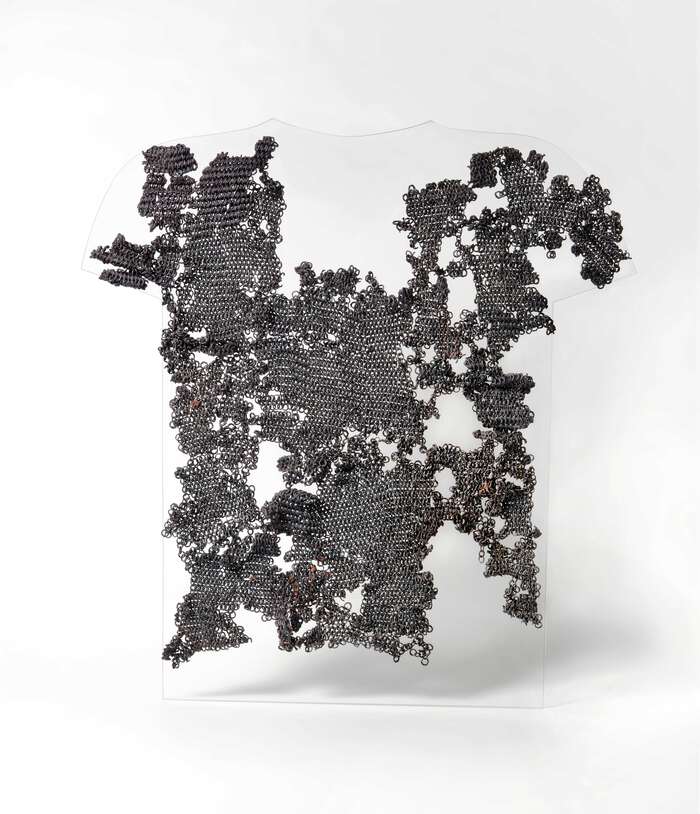
It was found in 1943 at the Gjermundbu farm in Ringerike, in south-eastern Norway. The helmet belonged to the grave of a very wealthy man, which also contained chain mail, a sword, two spears, two axes, shields, riding equipment, gaming pieces, and cooking utensils.
Ringerike was an important political and economic centre during the Viking Age, known for powerful chieftains and richly furnished burials. From the early Middle Ages onwards, Ringerike had close connections to the Norwegian royal lineage.
The man from Gjermundbu must have belonged to a specialised group of high-status mounted warriors that emerged during the 10th century. He was buried with all the equipment such a warrior might need in the afterlife.
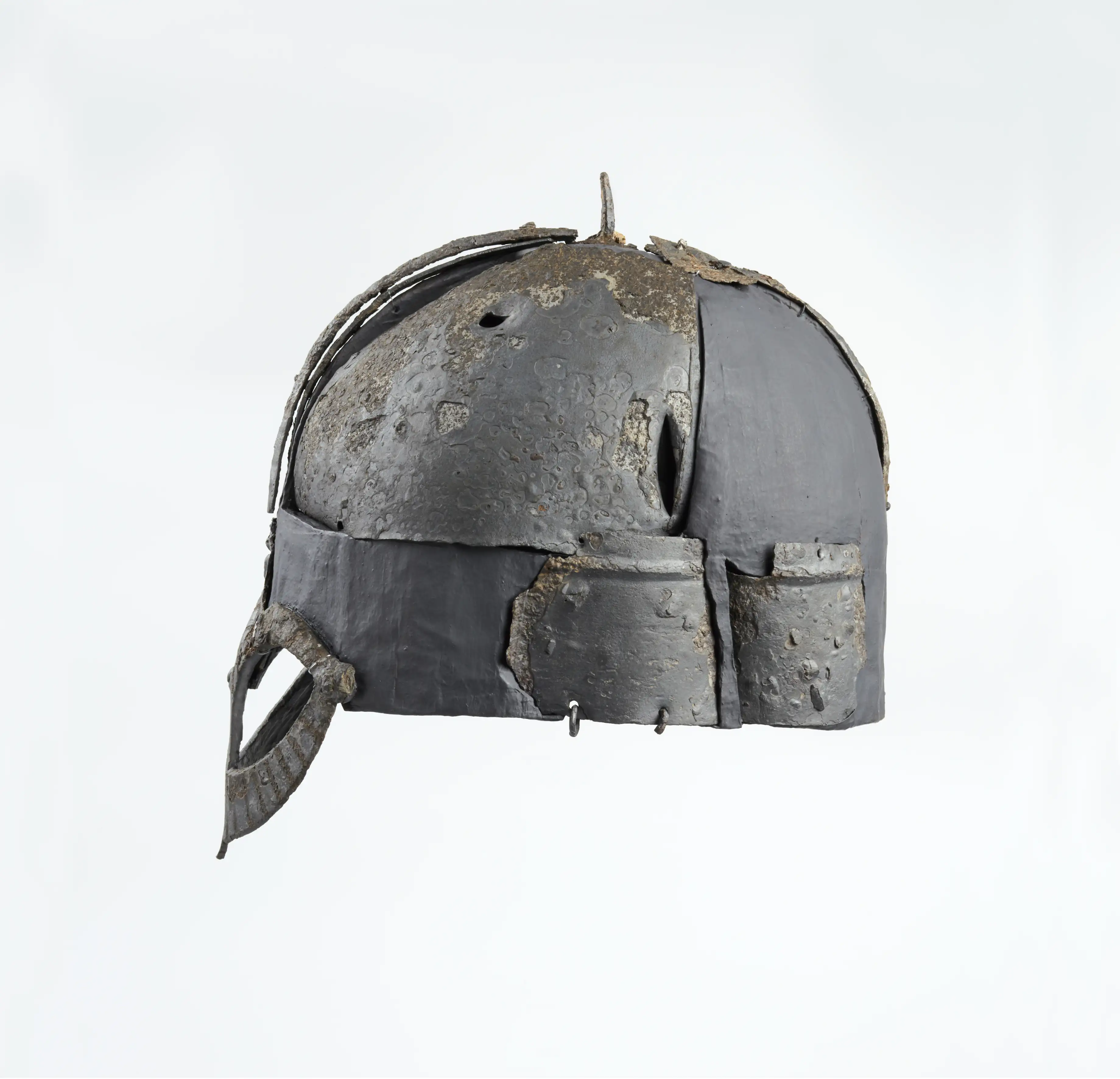
Such helmets were expensive, and few warriors could afford this type of equipment. The rare and exclusive grave goods demonstrates that the Gjermundbu man must have been a high-ranking person.
The helmet has been deliberately damaged as part of the burial ritual and pierced by both of the very same spears placed in the grave—one thrust from each spear.
Small iron rings along the helmet’s rim show that it was originally fitted with exclusive chain mail to protect the wearer’s neck and nape.
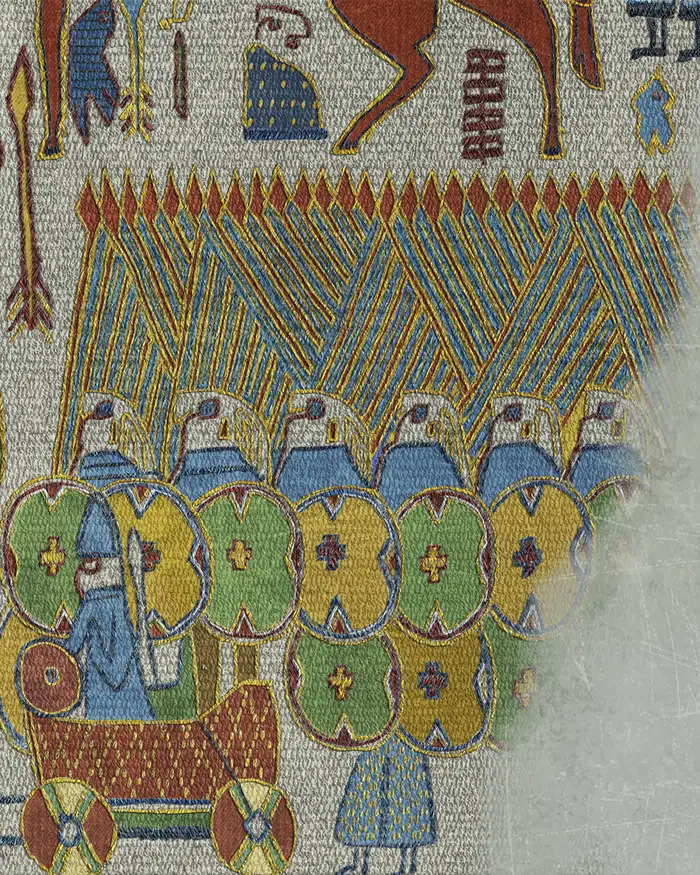
Viking battle helmets never had anything as impractical as horns. Horned weapon dancers and divine figures do appear on helmet decorations, fittings, and tapestries from both before and during the Viking Age. However, in reality the horned Viking helmet is purely a myth.