The discovery would prove to be Norway's largest hoard from the Viking Age, and a testament to the Vikings' vast network across the world.
A treasure in a ditch
The cotter Halvor Kvernmoen had been assigned the task of digging a drainage ditch in a bog at the farm Nedre Hoen in southeastern Norway.
As he was nearing the end of the work, Kvernmoen noticed a rounded mound at the bottom of one of the ditches. While levelling out, the initial discovery of the treasure was made.
Vast amounts of gold
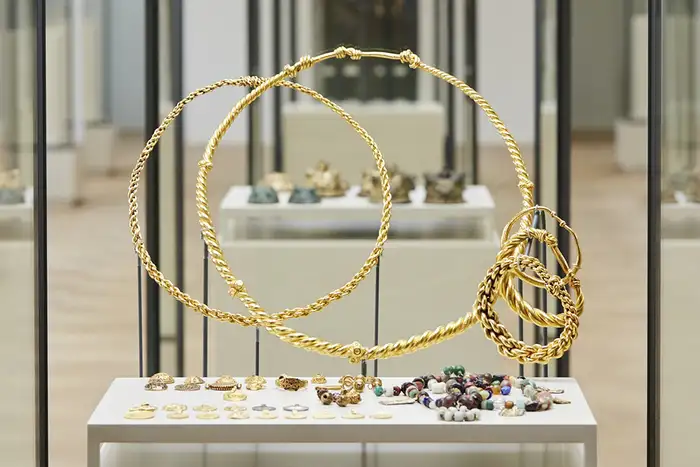
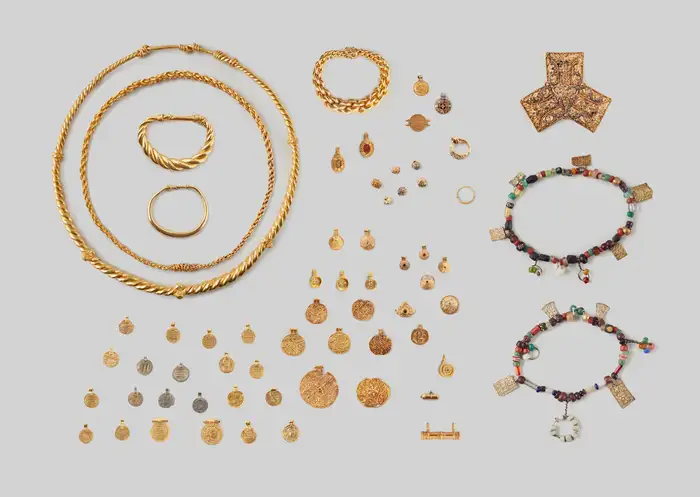
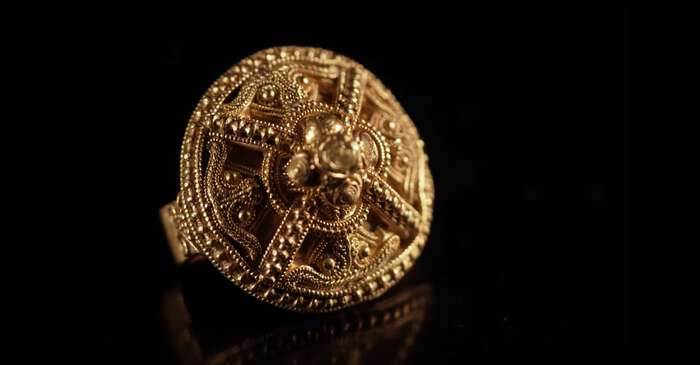
The treasure uncovered on this autumn day is today known as the Hoen Hoard. It is the richest and most spectacular treasure find ever made in Norway. The find is remarkable for its large amount of gold, totalling 2.59 kg.

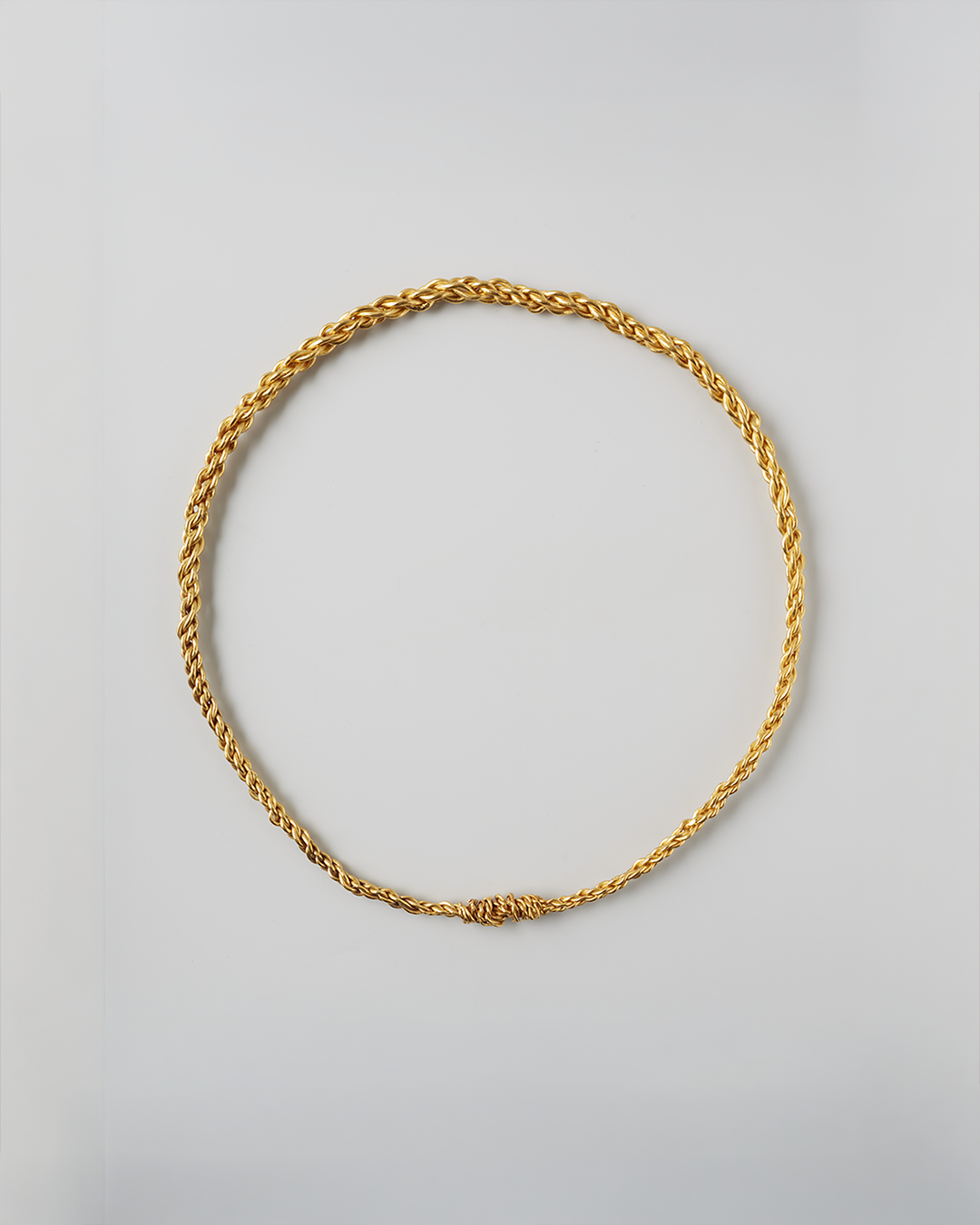
In addition to three arm rings, the hoard contains two neck rings. These were not merely decorative; both show signs of wear indicating that they were used by people over time.
Coins from all around the world
In total, the hoard consists of more than 200 objects: gold and silver jewellery and fittings, coins, and numerous beads of glass and semi-precious stones.
The coins are made of both gold and silver and originate from the Roman, Byzantine, Anglo-Saxon, Islamic, and Carolingian worlds. They span more than 500 years: the oldest date to the mid-4th century, while the most recent was minted around 850. All the coins have attached metal bails, showing that they were repurposed as pendants for necklaces.
Rare objects
In the past, the high quality of many of the objects led researchers to assume that they must have been of foreign origin. However, recent research indicates that several of the items may have been produced in Scandinavia.
Several objects are classified as Carolingian. Variations in their decoration and craftsmanship suggest that they did not all originate from the same place or workshop.
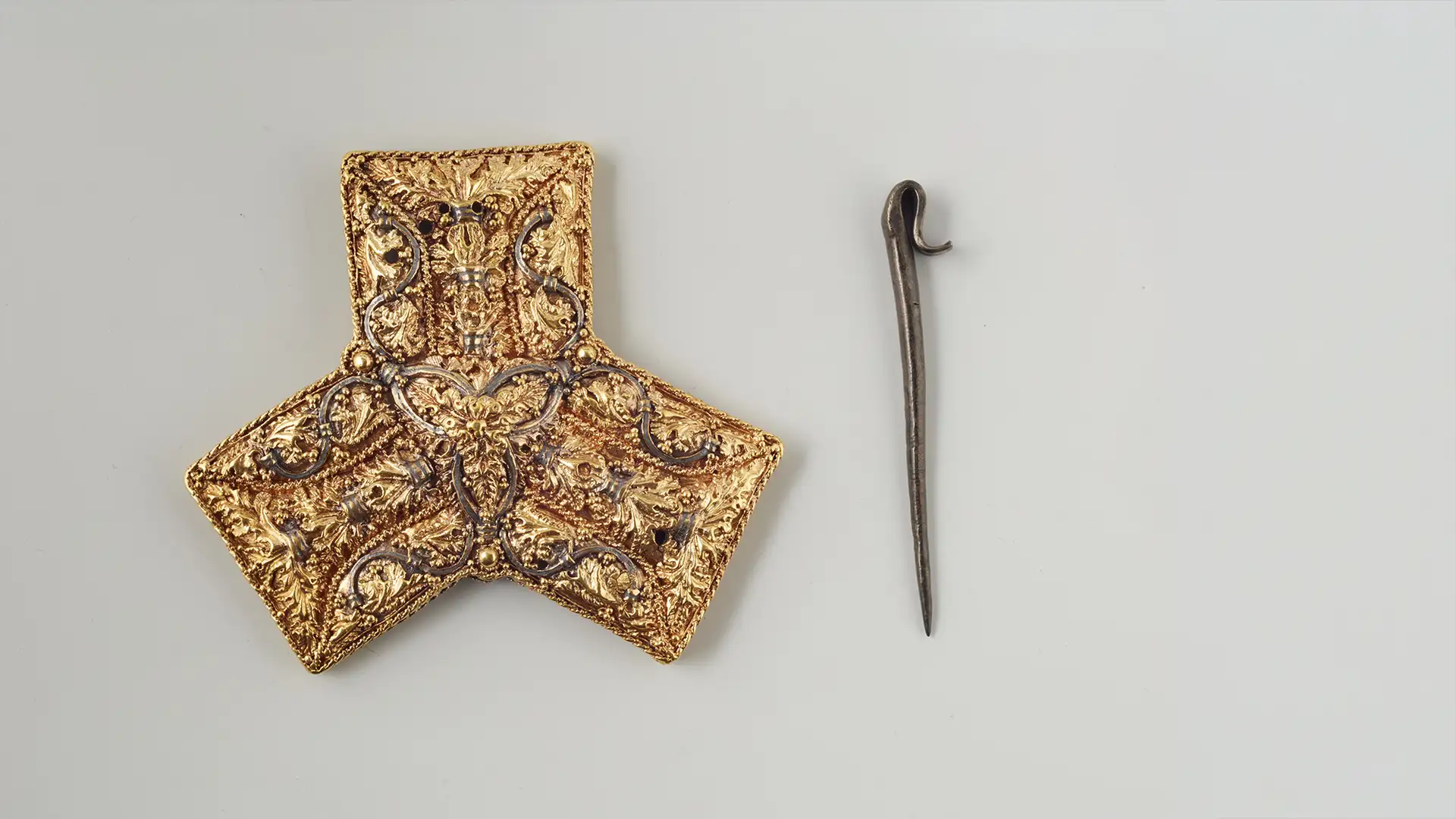
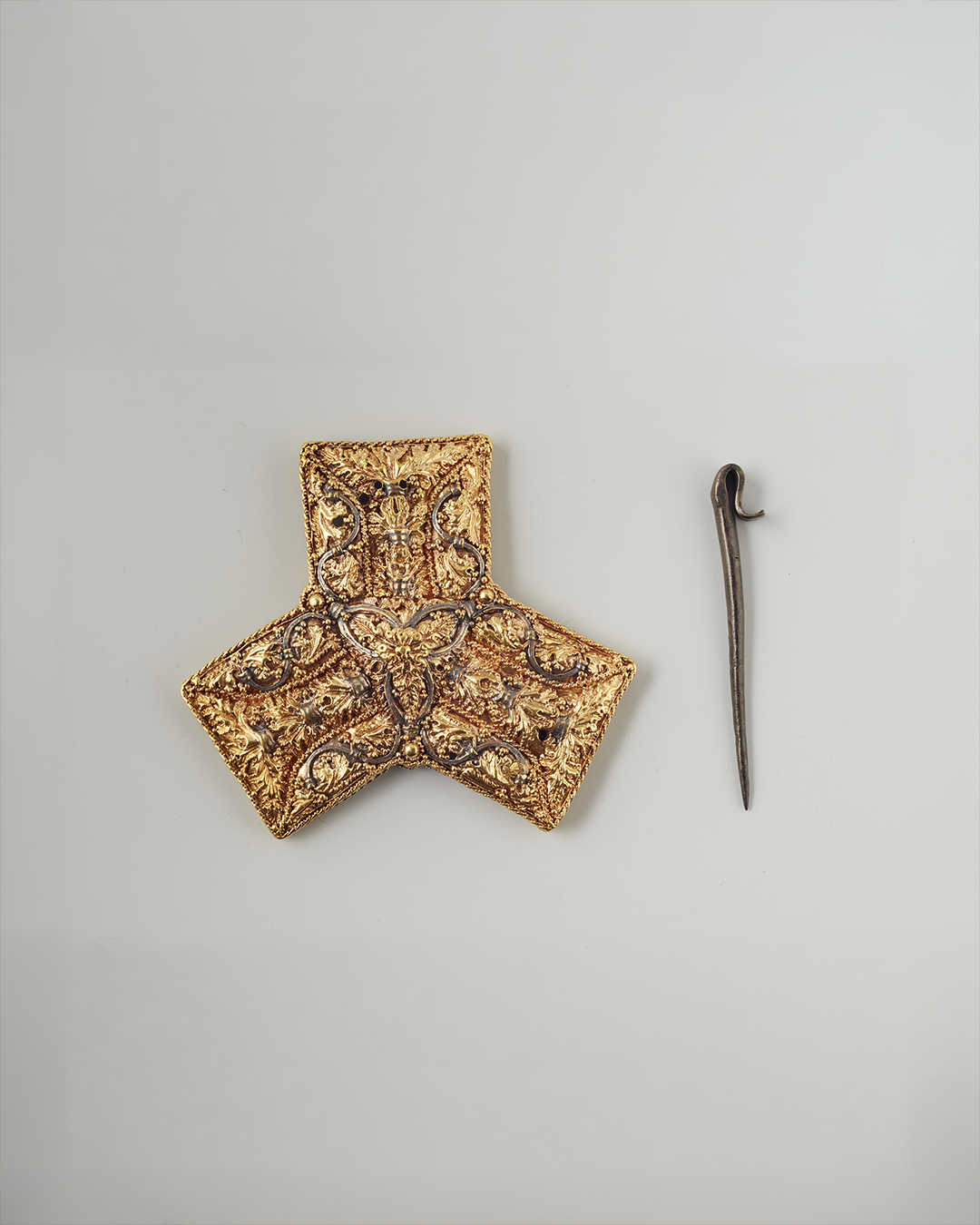
Particularly noteworthy among the objects in the hoard are 32 violet glass beads. Such beads are extremely rare in northern Europe, especially in Scandinavia. However, during the second half of the 8th century, they became common in eastern regions, particularly the Caucasus, Crimea, and Ukraine.
The hoard also contains carnelian beads. Carnelian is a yellowish-red stone that does not occur naturally in Scandinavia, yet became a popular gemstone during the Viking Age. It was imported from regions in the Caucasus, Iraq, Iran, and India.
A wealthy area
The Hoen Hoard was likely buried towards the end of the 9th century. Nearby we can find some of the most affluent and prominent burial monuments that we know of from the Norwegian Viking Age.
We do not know why the hoard was buried. However, research suggests that it was not intended as an offering to the gods, but was instead hidden or buried for safekeeping.
We also do not know who owned it, but we do know that its owner never had the opportunity to recover it. The hoard remained underground until Halvor Kvernmoen discovered it in 1834.
Finder’s reward
The hoard eventually entered the collection of the University of Oslo, where it remains today. Both Kvernmoen and the landowner received a finder’s reward of 2,030 speciedaler, divided equally between them. That is equivalent to more than 800,000 Norwegian kroner today, an enormous sum!
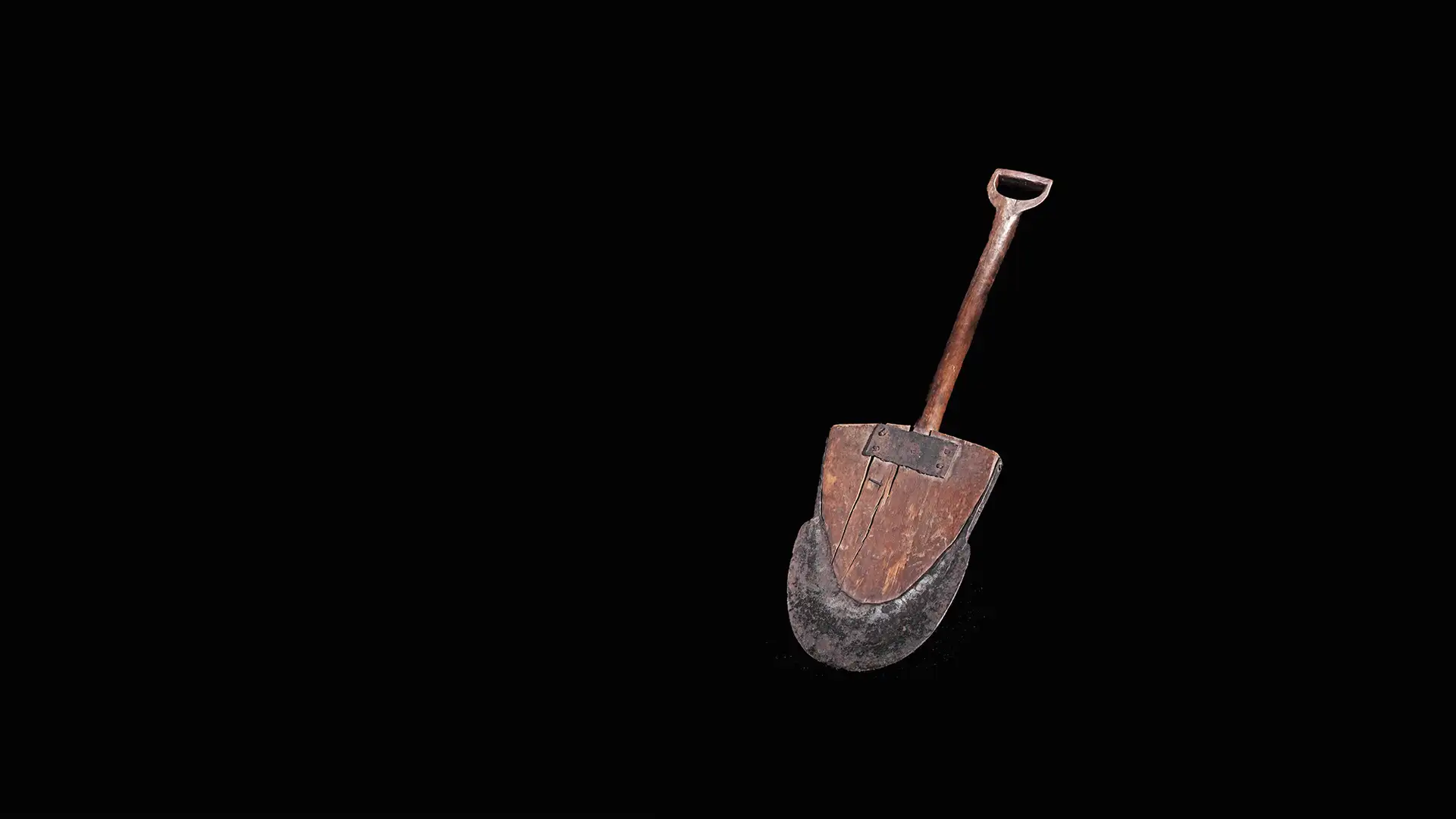
And what did the cotter Halvor Kvernmoen spend his reward on? He bought his own land and was no longer a cotter, but a farmer on his own farm. Hopefully, he also bought himself a new spade, because the “gold spade” itself is now part of the museum’s collection.
The definition of a hoard
An archaeological term for a find consisting of valuable objects hidden away for safe-keeping, for example during times of unrest.