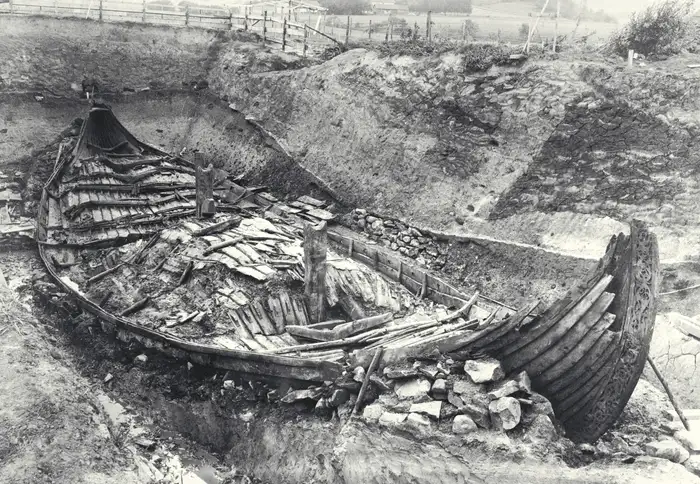
When the world’s most famous Viking Age grave, the Oseberg Mound, was excavated in 1904, archaeologists discovered hundreds of textile fragments. The women buried there had been laid to rest with embroidery, sophisticated silks, tablet-woven bands, and a vast array of functional textiles. These included clothing, tents, bedding, and interior furnishings.
But the most remarkable find?
Fragments of a tapestry with detailed motifs and patterns.
These were extremely costly grave goods. Raw materials such as wool and linen were expensive to produce, process and dye, while weaving, sewing and embroidering were time-consuming tasks. Silk had to be imported from afar.
The magnificent tapestries from Oseberg
The tapestries are not only among the finest textiles we have from the Viking Age; they are among the very icons from the Oseberg ship.
Although it is difficult today to visualize what these tapestries looked like when they were new, we can still see the detail and exquisite quality of the workmanship.
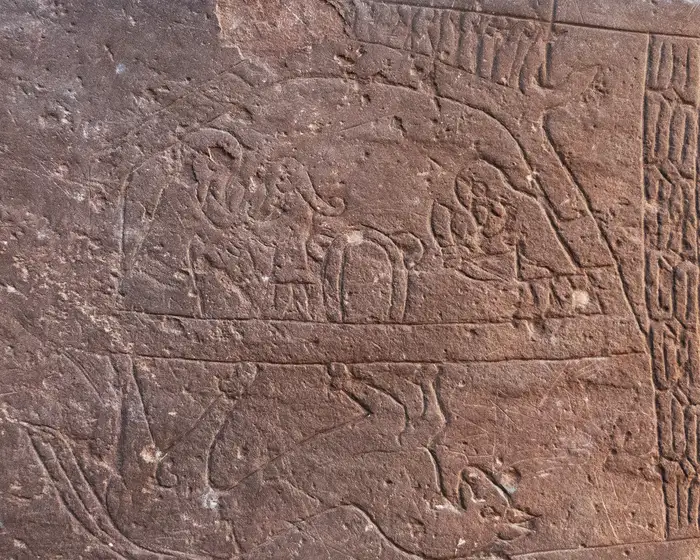
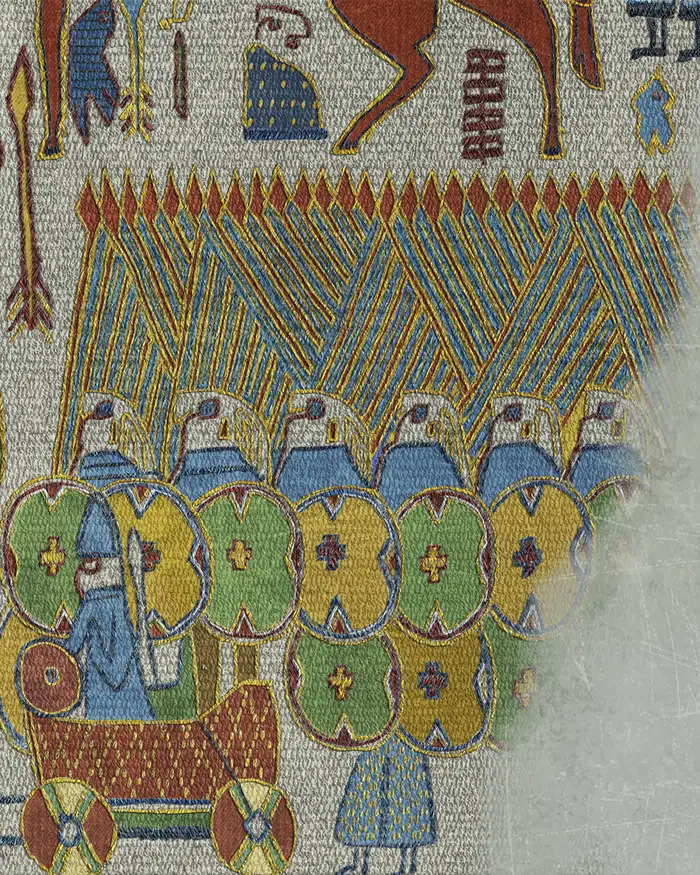
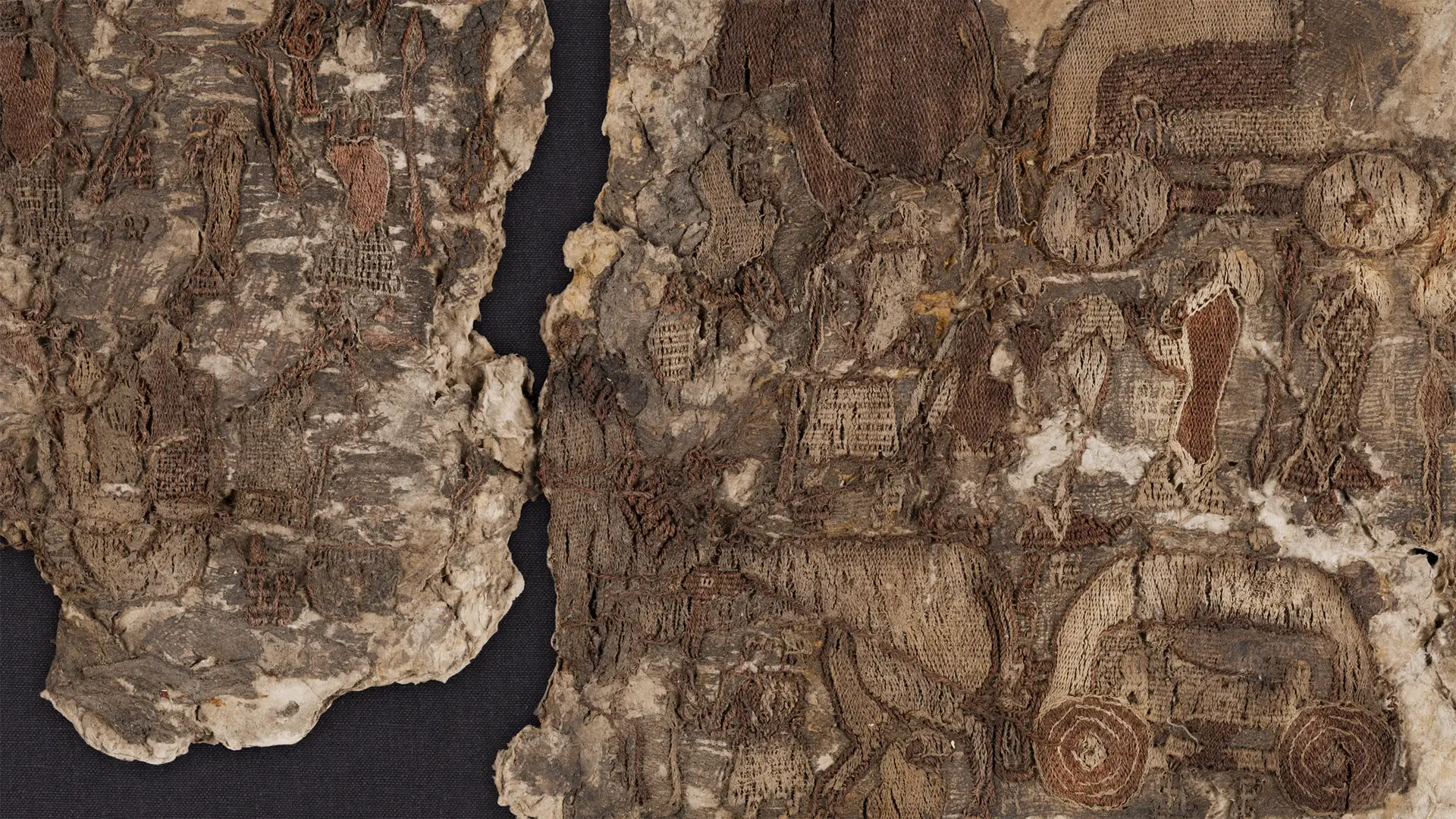
The tapestries depict a multitude of finely crafted figures: animals, people, ships, wagons and houses. Many of the motifs are violent, featuring battle scenes, warriors in animal guises, and hanged men. We can also see both decorative and geometric ornamentation.
What do the motifs on the Oseberg tapestry signify?
The tapestries are rare examples of Viking Age visual storytelling.
The two largest fragments depict people and animals moving in succession, as if participating in a funeral procession or cortege.
Some figures carry objects, while others ride horses or travel in wagons. Interspersed among the animals and people in the procession, we can see isolated geometric shapes, spears and birds.
Despite the many motifs and figures, we cannot say with certainty what the tapestries actually depict. They may represent myths, rituals, or actual events.
Exotic goods from Persia and Byzantium
Silk was a luxury item reserved for the wealthiest, and silk fabrics produced in Central Asia and the Byzantine Empire were found in the Oseberg burial. Cut into narrow strips, they may have served as decorations on the women's clothing. We can see that some were sewn onto the garments inside out, likely because they had become worn from extensive use. That's how valuable the silk was.
Elsewhere in Europe, similar fabrics were used for reliquaries that held holy objects and for liturgical garments
The grave also contained multicoloured silk embroidery featuring patterns of plant tendrils, spirals, animals, and geometric shapes. These, too, may have adorned clothing. Their place of origin is unknown, though the patterns resemble those found on items made in the British Isles.
Tools used for weaving and spinning were also found alongside the women. The discovery included several looms, a number of small tablets for tablet weaving, spindle whorls, needles, scissors, and other equipment for textile production.
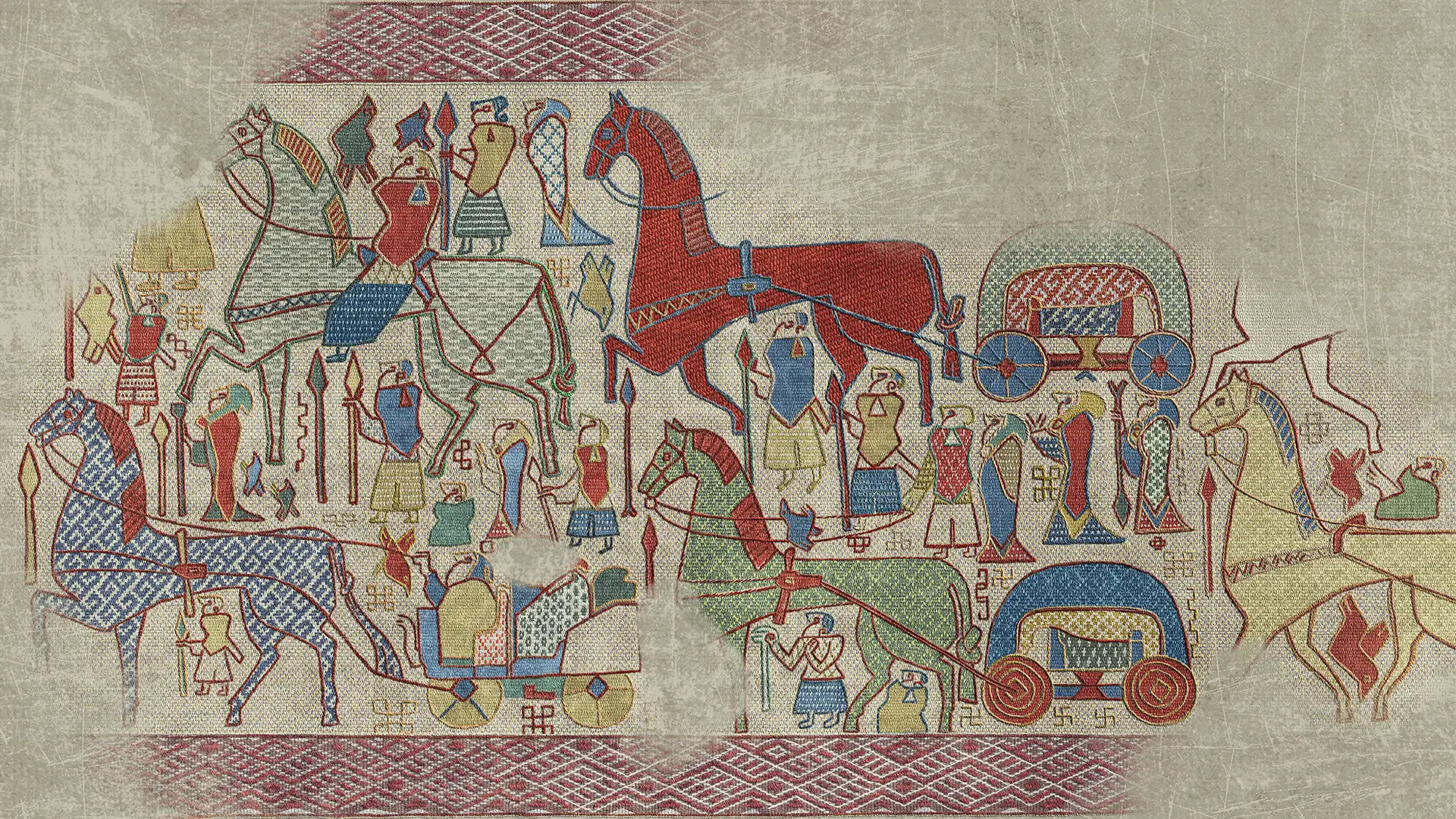
The colours that disappeared
After lying buried in wet clay for nearly 1,200 years, the motifs on the tapestry and other textiles have become increasingly indistinct. Some parts have completely rotted away and are lost forever.
In the years following the excavation of the Oseberg ship, it was still possible to discern some of the original patterns on the silk fabrics; these were documented in sketches made by the illustrator Sofie Krafft.
Krafft illustrated 41 of the 110 surviving silk fragments by placing them in a water bath and drawing the patterns as she saw them through the surface of the water. In the years that followed, the patterns faded rapidly.
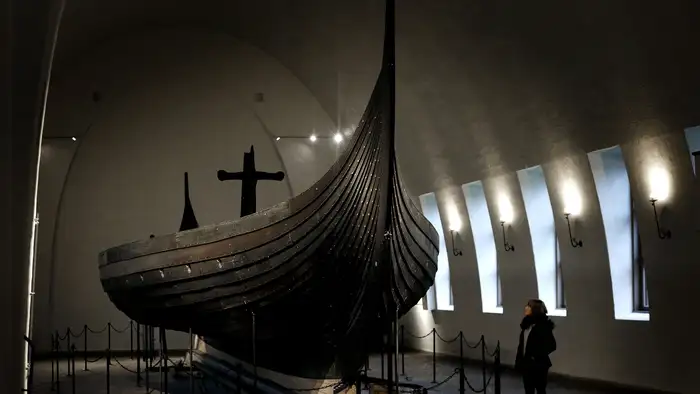
When the Museum of the Viking Age opens, visitors will be able to see the unique Oseberg textiles on display.